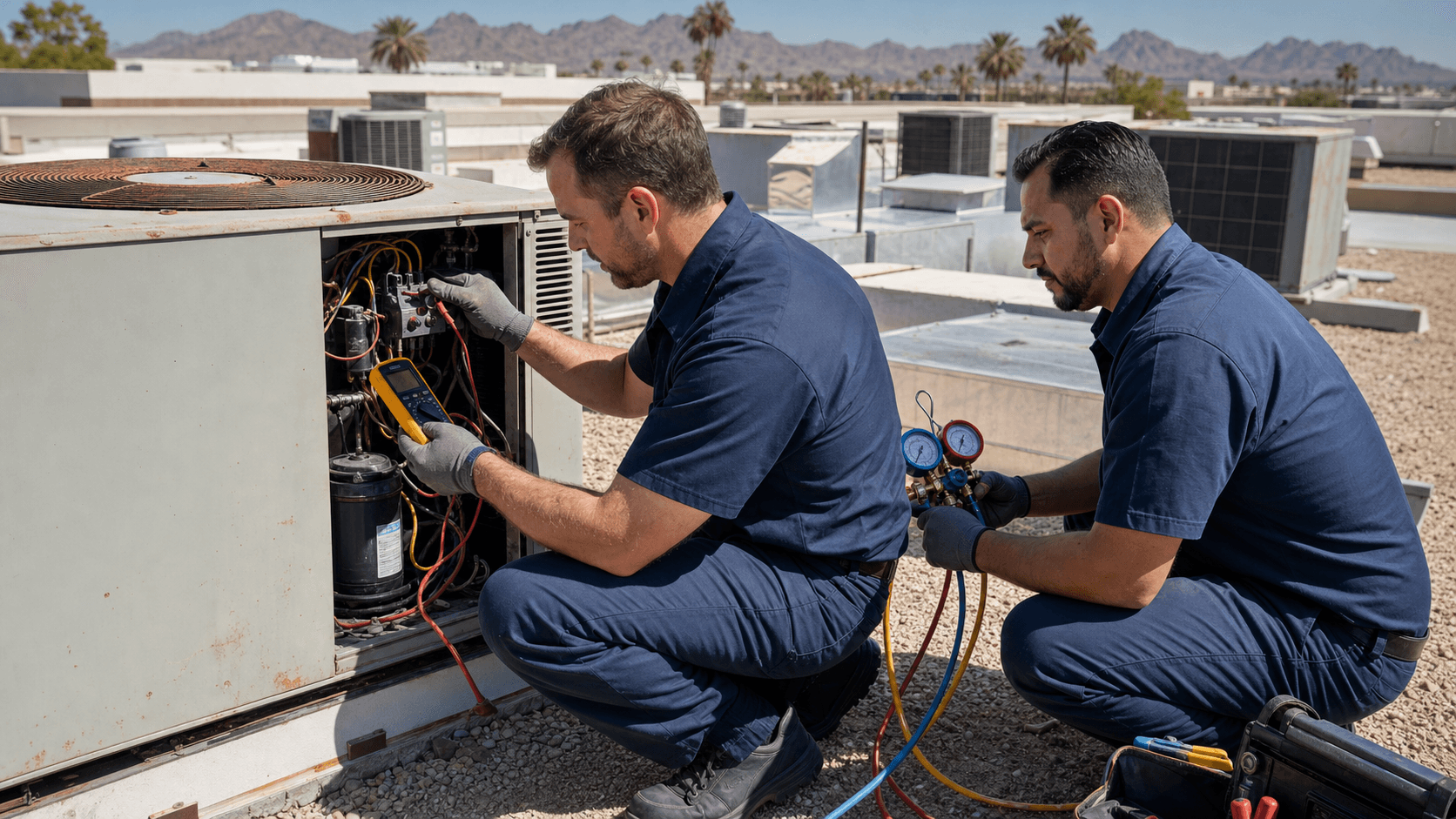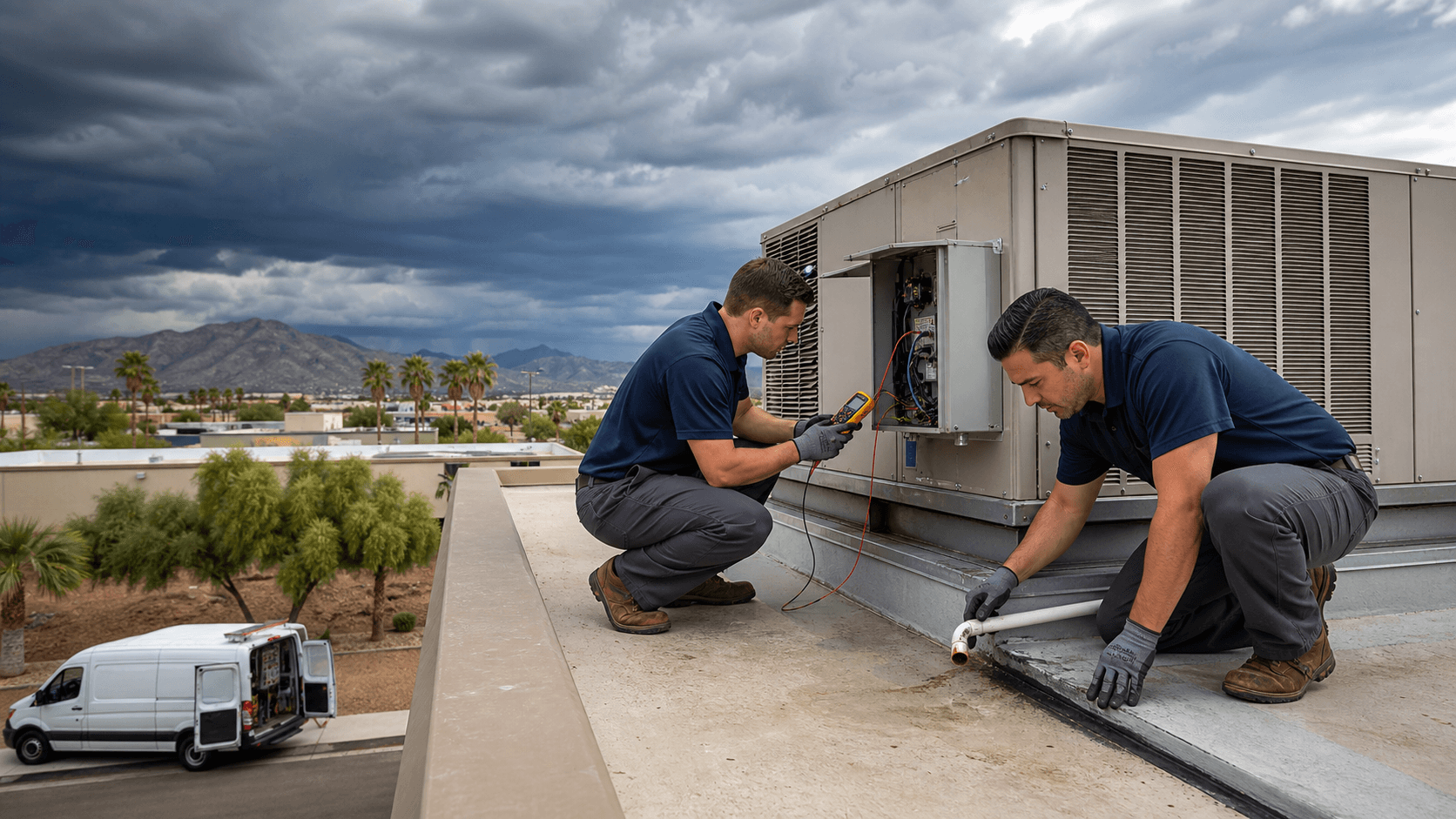
Commercial HVAC in Phoenix, AZ has its own set of rules once monsoon season kicks in. If you own or manage a commercial building with rooftop units, you already expect extreme heat and long run times. What often gets missed is how dust, wind, and fast storms can shut down systems that seemed fine a week before. When the storm hits during peak business hours, a "small" HVAC issue can turn into hot offices, angry tenants, or product loss in a hurry.
Frosty Fox AC works with commercial property owners, facility managers, and business owners across the Phoenix metro area, and we see the same pattern every season. Filters get changed, basic service is done, but monsoon-specific prep is skipped. This is where the surprise breakdowns happen. Here's what tends to get overlooked and what you can do about it before the next wall of dust rolls in.
Monsoon Season Surprises That Shut Down Arizona Businesses
Regular summer prep is about heat and long run times. Monsoon prep is different because you are dealing with dust storms that coat equipment, strong gusts that move debris across roofs, sudden downpours that flood low spots, and power blips and brownouts right when loads are highest.
When monsoon prep is weak, the fallout hits your bottom line fast. Indoor spaces heat up in the afternoon, customers and staff start complaining, and some tenants may even bring up lease issues if comfort is poor. In restaurants, medical offices, or markets, a failed system can mean spoiled product or lost inventory.
Many commercial owners and managers think about filters and maybe a quick check of a few units. That helps, but Phoenix techs see the same monsoon-related issues every year that go way beyond a dirty filter.
How Monsoon Dust and Debris Choke Rooftop Units
High winds during a storm do not just bring dust. They move leaves, palm fronds, plastic bags, and loose trash right into rooftop package units and condensers. Over time, this does more damage than many people expect.
Common problems we see on commercial HVAC in Phoenix, AZ after storms include:
- Condenser and evaporator coils packed with dirt that blocks airflow
- Fan motors running hot because they cannot move enough air
- Electrical panels and contactors filled with fine dust
- Condenser drains clogged with mud and debris so water backs up
From inside the building, the warning signs often start small and then build as conditions get hotter and equipment strain increases. You may see indoor temps climb late in the day even though the thermostat is set low, and units may begin short cycling by turning on and off more than normal. As the load rises, breakers can trip (often in the hottest part of the afternoon), and you might notice new rattling or scraping sounds from rooftop fans. Many properties also see summer power bills jump because the system works harder for the same result.
Practical prep that helps before and after peak monsoon:
- Schedule professional coil cleaning on rooftop units before storms hit and again once the season settles down
- Make sure fan guards, access panels, and filters are secure so debris cannot get pulled in as easily
- Keep the roof around each unit cleared of loose trash, leaves, and storage items that can blow into equipment
- Have drains, pans, and lines checked so water can get away from the unit and off the roof instead of backing into the equipment
The Electrical Side of Monsoon Prep Most Owners Skip
Storms do not just hit the mechanical side. The electrical side takes a beating too. Lightning in the area, rapid power drops, and utility brownouts all put extra stress on commercial HVAC in Phoenix, AZ.
Field techs often find:
- Burned or heavily pitted contactors
- Weak or failed capacitors that keep fans and compressors from starting reliably
- Loose lugs and connections that have overheated in the past
- Surge protection that is missing, undersized, or already failed
- Control wiring on rooftops that is cracked, exposed, or water damaged
When these issues are ignored, the pattern is usually the same: units will not restart after a quick power flicker, properties end up with multiple service calls just to reset equipment that trips again later, and downtime gets longer while waiting on special-order parts during the busiest season.
Before storms roll through, it pays to have a commercial HVAC tech:
- Tighten and torque check electrical connections inside rooftop units
- Inspect and test capacitors and contactors for early failure signs
- Check exposed control wiring, sensors, and low-voltage circuits on the roof
- Review whether critical systems need surge protection or phase-loss monitoring for better protection during rough power events
Roof Drainage, Standing Water, and Hidden HVAC Damage
Fast, heavy monsoon downpours can overwhelm roof drains and scuppers. Water ends up ponding around HVAC curbs and supports. It may not look serious from the ground, but up close it can be a big problem.
Techs often find:
- Water-damaged wiring and junction boxes sitting in puddles
- Rusted steel supports, sagging rails, and soft spots under units
- Rotted curbs and cracked seals where units meet the roof
- Saturated roof insulation that stays wet long after the storm
- Units that are no longer level, which can cause oil return issues inside compressors
Operational problems can include leaks into offices, retail areas, or kitchens from around unit curbs, along with ceiling tiles ruined over tenant spaces and concerns about mold. Some of the most costly issues happen at night, when a unit over a critical space starts leaking during a storm and turns into an emergency call.
Good prep often means HVAC and roofing teams need to work together:
- Clear roof drains and scuppers so water actually leaves the roof
- Confirm units are properly flashed and sealed at the curb
- Make sure condensate drains discharge away from walkways, doors, and critical pathways
- Check that access paths to each unit stay safe to walk, even when surfaces are wet
Indoor Impacts, Humidity, Controls, and Sensitive Spaces
Monsoon humidity changes how your building feels and how your systems run. Even with the thermostat reading a good number, people may feel sticky or uncomfortable. Systems can run longer and still struggle to keep up.
Common issues we run into on commercial properties include:
- Economizers or outside air dampers that are stuck or set wrong, dragging in too much humid air
- Failed or miscalibrated humidity controls in offices, healthcare spaces, or specialty rooms
- Ice machines working harder in hot, humid kitchens and back rooms
- Refrigeration condensers running hot when ventilation is poor
This is more than a comfort annoyance. Condensation on grocery or retail floors can turn into a slip hazard, and restaurants and markets can face food quality concerns when humidity stays high. Sensitive areas like server rooms, network closets, or labs may also edge toward unsafe temps if comfort cooling is struggling.
Ahead of monsoon season, it helps to:
- Have economizers and outside air dampers inspected, cleaned, and calibrated
- Verify thermostats and sensors are accurate, secured, and not blocked by furniture or displays
- Confirm refrigeration and ice machine condensers are clean and have good airflow in the spaces where they sit
Building a Monsoon-Ready Maintenance Plan
The best way to handle monsoon prep is to make it part of a yearly plan, not a scramble after the first big haboob rolls in. A simple schedule can keep you ahead of most common failures.
A practical rhythm for many commercial properties looks like this:
- Spring: pre-summer tune-up to handle heat and long run times
- Early monsoon season: focused visit for coils, drains, electrical checks, economizers, and roof conditions
- Late summer: post-storm inspection to catch hidden damage and plan repairs before the next cycle
Planning this way helps cut down on surprise outages and emergency calls, and it also gives you time to plan for major parts or unit replacement instead of making rushed decisions. It can keep power usage steadier by keeping equipment running as designed, and it shows tenants and stakeholders that you are taking care of the building with documented maintenance.
It also helps to keep a simple asset list for each property so techs know what matters most during storms. That list might include unit ages, locations, roof access notes, and which areas are highest priority such as restaurants, medical suites, data rooms, or production areas. When storms put stress on your systems, that kind of planning makes all the difference.
Get Your Phoenix Commercial Building Ready for Monsoon Season
If you manage a commercial property in the Phoenix area and want to avoid HVAC, refrigeration, or ice machine failures during monsoon season, schedule a monsoon-focused maintenance visit with Frosty Fox AC. Our technicians can inspect your rooftop units, drainage, controls, and critical cooling equipment before storms hit, so your tenants, staff, and inventory stay protected when the weather turns.
Get Started With Your Project Today
If your building is ready for more reliable comfort and lower operating costs, we are here to help you plan the right solution. At Frosty Fox AC, our team will assess your space, recommend efficient system options, and schedule work around your operations to minimize disruption. Explore our services for commercial HVAC in Phoenix, AZ to see how we can support your next project. Reach out today so we can get your system on track before the next heat wave hits.