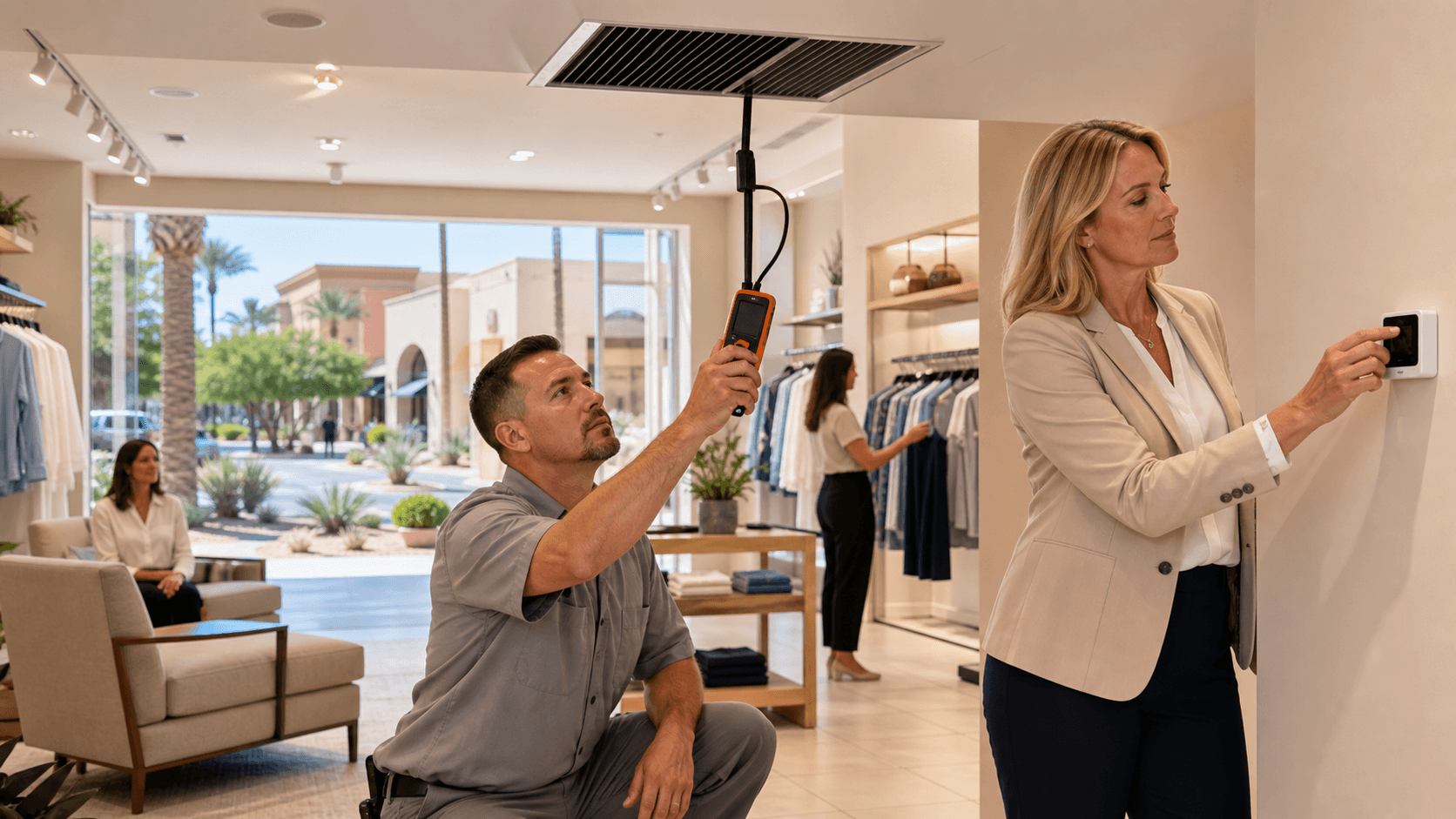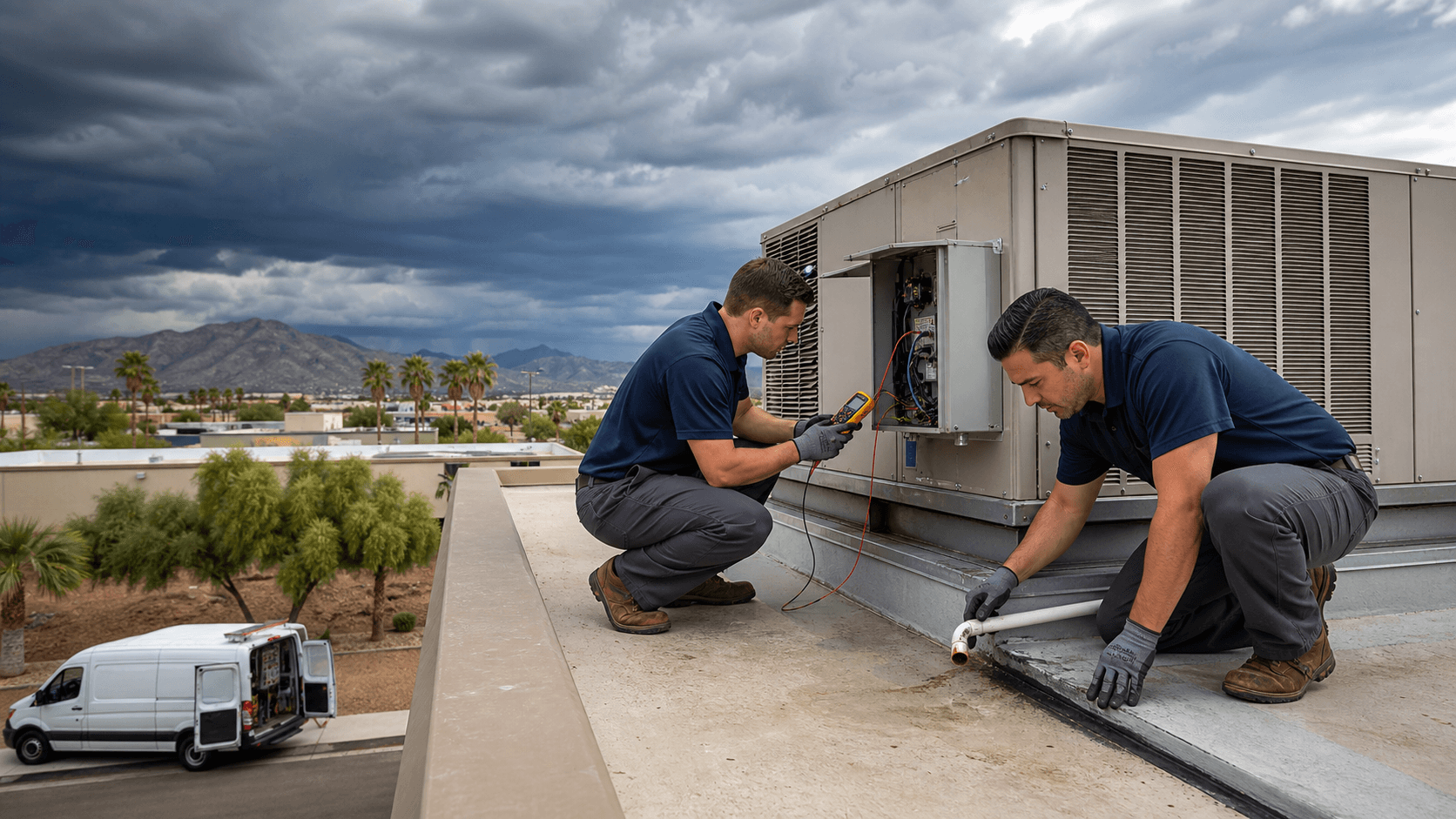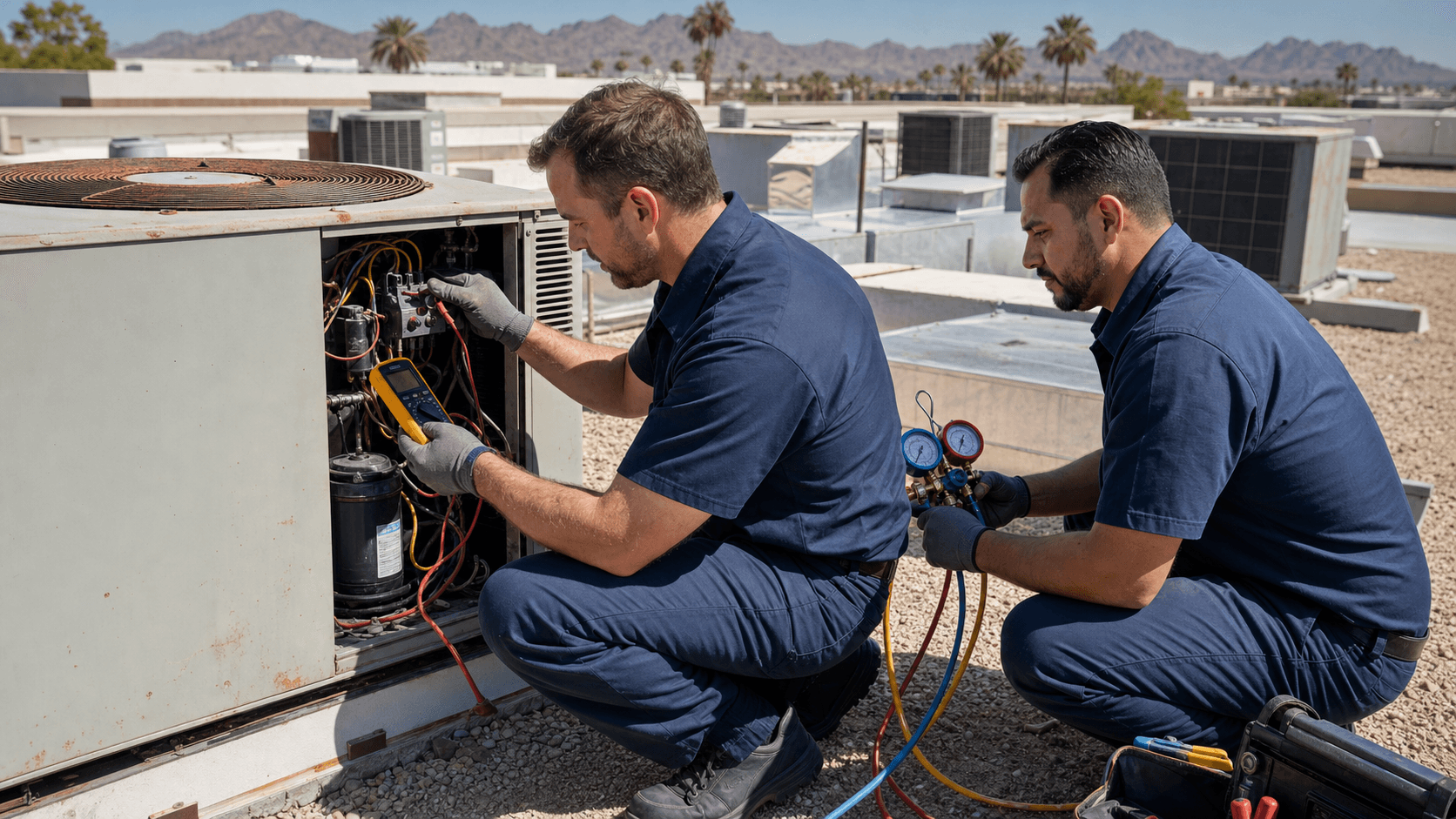
Running a server room in Chandler or the Greater Phoenix area is not the same as cooling a regular office. When outdoor temps stay in the triple digits day after day, your commercial HVAC has to work harder just to hold the line. If that system also has to cool a heat dense server room, you can run into hot spots, alarms, and surprise downtime fast.
In this article, we are talking directly to IT managers, facility managers, and business owners who are responsible for server rooms, network closets, or small data centers. We will walk through how Arizona heat affects these spaces, what a solid design looks like, daily and seasonal habits that help, and the warning signs that say your system needs attention before the next 110-degree week hits.
Why Chandler Server Rooms Need Extra Cooling Attention
Standard office comfort cooling is built around people, not racks of hardware. Office zones expect people to come and go, lights to shut off at night, and loads to drop after business hours. Server rooms do the opposite. They pour out steady heat, 24/7, even when the building is empty.
In Chandler, that heat lands on top of tough local conditions:
- Long stretches of 110 degree and higher days
- Warm evenings where the building never really cools off
- Dust and debris that clog filters and coils
- Rooftop units baking in direct sun for hours
When you stack all of that together, a server room tied into a regular office zone usually comes up short. The goal is simple: keep racks online, avoid throttling, and prevent those emergency "systems are down" calls. That takes a different approach to commercial HVAC in Chandler, AZ than a typical comfort setup.
How Arizona Heat Overloads Commercial Server Rooms
Arizona heat creates a kind of load stacking that pushes server rooms over the edge. You start with high outdoor temperatures, then add west-facing glass heating the building shell, plus the internal heat from servers, UPS systems, switches, and battery backups. The result is a room that runs hot even when the office around it feels fine.
Common building issues make it worse:
- Older rooftop units that were never sized for IT loads
- Shared zones where the server room and office use the same thermostat
- Poor separation between hot equipment and return air
- No dedicated cooling, just "extra vents" into the room
We see the same field clues again and again: the server room feels muggy and hotter than nearby offices, server fans run at high speed all afternoon, you get regular thermal warnings, and temperatures swing between day and night. In some spaces, doors are propped open to "borrow" hallway air, or portable spot coolers are left running as a long-term fix instead of a true solution.
Designing Commercial HVAC in Chandler, AZ for Server Rooms
For most Chandler offices and light industrial spaces, the first big step is simple: give the server room dedicated cooling. When you tie it to a standard office zone, the equipment ends up on the same schedule as people, which does not work for hardware that never sleeps.
Good design usually includes:
- Equipment sized for a constant 24/7 load, not just office hours
- Redundancy (N+1) when uptime is business critical
- Separate controls so server room cooling does not shut off with the rest of the building
In real terms, that can look like a split system that serves only the server room, an upgraded rooftop unit with a dedicated zone, or changes to how existing equipment is controlled. Systems also need to be chosen with high ambient conditions in mind so they perform when rooftop temps and sun exposure are at their worst. On top of that, there are local details like safe condensate handling on flat roofs, enough electrical capacity, and proper clearance around units on crowded roofs.
Daily and Seasonal Practices to Keep Racks Cool
Even with good design, day-to-day habits make a big difference. Your facilities team can do simple checks without tools, such as:
- Confirm server room doors stay closed and latching properly
- Make sure supply and return vents are not blocked by boxes, racks, or cable trays
- Check that no one has "saved money" by raising setpoints or changing schedules
Summer in Chandler adds a few extra steps. Server room cooling should be set for true 24/7 operation, especially during monsoon humidity and peak heat. Rooftop units need safe, clear access, and drain lines should be checked so storms do not back water into equipment. When possible, heavy IT work that throws extra heat, like large backups or major updates, is better planned for cooler parts of the day or night.
Coordination between IT and facilities is key. New hardware should not be added without a quick look at cooling capacity. It helps to document who is allowed to change setpoints and schedules, and to keep a basic temperature log. Many outages start with small trends that would have shown up in a simple daily record. A common story is a server room placed on the same occupied or unoccupied schedule as the open office and left that way over a long weekend, leading to overheated switches by Monday morning.
Warning Signs Your Server Room Needs HVAC Attention
Server rooms rarely fail with no warning at all. Early signs include:
- Room temperatures slowly creeping above 77 to 80 degrees
- Differences between the wall thermostat and what server monitoring tools report
- Minor UPS or server temperature alarms that only happen on hot afternoons
More urgent red flags show up on service calls. Techs often find water on the floor from clogged condensate drains, ice on the indoor coil, short cycling units that start and stop every few minutes, or rooftop units tripping high pressure safeties in late afternoon heat.
When that happens, the business impact is real. Systems can throttle during peak work hours, backups and writes can fail during emergency shutdowns, IT staff may have to work late to rebuild or restore systems, and tenants in multi-tenant buildings can lose confidence if outages become repeat events.
In-house teams can safely check a few things: thermostat settings and schedules, clear airflow at vents, and whether doors are shut. But signs like water on the floor, ice on coils, burning smells, or units that will not restart should trigger an urgent service call before downtime stretches across a full business day.
Building a Practical Maintenance Plan for Chandler Server Rooms
A good commercial HVAC maintenance plan for Chandler server rooms is a little more focused than standard office PM. The basics include:
- More frequent filter changes to deal with dust and debris
- Coil cleaning on rooftop units so they can reject heat on hot days
- Refrigerant checks before the hottest part of summer
- Verification that controls are set for continuous operation where needed
It also helps to match maintenance to Arizona seasons. Many businesses choose a full system review and load check in spring, a mid-summer visit focused on filters, drains, and performance under load, and a fall review after monsoon storms. During a tune-up, technicians should look beyond the equipment. That means checking airflow around racks, making sure return air has a clear path, confirming thermostat and sensor locations make sense, and reviewing recent temperature or alarm history with the IT team.
A structured plan makes budgeting easier. Instead of surprise failures and emergency replacements, you get early warnings, longer equipment life, and time to plan upgrades as your IT load grows.
Get Started With Your Project Today
If your facility is ready for more reliable comfort and lower operating costs, we are here to help you plan the right solution. At Frosty Fox AC, our team can design, install, or upgrade commercial HVAC in Chandler, AZ to match your building's unique needs. Reach out today so we can review your goals, assess your current system, and schedule a convenient time to get your project moving.