Why Rooftop HVAC Issues Hit Strip Centers so Hard
Rooftop HVAC problems in a Phoenix strip center are not just a comfort issue; they are a revenue and tenant-retention issue. Most multi-tenant centers in our area rely almost entirely on rooftop package units to keep suites comfortable enough for customers and employees to stay in the space. When one of those units fails during a hot afternoon, complaints can start within minutes and escalate quickly.
In a typical center, hot storefront glass, shared walls, and shared attic spaces mean one failed unit can affect more than just a single bay. Heat from an overheated suite can bleed into neighboring spaces, making those tenants feel like their AC is not keeping up either. The Arizona sun beats directly on those rooftop units all day, driving rooftop temperatures far higher than the actual outdoor reading, while dust, debris, and intense UV exposure shorten the life of coils, wiring insulation, and plastic components compared to cooler climates. This article is for commercial property managers and strip center owners who need clear, practical strategies to reduce no-cool calls, not a technical textbook.
How Rooftop Package Units Are Set Up on Strip Centers
Most Phoenix strip centers use one of two basic layouts for rooftop package units:
- One unit per suite, each serving its own tenant
- Larger units that serve multiple smaller bays or combined suites
With one unit per suite, a failure is somewhat contained, but you may still see heat transfer between spaces. When a single larger unit serves multiple tenants, that one failure can impact several storefronts at once, making prioritization and fast response even more important.
A standard rooftop package unit contains all the major parts in one cabinet, including:
- Compressor section and condenser coil
- Indoor blower section with belts, pulleys, and blower wheel
- Fan motors, control board, and electrical panel
- Economizer or outside air section on some commercial models
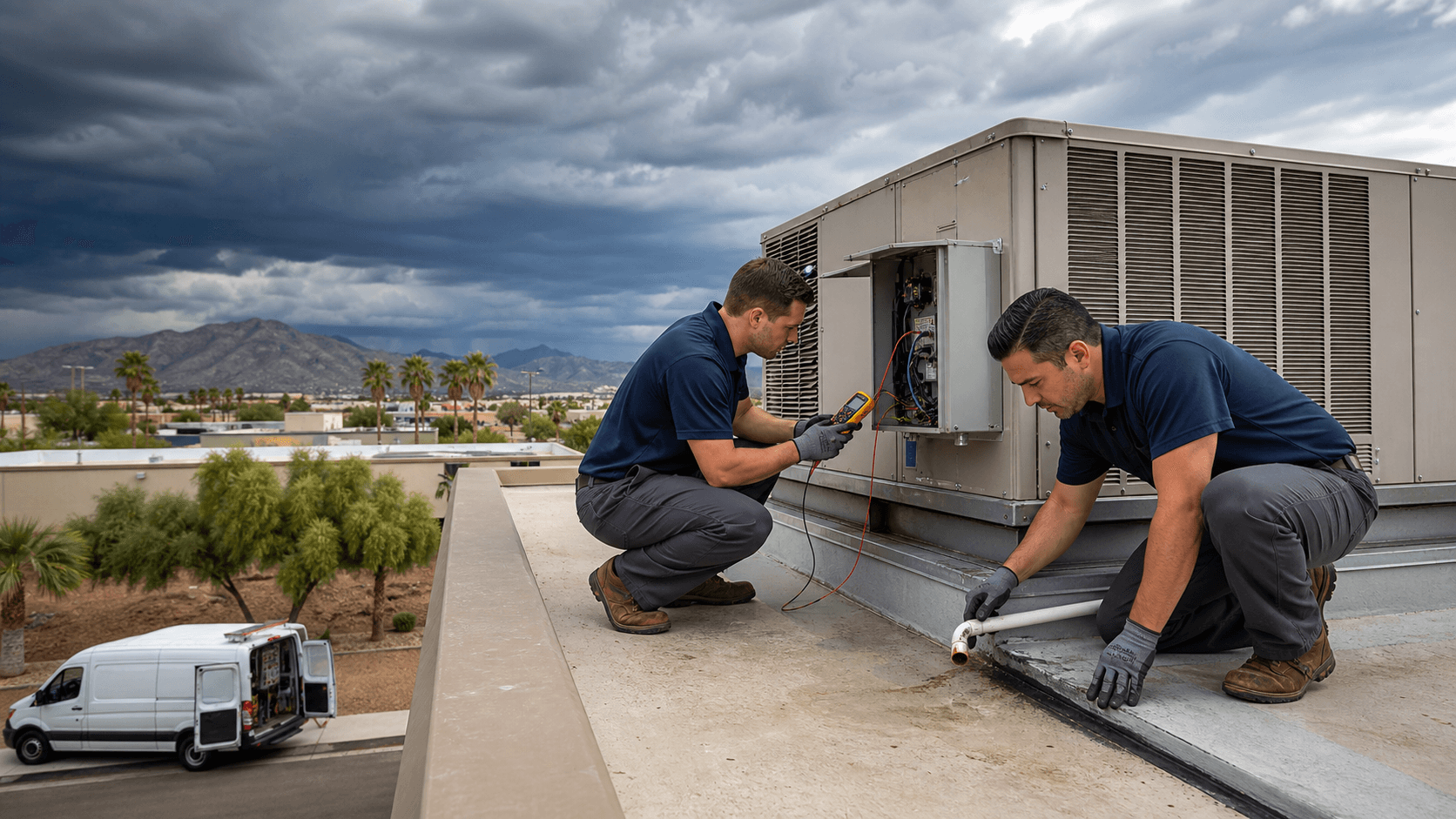
In Phoenix strip centers, these units typically sit on curbs, with long runs of power and low-voltage wiring across the roof. Poor roof access, loose pavers, or unmarked units slow technicians down and increase labor time. That is why mapping which unit serves which tenant is so important. A simple roof map, plus clear labels on the units and at each thermostat, can cut precious time when a no-cool call comes in.
Compressor Failures Under Arizona Heat
Compressors are usually the most expensive single component in a rooftop unit, and when they fail on an older system, it often forces a repair-versus-replacement decision. In commercial HVAC in Phoenix, AZ, we see several recurring causes for compressor problems on strip-center roofs:
- High head pressure from dirty condenser coils or blocked airflow
- Low refrigerant charge from long-term, slow leaks
- Electrical issues like pitted contactors or weak capacitors that cause hard starts
- Units running through extreme afternoons with little or no preventive maintenance
From a manager's point of view, some early warning signs include:
- Breakers that trip repeatedly, especially in late afternoon
- Tenants saying it feels "cool but not cold" or "only comfortable in the morning"
- Ice forming on refrigerant lines or around the outdoor unit
- Units that short-cycle or shut off on safety controls
When a compressor does fail, the decision is not just about the part cost. We look at age, refrigerant type (R-22 units especially), the repair history, and crane or access costs. Sometimes a compressor swap makes sense if the rest of the unit is in decent shape and uses a current refrigerant. Other times, a full unit replacement is a better long-term plan, especially if you are already seeing frequent failures across multiple components.
Electrical, Belts, Motors, and the Comfort Complaints They Create
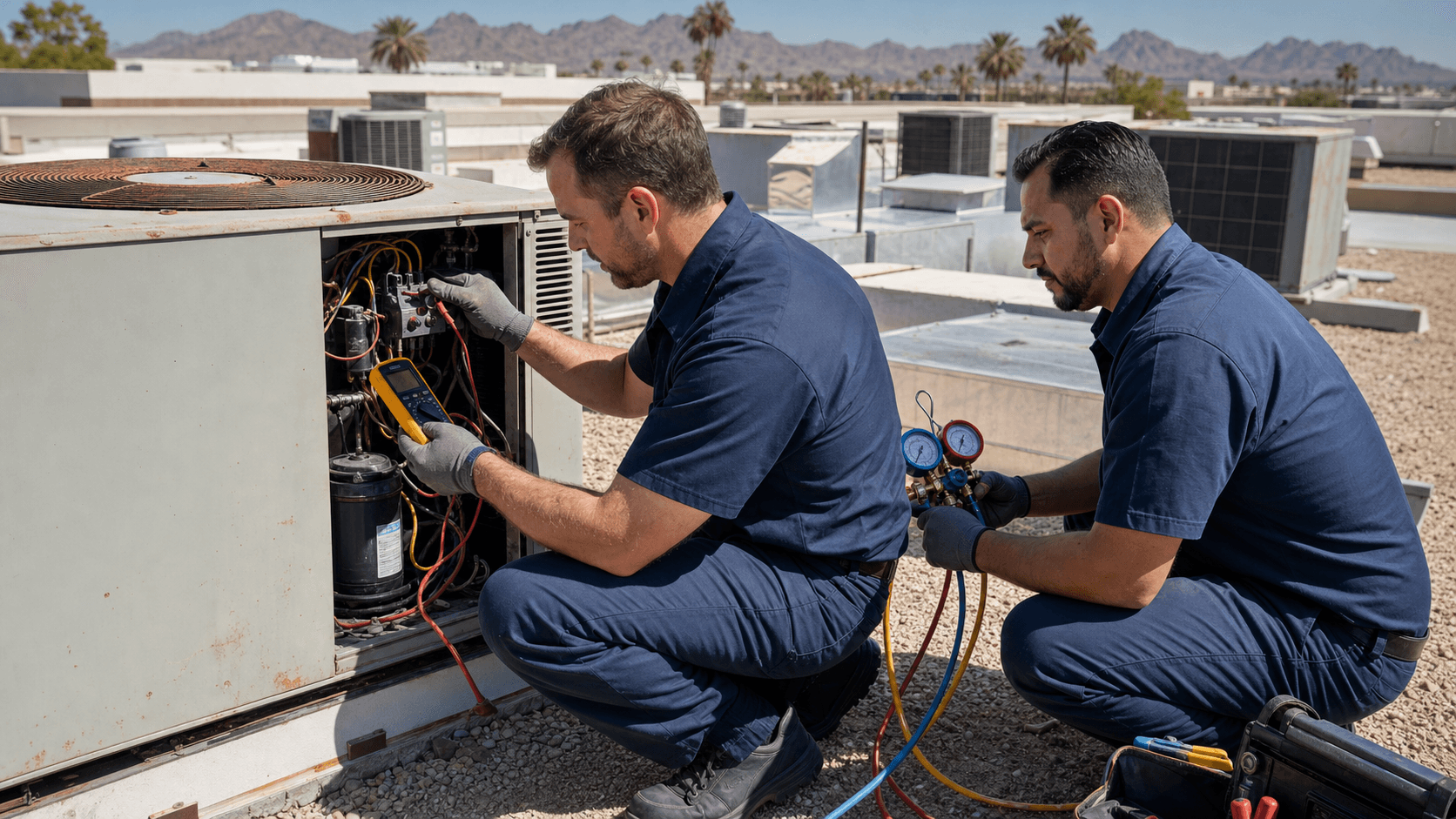
On Phoenix rooftops, capacitors and contactors are some of the most common failure points. Capacitors store a small charge to help motors start and run, and contactors are essentially heavy-duty switches that bring power to the compressor and fan. With constant thermal cycling and sun-baked metal panels, these parts age faster. Contacts pit and burn, capacitors swell or leak, and motors struggle to start.
Common field symptoms that managers may notice or hear about include:
- The outdoor fan not spinning while the compressor hums
- The unit trying to start repeatedly, then shutting off
- Hotter suites mainly in late afternoon when rooftop temperatures peak
Before a technician arrives, managers can take a few simple steps:
- Confirm that the electrical panel feeding the unit is on and not tripped
- Check whether multiple units are down, which might point to a larger power issue
- Ask tenants when they first noticed problems, and whether it is constant or time-of-day-specific
Inside the unit, belts and blower assemblies are another big driver of comfort complaints. Many older and mid-range rooftop units in Phoenix use belt-driven blowers. When belts slip, glaze, or break, airflow drops even if the unit is technically "on."
Technicians often find:
- Loose or misaligned belts that reduce airflow and create hot and cold spots
- Worn pulleys and dirty, unbalanced blower wheels that increase motor amps
- Blower motors overheating and tripping thermal overload because of dirty filters and neglected maintenance
Tenants will usually describe these issues as:
- "The back of the store is roasting compared to the front"
- Air that feels weak or "barely moving" even with the thermostat set low
- Comfort problems that come and go as belts slip more under load
The good news is that belts and basic motor checks are relatively inexpensive. Incorporating belt replacements and motor amp checks into regular maintenance often prevents noisy, disruptive failures during business hours.
Managing Tenant Comfort Complaints and Preventive Maintenance
Handling complaints well is just as important as fixing the equipment. We recommend a simple internal process:
- Decide who logs the call and who is allowed to request service
- Collect details: time of day, areas affected, thermostat reading, and how long the problem has been happening
- Note which suite number is affected and which rooftop unit serves that space
In Phoenix strip centers, we see common patterns:
- Heat complaints right after move-in because expectations and thermostat settings are not aligned
- West-facing glass bays that run warmer in the afternoon even when units are working correctly
- Issues that only show up on the hottest days, exposing weak components or marginal airflow
Working with your commercial HVAC in Phoenix, AZ, service provider to tag each rooftop unit by tenant suite is a simple project that saves time later. Clear labels at the thermostat, in the electrical panel, and on the rooftop unit let everyone speak the same language during a no-cool call.
Preventive maintenance is where most of the emergency calls can be reduced. For rooftop units on a Phoenix strip center, a realistic plan usually includes:
- Cleaning condenser coils to keep head pressure down
- Inspecting and replacing belts as needed
- Checking capacitors, contactors, and electrical connections
- Verifying refrigerant charge and checking for obvious leaks
- Clearing condensate drains and checking blower motor amps
In our climate, many multi-tenant centers benefit from at least two visits per year, typically spring and late summer. During those visits, technicians often catch things like weak capacitors, nearly snapped belts, and severely pitted contactors that are just waiting for a 4 p.m. failure on a busy sales day.
Budget Planning and Your Next Steps Before the Next Heat Wave
For property managers juggling multiple aging units, planning ahead helps avoid surprises. Working with a commercial HVAC partner to create a simple asset list is a smart first step. That list might include unit location, tenant served, tonnage, age, refrigerant type, and a high-level condition rating.
From there, you can start to:
- Prioritize units that serve key anchor tenants or high-revenue spaces
- Decide when a major repair is justified versus planning for replacement
- Recognize when repeated minor fixes signal that a unit is near the end of its useful life
A practical approach is to set aside funds each year for expected repairs while mapping out a 3- to 5-year schedule for replacing the oldest, least reliable units. Many managers try to align rooftop replacements with roof work to avoid paying for crane and access setup twice.
In a typical Phoenix strip center with several 12- to 15-year-old units that see frequent capacitor, motor, and belt issues, phased replacement often makes more sense than running every unit to failure. By combining unit mapping, consistent maintenance, and realistic budgeting, you can reduce emergency calls, keep tenants more comfortable, and make better long-term decisions about your rooftop equipment.
Get Started With Your Project Today
If you are planning upgrades, new construction, or a retrofit, we are ready to help you design and maintain reliable commercial HVAC in Phoenix, AZ. At Frosty Fox AC, we focus on efficient systems that keep your tenants, staff, and customers comfortable in the toughest summer conditions. Reach out to our team today to discuss your goals, explore options that fit your budget, and schedule a convenient on-site assessment of your building.