Why Arizona Businesses Cannot Ignore HVAC Maintenance
Commercial HVAC systems in the Phoenix metro do not get an easy break. When outdoor temperatures push past 110 degrees and rooftop surfaces get even hotter, your equipment is working at full load for long hours. If you own or manage a restaurant, office, warehouse, retail store, or multi-tenant building, that cooling is not a convenience; it is part of how you stay open and productive.
This article walks through why preventive maintenance for commercial HVAC systems matters so much in Arizona heat, what a solid plan should include, and how it protects your revenue, equipment, and energy budget. As a licensed HVAC contractor serving businesses across the Phoenix area, we see every day how smart maintenance separates comfortable facilities from those dealing with constant AC emergencies.
How Preventive Maintenance Protects Your Bottom Line
In Arizona, HVAC downtime is not just uncomfortable, it is expensive. When systems fail during peak afternoon hours, businesses feel the impact almost immediately.
Downtime and lost revenue are often the first and most visible hit. When a dining room starts to feel like an oven, customers leave quickly and online reviews can suffer. Grocery and convenience stores have to worry about product safety if indoor temperatures rise. Warehouses and distribution centers can run into worker comfort issues, which slows productivity.
Preventive maintenance also extends equipment life, which matters because commercial units in our area run under heavy load for much of the year. Regular inspections, cleaning, and adjustments reduce strain on common failure points in rooftop units and split systems around Phoenix, including:
- Compressors
- Fan motors
- Belts and pulleys
- Electrical components
Another major financial driver is energy use. Dirty condenser and evaporator coils, restricted filters, or low refrigerant charge force equipment to run longer and draw more power. That can lead to:
- Higher kWh usage
- Increased demand charges
- Hot and cold spots that make tenants keep lowering thermostats
Preventive maintenance helps systems run closer to their design efficiency, and it also reduces the number of emergencies you face. Finding weak components before the hottest weeks arrive means fewer late-night or weekend breakdowns, and emergency calls are harder on both operations and budgets than planned service. For many properties, the cost of a structured maintenance plan is small compared to one or two major outages during peak summer.
What a Commercial HVAC Maintenance Plan Should Include
A commercial HVAC maintenance plan in Arizona should be tailored to desert conditions and to the specific mix of equipment on your property. Basic checkups are not enough when systems sit on sun-soaked roofs and run nearly year-round.
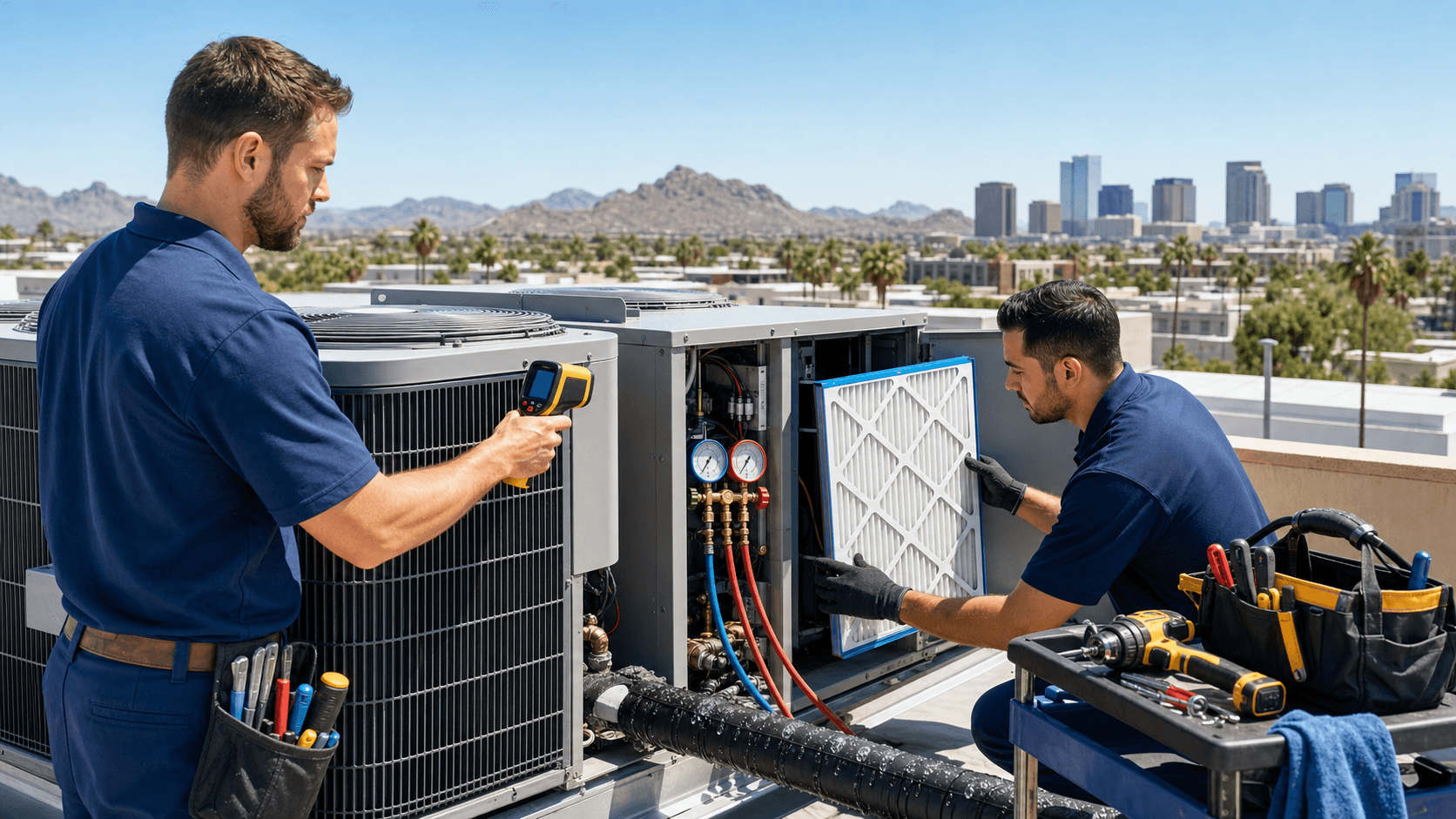
Seasonal tune-ups should be suited to Arizona conditions and include:
- Coil cleaning to remove dust and debris that collect faster in dry air
- Refrigerant level checks to confirm the charge is within manufacturer range
- Inspection and tightening of electrical connections stressed by high heat
- Verification of condenser fan operation and amp draws on rooftop units
Rooftop units (RTUs) are especially common on offices, retail centers, and light industrial buildings from Phoenix to Tempe and Mesa, so critical RTU inspections should be part of the plan. Techs should inspect:
- Cabinet panels and seals for sun and heat damage
- Fan belts, pulleys, and bearings for wear and tension
- Drain pans and condensate lines for clogs or standing water
- Economizer operation where installed, to make sure dampers and sensors respond correctly
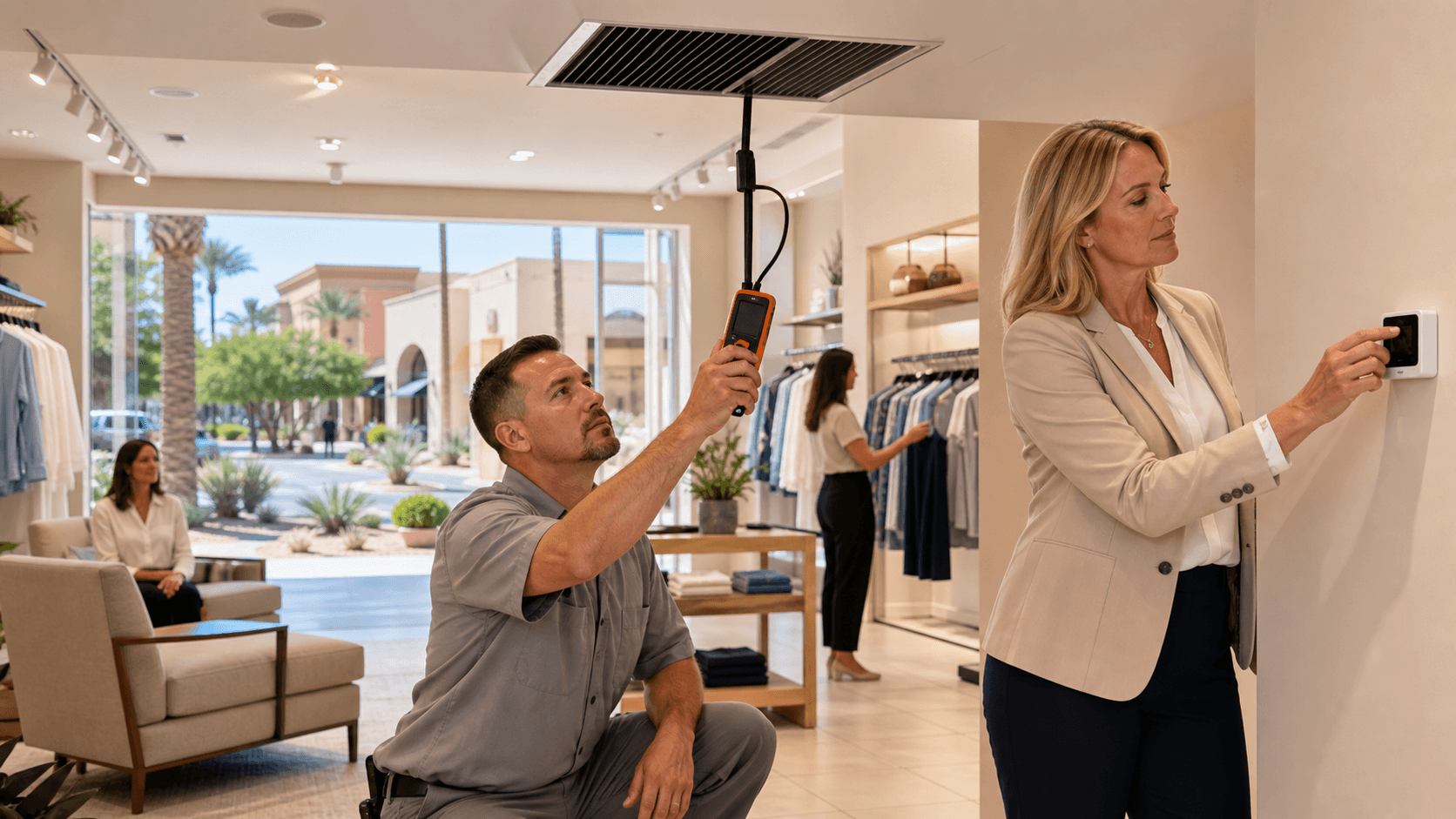
Airflow and controls deserve attention as well, because even a well-maintained mechanical system cannot perform if air is not moving correctly. Filters sized for commercial equipment should be changed on a schedule that reflects dust levels and occupancy, supply and return airflow should be checked to confirm zones are getting what they need, and thermostats and building controls should be calibrated and programmed for actual operating hours, not default settings.
Finally, documentation and reporting should not be an afterthought. Each visit should result in a clear report that notes:
- Work completed
- Components that show early signs of wear
- Recommended repairs or upgrades
This documentation helps managers track trends across seasons and plan work before components fail completely.
Arizona Specific Challenges for Commercial HVAC Systems
Commercial HVAC systems in the Phoenix area face stresses that are very different from cooler or coastal climates. Ignoring those local factors leads to higher failure rates.
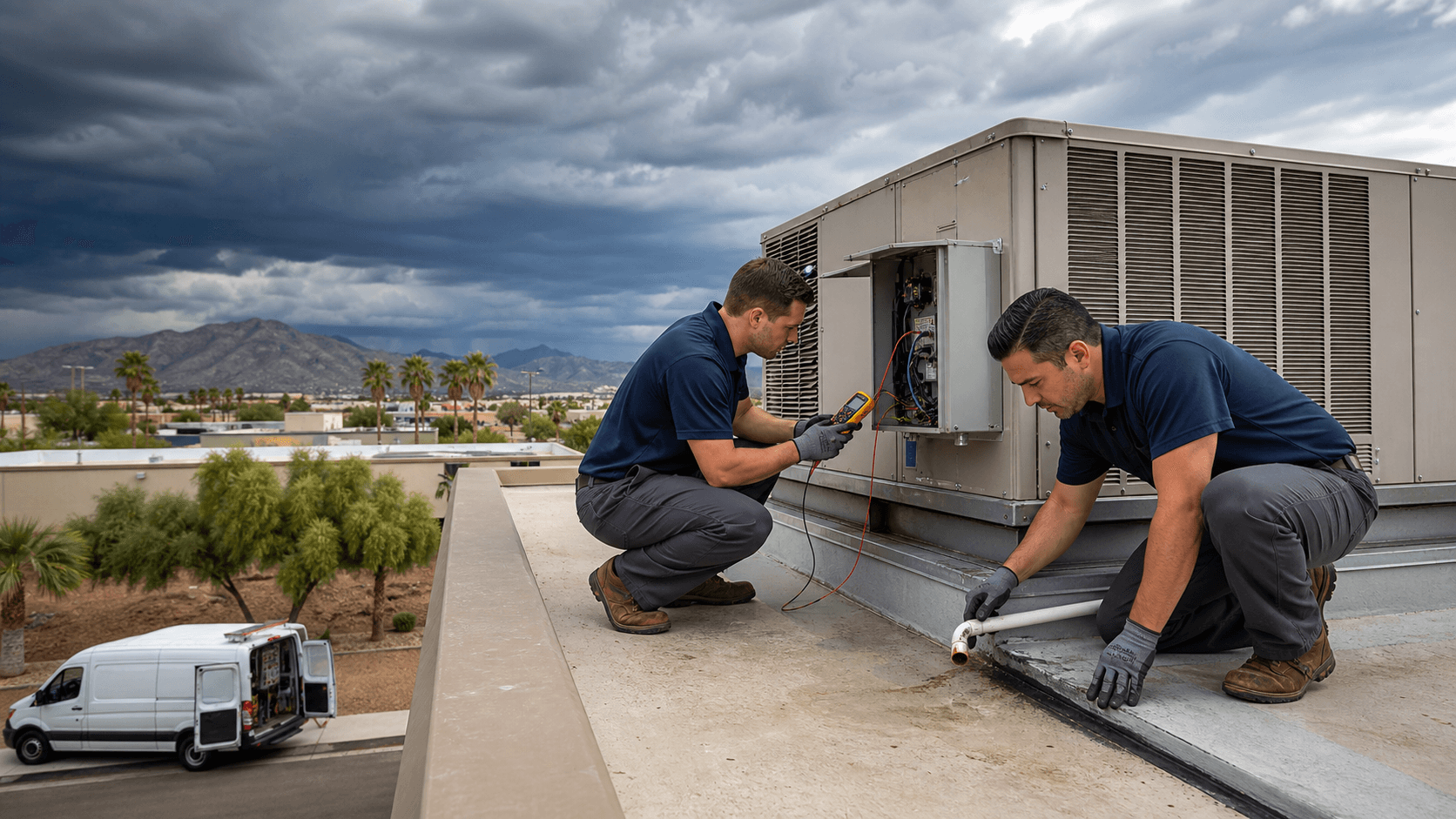
Extreme rooftop exposure is one of the biggest issues. Dark or unshaded roofs in Phoenix, Glendale, and nearby cities can reach very high surface temperatures, and that heat impacts:
- Unit cabinets and insulation
- Wiring and electrical connections
- Rubber and plastic parts, gaskets, and fan motor components
Over time, this exposure can cause cracking, warping, or premature aging.
Dust, monsoon storms, and debris also create unique maintenance demands. Dust storms and monsoon outflows can push large amounts of dirt and debris into outdoor coils, filters, drain pans, and rooftop curbs. This buildup restricts airflow and drainage, which stresses compressors and can trigger shutdowns.
High runtime and long cooling seasons add another layer of risk. Many commercial systems in Arizona operate from early morning until late evening for most of the year, with very little true off-season. That means maintenance windows need to be planned carefully so work gets done without affecting occupied hours.
Property type also changes the failure risks and what maintenance needs to focus on. Restaurants combine kitchen heat loads with frequent door openings, which creates heavy cooling demand, while retail storefronts experience constant doors opening and closing that makes temperature control challenging. Offices concentrate people and computer loads in relatively small spaces, and warehouses and distribution centers have high ceilings, large doors, and sometimes mixed-use spaces like offices or break rooms. Each of these environments calls for slightly different maintenance attention and scheduling.
Building a Smart Maintenance Schedule for Your Facility
A good maintenance schedule is not one-size-fits-all. It should match both your equipment and how your building operates.
The right visit frequency often depends on building type and load:
- Restaurants, grocery stores, and high-traffic retail often benefit from quarterly visits because of higher loads and filter changes.
- Offices and smaller retail spaces may do well with at least biannual service, often in spring and fall.
- Warehouses with large RTUs might opt for more frequent inspections during peak season if equipment is older or heavily loaded.
To reduce disruption, maintenance can often be coordinated around business operations by scheduling service during:
- Early mornings
- Evenings
- Slower weekdays
A consistent plan also supports capital planning, because it gives you better visibility into:
- Which units are nearing the end of their service life
- Components that are likely to need replacement soon
- Opportunities to phase upgrades instead of facing multiple surprises at once
This information is valuable for both owners and property managers when they create budgets.
Choosing a partner for HVAC services in Phoenix, AZ is another part of building a smart schedule, because responsiveness and reporting affect how well a plan works over time. When you evaluate a commercial HVAC contractor, it helps to look for:
- Experience with rooftop units and light commercial systems common in Arizona
- 24/7 support when emergencies do occur
- Clear communication and written reports
- Service agreements that can be tailored to your building type and schedule
As a local licensed HVAC contractor, we see how much smoother operations run when there is a long-term service relationship in place.
When to Call for Commercial HVAC Service in Phoenix
Even with a strong preventive plan, there are times when you need professional help between scheduled visits. Spotting early warning signs keeps small issues from becoming full failures.
Watch for:
- Uneven cooling or persistent hot spots in certain parts of the building
- Utility bills climbing without changes in occupancy or hours
- Short cycling, where units start and stop frequently
- Unusual noises from rooftop units, like squealing belts or rattling panels
- Breakers that trip more than once for the same unit
- Repeated complaints from tenants, employees, or customers about comfort
On-site staff can often handle basic tasks, such as:
- Changing filters on the schedule recommended by your contractor
- Keeping outdoor areas around ground-level equipment clear of trash and loose debris
- Reporting unusual noises, smells, or water leaks quickly
Work involving refrigerant, electrical components, or accessing rooftops should be left to licensed technicians. Commercial HVAC systems are complex, and incorrect DIY fixes can create bigger problems or safety risks.
Having an established relationship for commercial HVAC service in Phoenix means your provider already understands your equipment, site access, and operating hours. That leads to faster troubleshooting and better decisions when emergencies happen. Preventive maintenance reduces how often you face those stressful moments and how severe they are when they occur.
Secure Comfort and Reliability Before the Next Heat Wave
For Arizona businesses, preventive maintenance on commercial HVAC systems is not just a line item, it is a way to protect comfort, safety, and profitability. Regular inspections and tune-ups help equipment last longer, run more efficiently, and stay reliable when the desert heat is at its worst. Employees stay more productive, customers stay longer, and tenants have fewer reasons to complain.
Waiting until the first long stretch of 110-degree days to think about maintenance puts restaurants, retail stores, offices, and warehouses at higher risk for breakdowns and emergency calls. A consistent, well-planned maintenance approach gives you better control over costs and fewer surprises during the hottest months. For commercial property owners and managers across the Phoenix metro, investing in preventive maintenance is one of the most effective ways to keep HVAC systems ready for the next heat wave.
Get Started With Your Project Today
If you are ready to make your home more comfortable and efficient in every season, we are here to help guide the process from start to finish. At Frosty Fox AC, we take the time to understand your home's unique needs so you get solutions that actually fit your space and budget. Explore our full range of HVAC services in Phoenix, AZ to schedule maintenance, repairs, or a new system installation that keeps your indoor air feeling just right. Reach out today so we can help you move from quick fixes to a reliable, long-term comfort plan.