Gilbert retail tenants know right away when the AC is struggling. By mid-afternoon, the sun is blasting the storefront glass, doors are opening nonstop, and rooftop units are running almost without a break. For commercial landlords and retail property managers, that pressure shows up as hot complaints, short tempers, and calls that feel like emergencies even if the equipment is still technically running.
We want to walk through what commercial HVAC in Gilbert, AZ, really means for tenant comfort. Not just thermostat numbers, but how the system is set up, how it is maintained, and how it is planned over time. When those pieces line up, you see longer shopping visits, fewer after-hours calls, and tenants who are much more likely to renew their leases.
Why Gilbert Retail Tenants Feel HVAC Issues Faster
Late summer in Gilbert is tough on retail spaces. By August, many suites are dealing with long AC run times from late morning until closing, strong sun loading on big glass storefronts, and crowded shopping centers during peak hours.
Our focus here is commercial landlords and retail property managers who oversee multi-tenant buildings, strip centers, and standalone stores. You live in the middle of the complaints when a store feels stuffy, even if the rooftop unit is technically operating.
In real life, a few things happen very quickly when comfort slips. Customers cut visits short because the store feels heavy and warm, sales staff complain about hot zones (especially near the entrance), and tenants call in "broken AC" tickets even though the unit is still cooling, just not enough.
So commercial HVAC in Gilbert, AZ is not only about hitting 74 degrees at some point in the day. It is about:
- Predictable comfort from open to close
- Reasonable operating costs for the tenant
- Fewer urgent "AC is down" calls right in the middle of the afternoon rush
How Commercial HVAC in Gilbert AZ Impacts Retail Revenue
A small temperature swing can shift how customers behave. In a clothing shop, a warm fitting room can mean fewer items tried on. In a salon, sticky, warm air can push people to rebook less often. In a small grocery or convenience store, even a little extra heat near the coolers makes shoppers move faster instead of browsing.
We see common patterns in local centers, including a west-facing boutique that overheats from mid-afternoon to early evening (just when people get off work), a nail or hair salon where the thermostat is a constant battle between staff who run hot and customers who feel chilled under ceiling vents, and a convenience store where refrigeration cases dump extra heat into the sales floor and push the AC to its limits.
When comfort is unreliable, friction builds between you and your tenants. You may deal with frequent complaint calls and emails, after-hours emergency requests when the store feels unbearable, and pressure for rent breaks or credits because "the AC never works" during peak summer.
On the flip side, stable, well-tuned commercial HVAC in Gilbert, AZ helps:
- Reduce tenant turnover
- Make renewals less stressful
- Market vacant suites as "move-in ready" with reliable cooling
That kind of stability matters a lot more to tenants than small differences in rent.
Key HVAC Design and Setup Factors Retail Tenants Notice
Many comfort problems start with design and setup, not just age of the unit. Around the greater Phoenix area, we often see retail issues like undersized systems after a suite was expanded or combined with a neighbor, weak airflow at front doors so hot air floods in with every opening, and thermostats installed in back offices instead of the main customer area.
Where the air comes in and where it goes out makes a big difference. Supply registers, return air grilles, and thermostat placement all affect the part of the store that actually matters:
- The front-of-house where customers browse
- The checkout counter where staff stand for hours
- Fitting rooms and service chairs where people sit still
Common field findings in existing suites include blocked returns hidden behind storage racks or backroom shelving, supply diffusers blowing directly on customers at checkout or waiting areas, and remodeled spaces where walls moved but the HVAC setup never changed.
Practical steps landlords and managers can take with their HVAC contractor include:
- Walking each problem suite during peak afternoon heat, not early morning
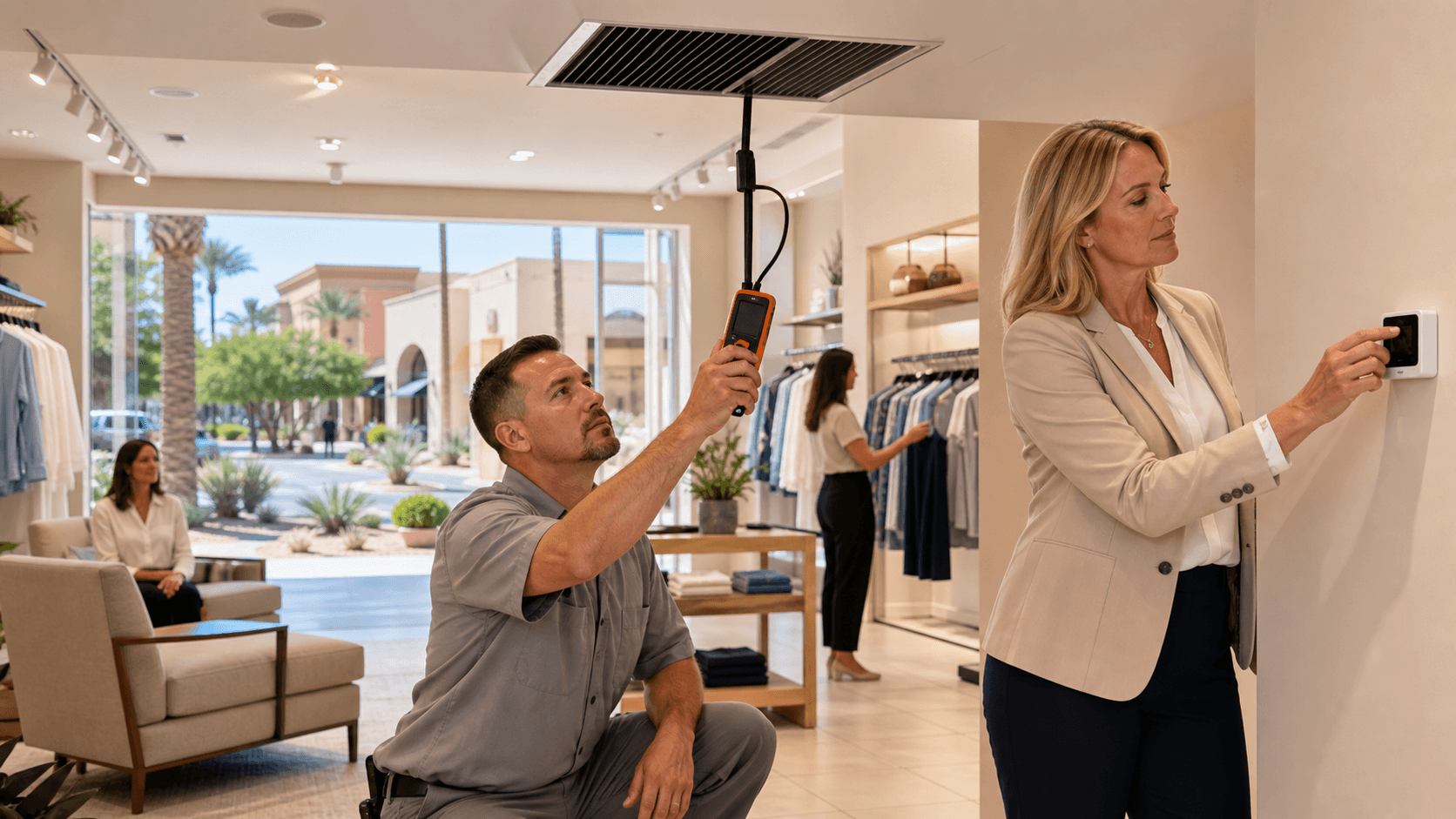
- Checking airflow at the entrance, fitting rooms, and register areas
- Verifying that thermostat locations reflect actual occupied zones instead of quiet backrooms
Those small checks often reveal why one tenant feels "hot all the time" even though the thermostat looks fine.
Maintenance Habits That Quiet Tenant Complaints
In Gilbert retail centers, a realistic maintenance rhythm makes a huge difference. For most properties, that means:
- At least spring and fall preventive visits
- Extra filter checks during summer, especially for dusty locations or suites with constant door traffic
- Paying closer attention to spaces with refrigeration equipment inside the store
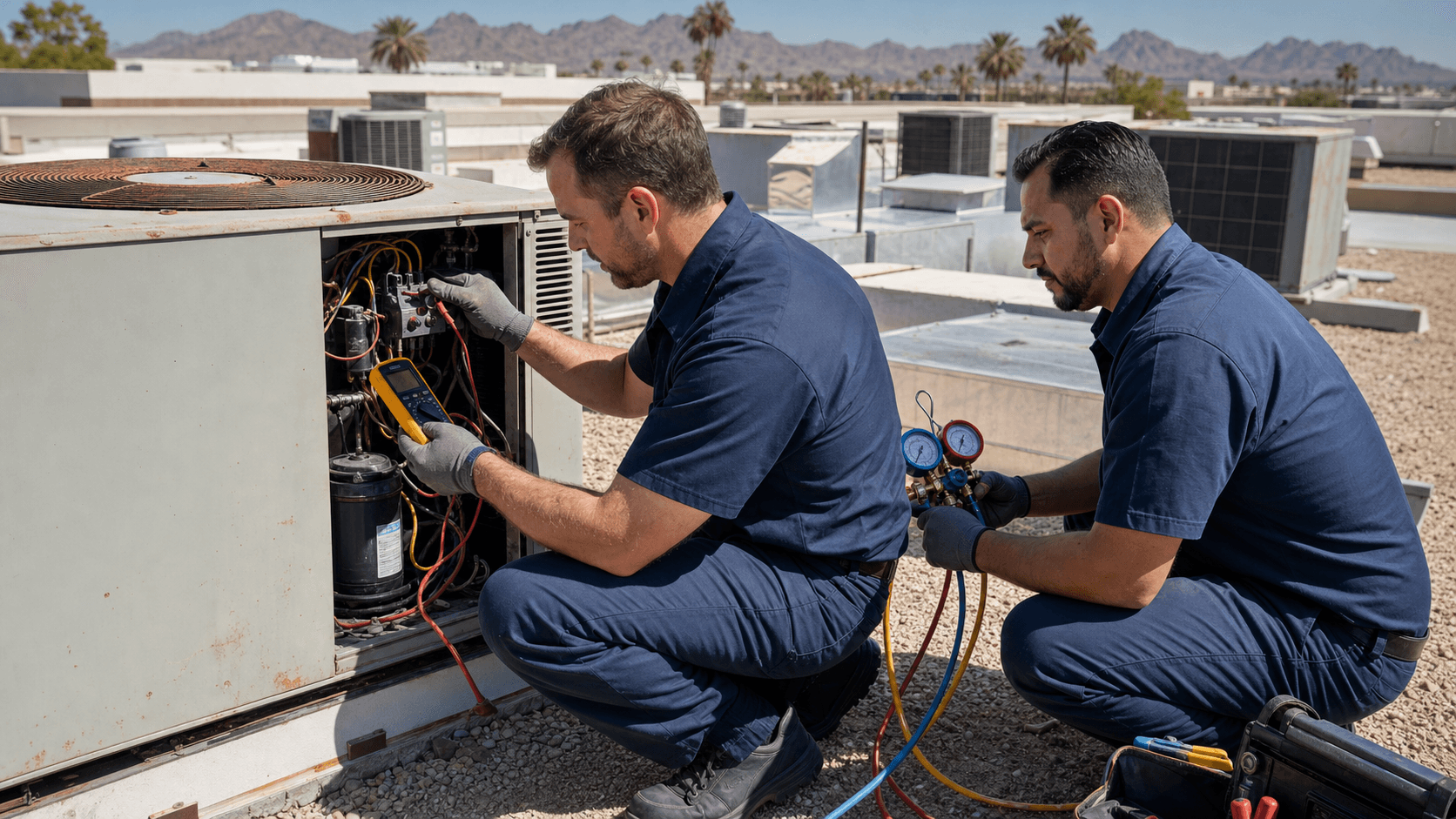
During commercial maintenance visits, technicians commonly find:
- Clogged filters cutting airflow across the coil
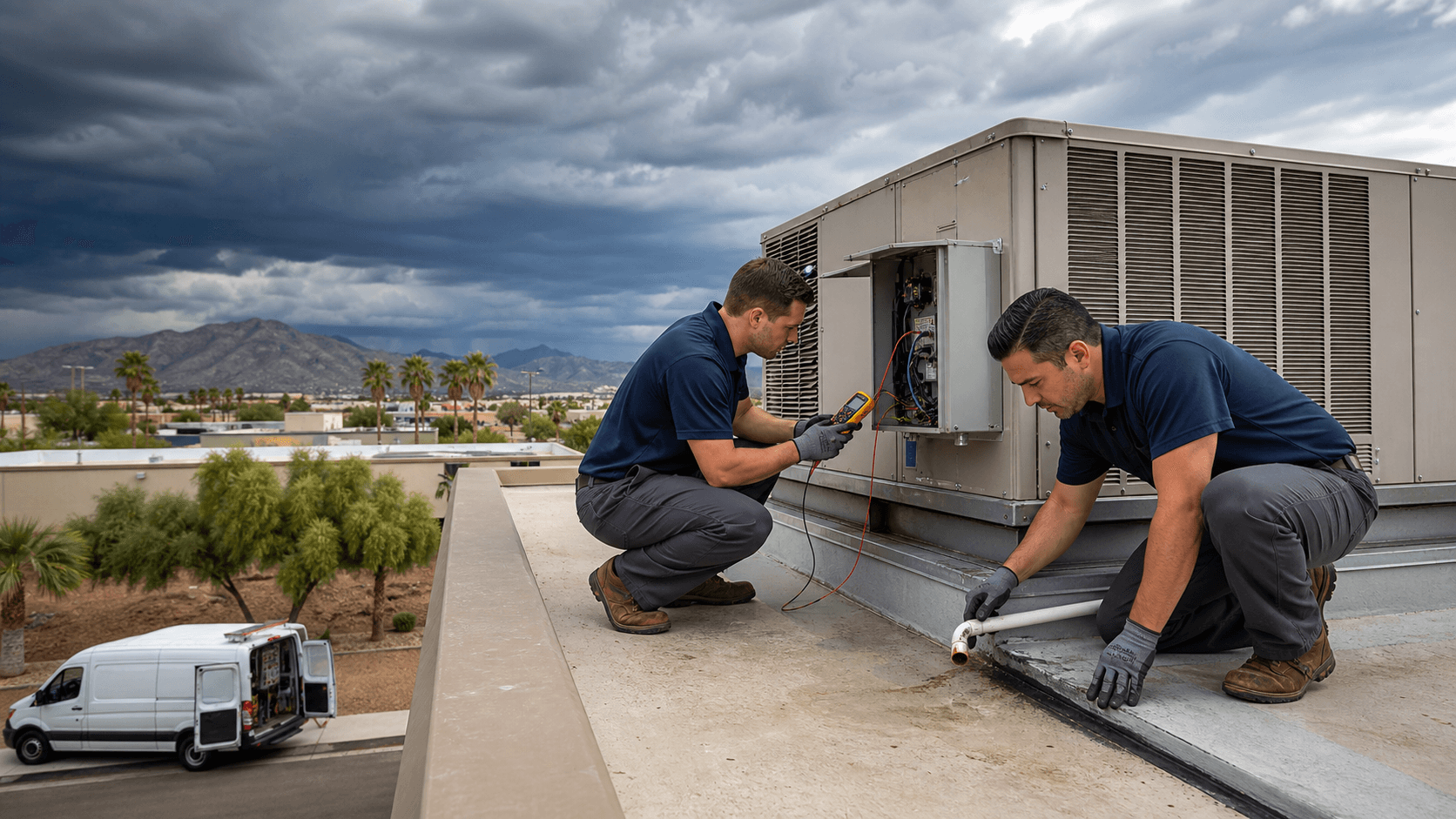
- Dirty condenser coils baking on rooftop units under direct sun
- Low refrigerant charge from slow leaks
- Condenser fan motors that fail after long, hard run hours
Tenants feel those issues in very specific ways. They report that "the AC runs all day but never gets comfortable," notice hot and cool aisles only a few feet apart, and deal with humidity building up in fitting rooms or closed-off corners. In some suites, musty odors show up after closing when the system cycles down.
Documenting maintenance for each suite and unit helps you long term. A log for each rooftop unit or split system gives you:
- Faster troubleshooting when tenants change and you inherit old problems
- Better support for warranty questions with manufacturers
- Clear data to decide when a unit should be replaced instead of patched again
Without that record, every summer feels like starting from zero on the same problem units.
Planning Capital Upgrades Before Tenants Lose Patience
Rooftop units in the Phoenix area work hard. High heat, dust, and long daily run times shorten their useful life compared to cooler, milder climates. That is especially true for retail systems that run full blast during busy hours and rarely get a break.
Landlords and property managers can get ahead of this by working with a commercial HVAC contractor to rank systems by:
- Age and model type
- Repair history and frequency of service calls
- Tenant sensitivity, such as high-end boutiques, medical retail, or salons that depend heavily on comfort
There are clear warning signs that a unit is moving from "repair" to "replace soon" territory:
- Repeated compressor trips or nuisance lockouts
- Rising electric bills for the same suite usage
- Increased unit noise on the roof or inside the store
- The same tenant calling every summer with comfort complaints
Proactive replacements can often be scheduled:
- Between tenants during build-outs
- During slower business periods or off-peak hours
That planning reduces downtime, avoids dramatic mid-summer failures, and keeps HVAC problems out of rent negotiations as much as possible.
Next Steps to Stabilize Comfort in Your Gilbert Retail Centers
For retail properties around Gilbert, the best next move is usually a focused comfort and performance review. Start by listing your "hot tenants," problem suites, and units that needed repeat service over the last few seasons. That short list becomes your roadmap.
From there, a commercial walk-through with a contractor like Frosty Fox AC can bring together equipment condition, maintenance history, and obvious airflow or thermostat issues. With that information, it becomes much easier to build a tailored maintenance program and a phased replacement plan that keeps cooling reliability, tenant comfort, and operating costs working together instead of fighting each other every summer.
Get Started With Your Project Today
If your building is ready for more reliable comfort and efficiency, we are here to help you plan the right solution. Explore our commercial HVAC in Gilbert, AZ services to see how Frosty Fox AC can support your facility's needs. We will walk you through system options, timelines, and costs so you can move forward with confidence. Reach out today and let our team put together a practical plan for your next HVAC project.