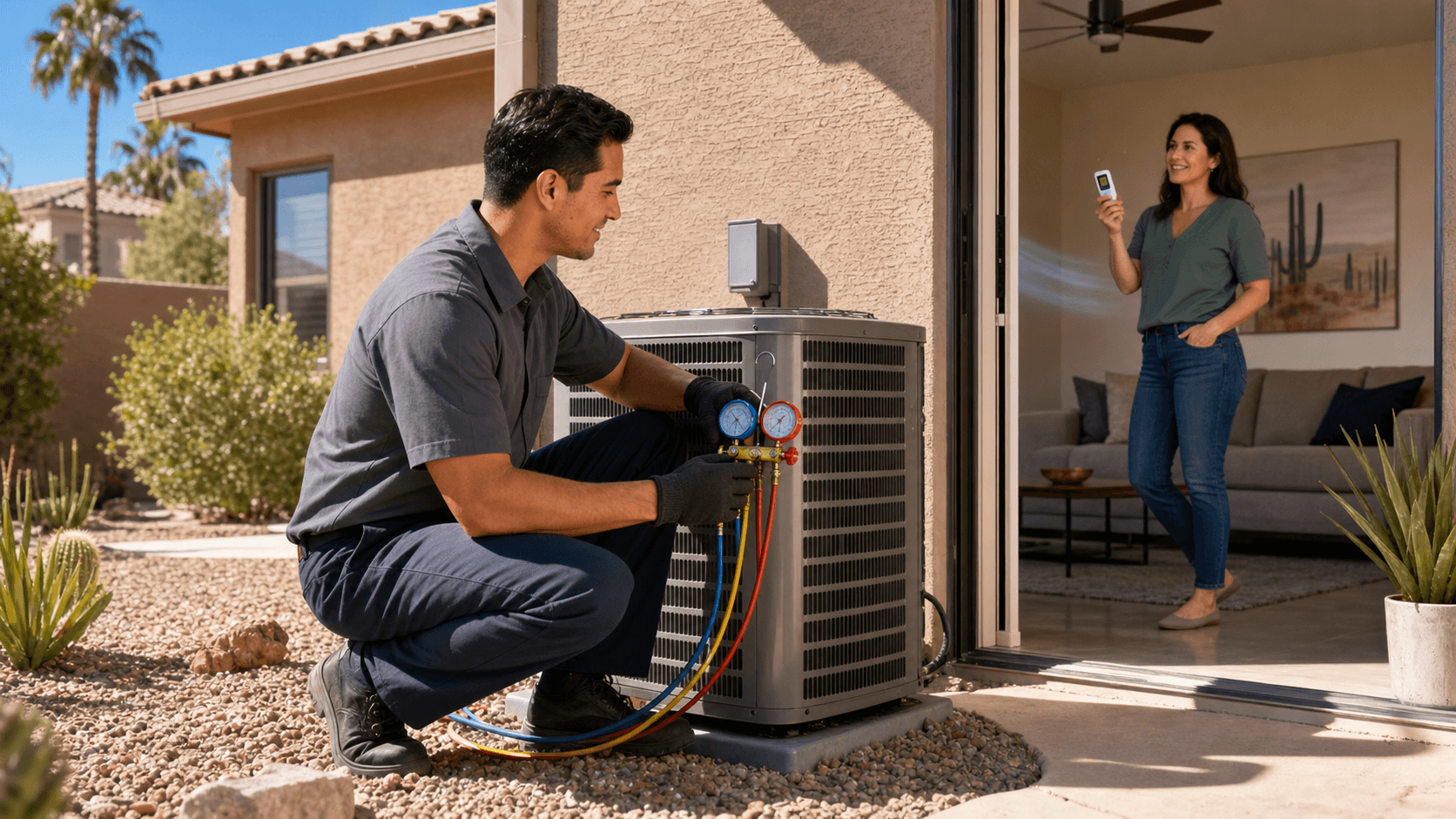
Why Your AC Runs Nonstop in Arizona Summers
Air conditioners in the Phoenix area have a hard job. When afternoon temperatures soar into the 110s and the sun bakes your home or building until well into the evening, it is normal for your AC to run a lot just to keep things livable. That can make it tough to know where the line is between normal heavy use and a system that needs help.
In this article, we will walk through what is normal for an AC in Arizona heat, what is not, and the common issues that cause nonstop operation. We will cover dirty coils, restricted airflow, undersized equipment, refrigerant problems, thermostat settings, and how extreme outdoor temperatures affect HVAC efficiency in our desert climate. Our goal is to help you decide when simple adjustments are enough and when it is time to call a professional HVAC technician.
When a Constantly Running AC Is Actually Protecting You
On brutal summer days in Phoenix and the surrounding cities, the outdoor air can stay above 100 degrees for most of the day, with nights that barely drop below the 90s. Roofs, patios, and parking lots store heat, then radiate it back into homes and commercial buildings for hours.
In those conditions, a healthy AC system often has to run long, almost continuous cycles during the hottest part of the afternoon and early evening. That is the system working hard to keep indoor temperatures at a safe level, not necessarily a sign of failure.
There are times when constant operation is actually your friend, such as during:
- Prolonged heat waves with temperatures deep into the triple digits
- Late afternoon in west-facing homes, storefronts, or office spaces
- Busy restaurant kitchens or grocery stores with constant door traffic
Where we start to get concerned is when the AC is running nonstop and you still feel uncomfortable. That is usually the tipping point between "working hard" and "needs professional attention."
Normal Vs Not Normal: How Long Should Your AC Run?
On milder spring days, you may notice your AC cycling on and off with comfortable breaks in between. Once we move into peak summer, seeing your system run for long stretches in the afternoon is expected, especially between midday and late evening.
Continuous or near-continuous operation can be reasonable when:
- The outdoor temperature is much hotter than your thermostat setting
- You have rooms with big glass windows facing west or south
- You are cooling high-occupancy areas like restaurants, retail, or offices
It starts to look not normal when:
- The AC cannot reach the temperature you set on the thermostat
- It runs all night without cycling off, even when it is cooler outside
- Indoor humidity feels sticky or clammy instead of dry and comfortable
Before calling for service, there are a few simple checks to make:
- Confirm the thermostat is on "cool" and set to a realistic temperature
- Make sure windows and doors are closed, especially in busy commercial spaces
- Close blinds or sunscreens on sun-facing windows during peak sun
- Check and replace dirty air filters if needed
If those quick steps do not change anything, that points more toward a system issue that may need professional diagnosis.
Dirty Coils, Restricted Airflow, and Strain on Your System
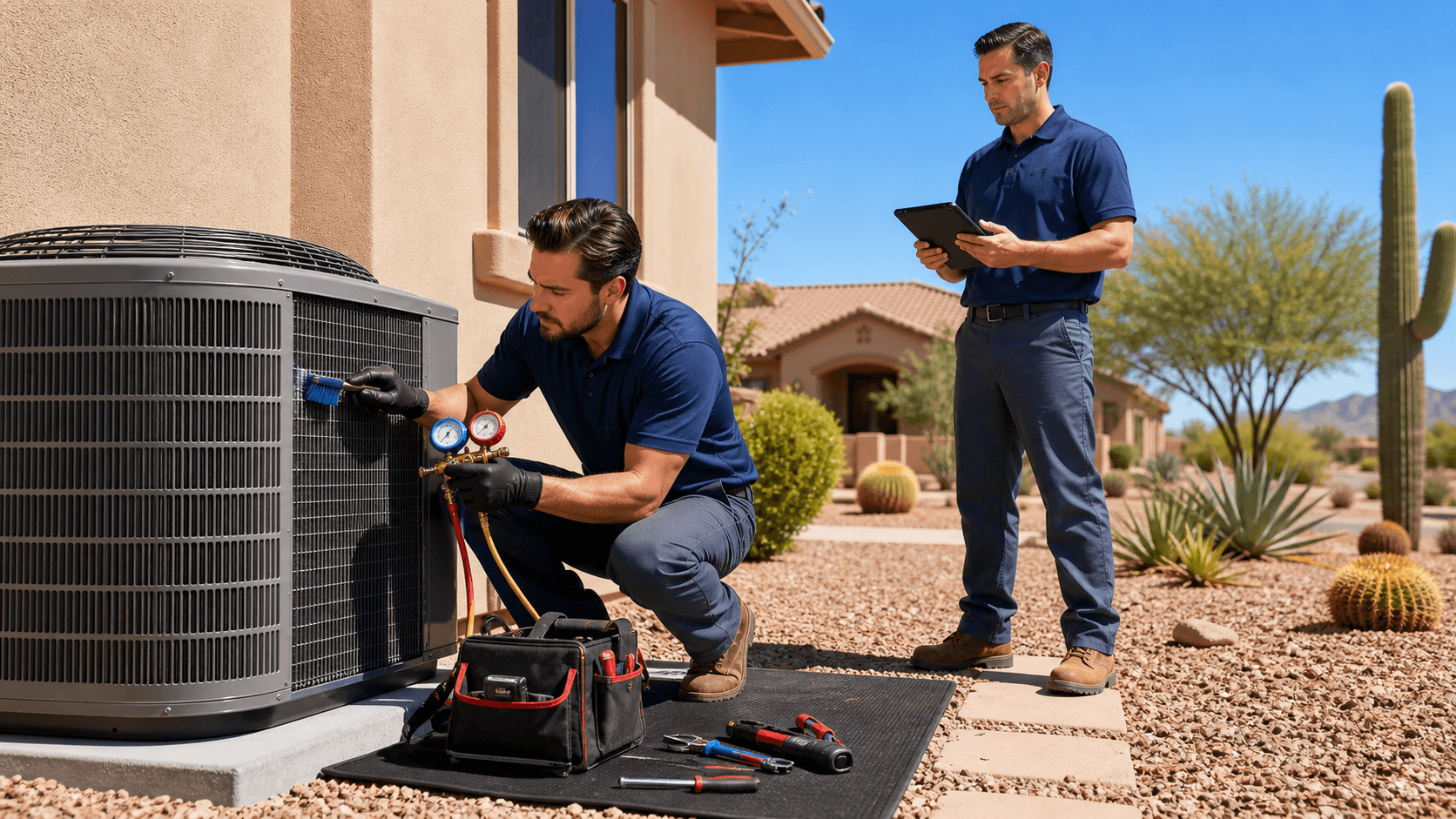
Arizona dust is brutal on outdoor condenser coils. Over time, dust, pollen, and monsoon debris can coat the fins of the outside unit. When those coils are dirty, your system has a harder time dumping heat outdoors, so it has to run longer to produce the same cooling.
Inside, restricted airflow causes similar trouble. Common airflow problems include:
- Clogged or overdue air filters
- Supply or return vents blocked by furniture, boxes, or displays
- Mechanical rooms packed with storage that limits air movement around equipment
When air cannot move freely, cooling capacity drops and run times stretch out. You might notice:
- Hotter rooms at the far ends of homes, strip malls, or offices
- Rising energy bills with no change in thermostat settings
- Louder or more stressed-sounding fans and equipment
Over time, this extra strain is hard on compressors and fan motors, especially in restaurants, office buildings, and retail spaces that already deal with higher internal heat loads.
Undersized Systems and Arizona Building Realities
Undersized AC units are another reason systems run almost nonstop. Sometimes a home or commercial space is expanded, a garage is converted, or a tenant build-out adds more heat-producing equipment, but the original HVAC system is never upgraded to match the new load.
In those cases, the AC can run flat out and still struggle to keep up. It may eventually cool the space at night, but lose ground every afternoon.
In many Phoenix-area homes and businesses, additional factors like large west-facing glass, older insulation, and very high internal heat loads from cooking equipment or refrigeration can also make a properly sized system feel overwhelmed during peak heat. The result is the same for the person paying the bill: the system runs and runs while comfort never quite gets where it should.
Refrigerant, Thermostats, and Extreme Heat Working Together
Low refrigerant or an incorrect refrigerant charge reduces your system's ability to move heat. Instead of strong, cool air, you get lukewarm airflow from the vents, and the unit never seems to shut off. You may also see ice forming on refrigerant lines around the air handler or outdoor unit.
Thermostat settings and location matter as well. Common thermostat-related issues include:
- Setting the target temperature unrealistically low, such as under 72 degrees on extreme heat days
- Fan set to "on" instead of "auto," which keeps the blower running even when the compressor is off
- Thermostat installed in direct sunlight, near kitchen equipment, or near frequently opened doors
All of this happens against the backdrop of Arizona's extreme outdoor temperatures. When it is around 115 degrees or higher outside, even a healthy, properly charged system may run nearly nonstop in the afternoon just to hold the line at a safe indoor temperature in the mid to upper 70s.
Boosting HVAC Efficiency in Arizona Without Overworking it
You cannot change the Phoenix sun, but you can ease the load on your AC so it does not have to run quite as hard. Some practical, Arizona-friendly steps include:
- Shade or sunscreens on west and south-facing windows
- Sealing gaps around doors and windows to reduce hot air infiltration
- Improving roof and attic insulation where possible
Thermostat strategy also helps. Many homes and businesses find better comfort and efficiency by:
- Setting thermostats in the 75 to 78 degree range on extreme heat days
- Using programmable or smart thermostats to reduce big temperature swings
- Avoiding constant temperature setbacks that force the system to "catch up" during peak hours
Finally, basic maintenance habits go a long way toward HVAC efficiency in Arizona:
- Changing filters more often during dust storms or high-use periods
- Scheduling seasonal professional tune-ups before the hottest months
- Keeping outdoor units clear of gravel, weeds, and trash
These steps often prevent small issues from turning into emergencies that leave your system running nonstop without keeping you comfortable.
When to Call for Professional AC Service
Even with good habits, there comes a point where a professional needs to step in. Signs that it is time for service include:
- AC runs nonstop yet never reaches the set temperature
- Warm or barely cool air coming from vents
- Ice buildup on refrigerant lines or the outdoor unit
- Breakers tripping when the AC comes on
- New grinding, squealing, or rattling noises
- A sudden, unexplained jump in your energy bill
For homeowners, that can mean uncomfortable bedrooms and living areas. For property managers, restaurants, grocery stores, and other commercial facilities, it can mean lost business or unsafe conditions for staff and customers during extreme heat.
When nonstop operation crosses from "working hard" to "not working right," that is the time to involve a licensed HVAC contractor for accurate diagnostics and repair so your system can handle Arizona's toughest summer days more efficiently.
Restore Reliable Comfort To Your Home Today
If your AC is struggling to keep up with the Phoenix heat, we are ready to help you get comfortable again. Schedule professional AC repair in Phoenix, AZ with Frosty Fox AC so we can diagnose the issue and fix it correctly the first time. Our technicians respond quickly, explain your options clearly, and focus on solutions that fit your home and budget. Reach out today so we can get your system running smoothly before small problems turn into costly breakdowns.