What Arizona Homeowners Should Expect From Their AC
An AC system in Phoenix works harder than almost anywhere else in the country. We deal with months of 100-degree-plus days, long cooling seasons that stretch most of the year, intense sun, dust, and hot air radiating off concrete and block walls. All of that heat and grit takes a toll on residential and commercial HVAC systems.
Across the country, many central air conditioners are expected to last for around 12 to 15 years. In Arizona, especially across the Phoenix metro area, a realistic air conditioner lifespan is often closer to 8 to 12 years, even with good care. How long your system actually lasts depends on factors you can control, like proper sizing, professional installation, regular maintenance, and day-to-day usage habits. When you understand what is realistic in our climate, it is easier to plan for AC replacement Phoenix projects before a major failure in the middle of a heat wave.
How Arizona's Extreme Climate Shortens AC Lifespan
Our cooling season is long. In many Phoenix homes and businesses, the AC runs 9 or 10 months of the year. During heat waves, systems can cycle 12 to 16 hours a day trying to keep up. That extended runtime accelerates wear on:
- Compressors that constantly start and stop
- Condenser fan motors pulling hot outdoor air across the coil
- Blower motors inside air handlers or rooftop units
- Contactors and other electrical components that switch on and off
Environmental stress is just as hard on equipment as runtime. Across the Valley, we see:
- Rooftop units baking in direct sun on commercial buildings
- Heat radiating off parking lots and flat roofs, raising intake air temperature
- Monsoon dust and debris clogging outdoor coils and strainers
- Hard water scaling up condensate lines in homes, restaurants, and grocery stores
Many homes have outdoor units squeezed into tight side yards with block walls on both sides. When there is not enough airflow around the condenser, hot air recirculates instead of being released. That trapped heat raises operating pressures and can shorten system life. In crowded commercial mechanical yards, multiple units can compete for the same small pocket of air, which adds even more strain.
Businesses push HVAC systems especially hard. Restaurants with hot kitchens, grocery stores with refrigeration cases, and offices or retail spaces with doors opening constantly all add internal heat. Those loads keep equipment near its limits, so it is common for commercial systems to reach the replacement stage earlier than many owners expect.
Key Factors That Help Your AC Last Longer in Phoenix
You cannot change Arizona's heat, but you can stack the odds in your favor. Maintenance is the first big factor. In our climate, "regular maintenance" usually means:
- Professional seasonal tune-ups before peak cooling season
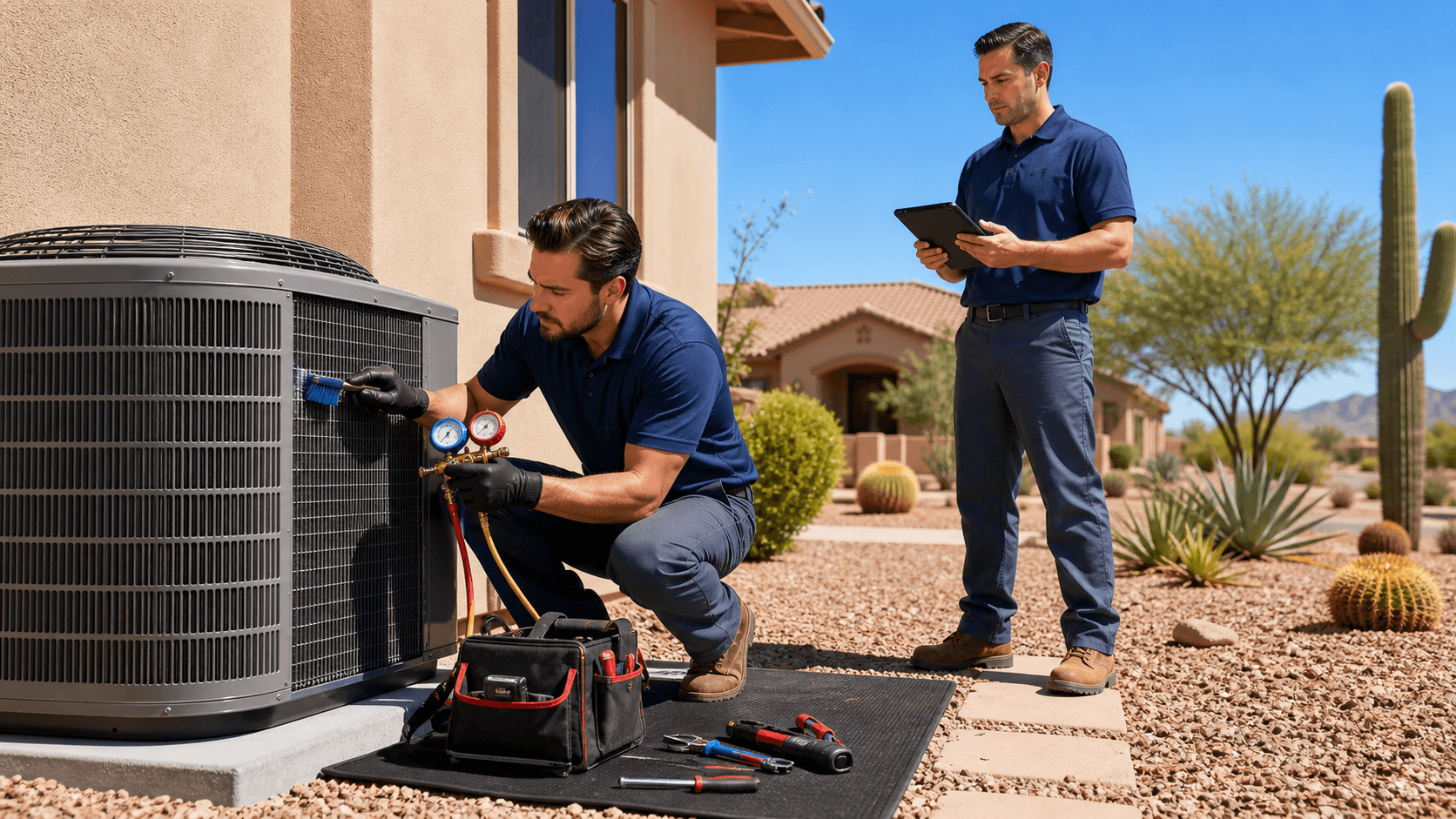
- Detailed cleaning of outdoor coils and inspection of condenser fan blades
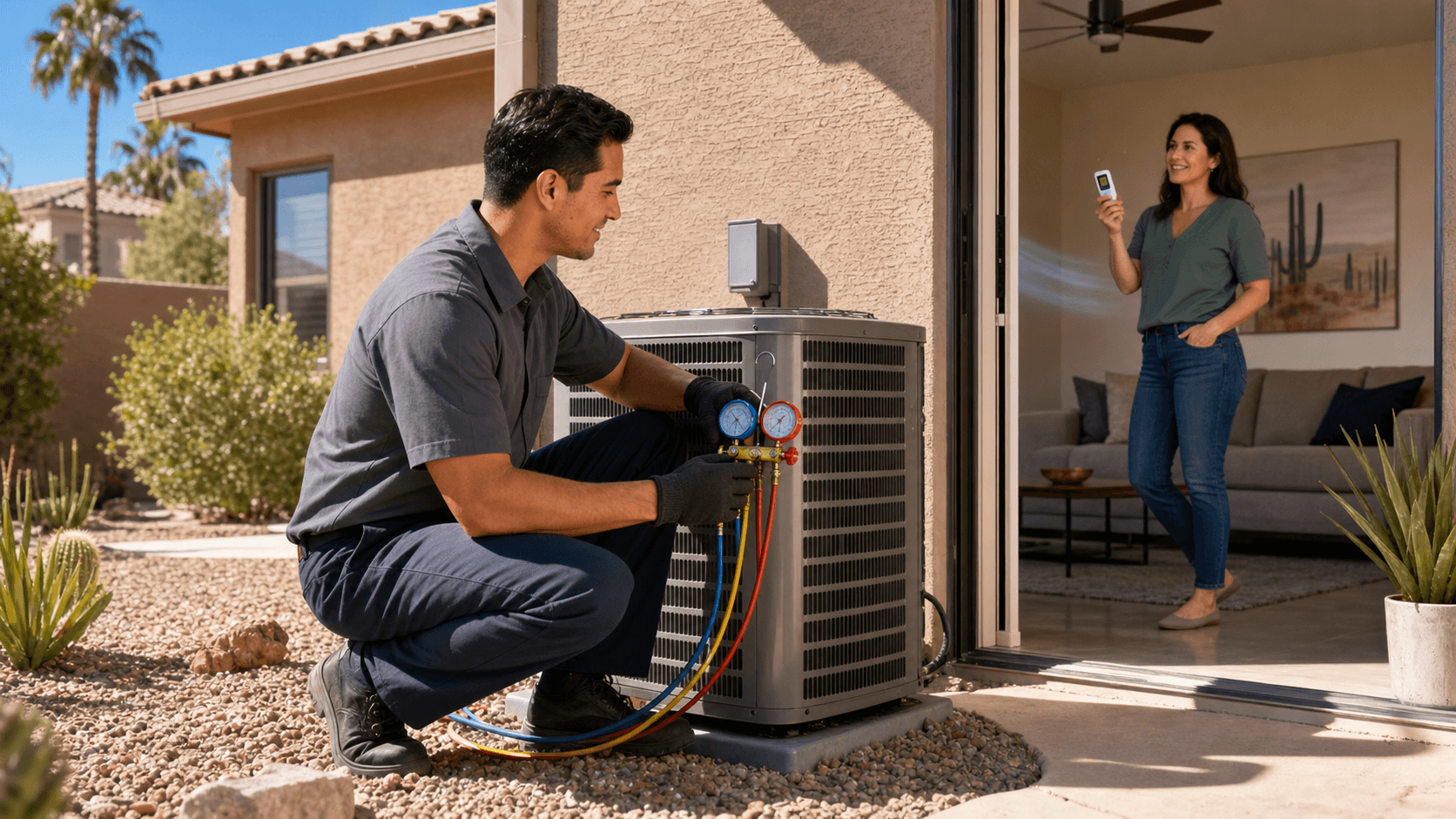
- Checking refrigerant charge and superheat or subcooling
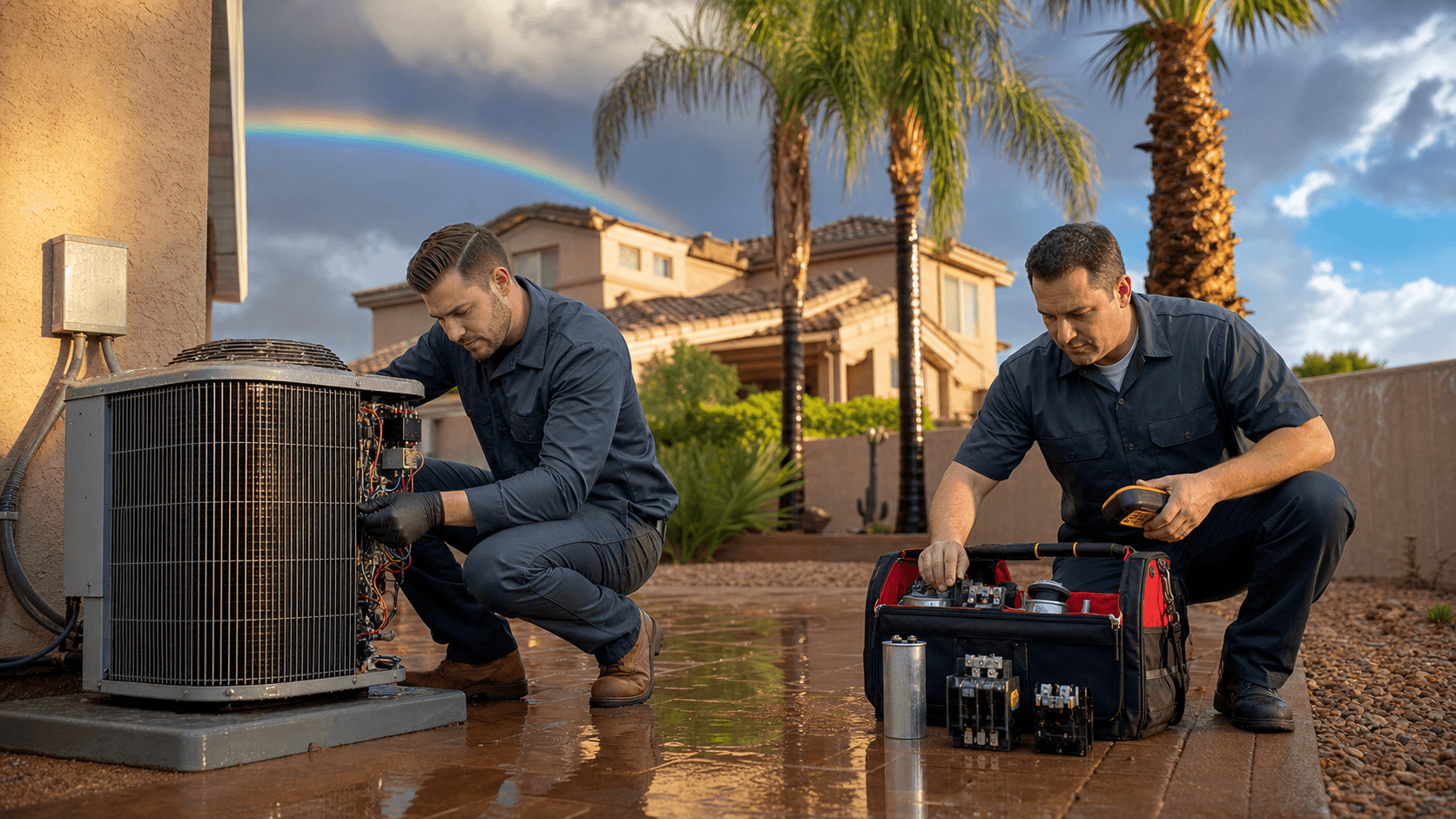
- Inspecting wiring, capacitors, and contactors for early failure signs
- Replacing air filters more often during dust storms and high-pollen times
The way a system is installed has a huge impact on its lifespan. Proper installation includes:
- Correct sizing so the unit is not constantly running or short cycling
- Proper refrigerant charging, not just "topping off"
- Well-designed ductwork and airflow, especially in two-story homes and strip centers
- Thoughtful placement of outdoor units to allow airflow and service access
Usage patterns matter too. Small changes in thermostat habits can add years of service:
- Keeping summer settings around 76 to 78 degrees when occupied
- Using programmable or smart thermostats instead of large temperature swings
- Adding shading, window film, or better attic insulation to reduce heat gain
- Closing blinds on west-facing windows during the hottest part of the day
Refrigerant type and technology also influence your long-term plan. Older systems that use R-22 are increasingly expensive to repair as that refrigerant is phased out. Many property owners find that when an older R-22 unit has a major issue, it is more practical to consider HVAC replacement instead of putting more money into hard-to-source refrigerant and replacement parts. Newer R-410A and alternative refrigerant systems are designed with current standards in mind, which makes future repair decisions more straightforward.
How Long Different HVAC Systems Typically Last in Arizona
Not every system ages the same way in our climate. For central split systems in homes and small offices, a realistic air conditioner lifespan in Arizona is often around 10 to 12 years with good maintenance. When units are neglected, undersized, or poorly installed, it can be less. It is also common for the outdoor unit and indoor air handler to age at different rates, especially if one side has had leaks, electrical issues, or airflow problems.
Package rooftop units on commercial buildings deal with even tougher conditions. They sit in direct sun all day, exposed to UV light, extreme rooftop temperatures, dust, and wind. Access can be more difficult, so maintenance sometimes gets delayed. In shopping centers, restaurants, and warehouses, that combination often means replacement comes sooner than many owners anticipate.
Heat pumps compared to straight cool systems have a different runtime pattern. Heat pumps provide both heating and cooling using the same equipment, so they see more total operating hours. In the Phoenix area, winter heating loads are relatively light compared to summer cooling, which helps balance that out. With consistent maintenance, heat pumps can still deliver a solid service life, but they should be evaluated regularly for efficiency and reliability.
Controls and accessories often fail earlier than major components. Many owners start to see:
- Thermostat failures or inaccurate temperature readings
- Frequent capacitor or contactor replacements
- Condenser fan motors or blower motors needing replacement
- Repeated issues with condensate pumps or safety switches
A growing list of minor repairs can be an early warning sign that the system is reaching the stage where AC replacement Phoenix planning makes sense.
Signs It May Be Time to Replace Instead of Repair
Age and repair history are usually the first clues. In our climate, once an air conditioner is past the 10 to 12 year mark and needs a major repair, like a compressor or coil replacement, it is wise to step back and compare repair cost to the remaining expected life of the system. If you are also dealing with repeated electrical or motor issues, the overall picture may point toward replacement.
Rising energy bills and declining comfort are another signal. If you notice:
- Longer run times to maintain the same thermostat setting
- Hot and cold spots that never seem to balance out
- Difficulty holding temperature during peak afternoon hours
- No noticeable improvement after filter changes and basic repairs
then the system may have lost much of its original efficiency. At that point, planning for HVAC replacement can be more cost-effective than constantly chasing performance problems.
Frequent breakdowns are hard on both budgets and schedules. Residential systems that fail multiple times per summer, or commercial systems that trigger 24/7 emergency calls, can quickly exceed what most owners wanted to spend on that older unit. For businesses, especially restaurants, grocery stores, and offices, the cost of downtime often outweighs the cost of moving to a more reliable system.
Obsolete refrigerant or hard-to-find parts also shift the math. When the price and availability of refrigerant or key components start to climb, each new repair on an aging unit becomes a bigger gamble. Even if the equipment can technically be fixed, the long-term value is often lower than putting that money into a newer, more efficient system.
Making a Smart Plan for AC Replacement in Phoenix
The best time to think about AC replacement in Phoenix is before a catastrophic failure in the hottest part of summer. When a system quits on a triple-digit afternoon, decisions have to be made quickly, and schedule options can be limited. Planning ahead gives you room to compare options, consider efficiency levels, and choose the right timing for your home or business.
A professional evaluation can help you build a realistic replacement timeline. By reviewing system age, visible condition, current performance, and repair history, we can estimate how much useful life may be left and what kind of efficiency gains you might see with newer equipment. Modern high-efficiency units are designed with our kind of climate in mind, with features like variable-speed compressors and fans, improved controls, and better performance in extreme heat. For many Arizona properties, those improvements translate into more consistent comfort, quieter operation, and reduced energy use over the long term.
Lower Your Energy Bills With a Reliable New AC System
If your current unit is struggling to keep up with the Phoenix heat, we are ready to help you plan a smooth upgrade. Our team at Frosty Fox AC will walk you through sizing, options, and timing so you get a system that actually fits your home and budget. Schedule your air conditioner replacement in Phoenix today and enjoy more consistent comfort, better efficiency, and fewer unexpected breakdowns.