When Monsoon Storms Hit, Your AC Takes the First Punch
Arizona's monsoon season is hard on air conditioners. Dust storms, sudden downpours, powerful winds, and lingering triple-digit heat all hit your system at the same time, often in a single afternoon. While the rain might cool things off for a few minutes, the humidity goes up and your AC has to work even harder.
Across Phoenix and the surrounding cities, we see a clear pattern every monsoon season: certain AC problems show up again and again. In this article, we will walk through the most common monsoon-related repairs we handle, the warning signs you should watch for, and when it is time to call a professional for AC repair in Phoenix, AZ or anywhere in the Valley.
Power Surges and Electrical Damage During Monsoons
Lightning, grid instability, and quick on-and-off power blips during storms can push sudden surges of electricity through your AC system. Even if lightning does not hit your property directly, the entire neighborhood can experience spikes and drops that are tough on HVAC equipment.
Those surges can lead to problems such as:
- Tripped breakers or blown fuses
- Burned or loose wiring at the condenser or air handler
- Damaged contactors that stick open or closed
- Control boards that fail after repeated surges
Common warning signs after a storm include an AC that will not turn on, a breaker that trips as soon as the system starts, or a thermostat that keeps cutting out. A burning or electrical smell at the outdoor unit, rapid on-and-off cycling, or the need to keep resetting the system are all signals that something is wrong.
Any time a breaker trips more than once, there is a burning smell, or you find yourself repeatedly resetting the AC, it is time to stop and call a pro. Electrical problems can lead to fire and shock hazards, and opening panels or replacing parts without training is risky for both you and your equipment.
Capacitor Failures in Extreme Heat and Storm Conditions
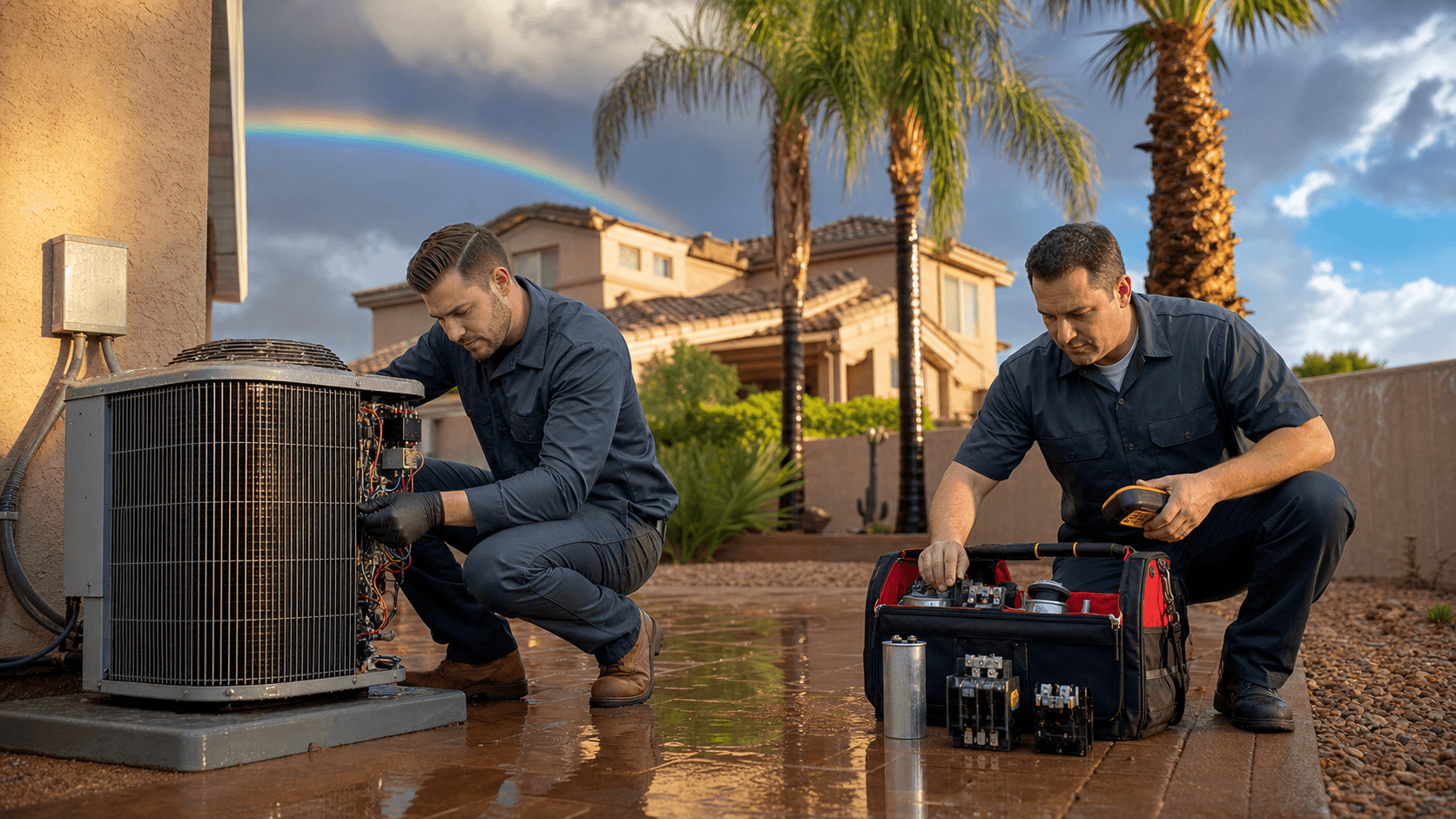
Capacitors are small electrical components that store energy and help your AC's motors start and keep running. Your compressor and outdoor fan motor both depend on healthy capacitors. When Phoenix heat combines with repeated power surges and long run times, those capacitors wear out faster, especially during monsoon season.
Signs of a failing capacitor include:
- Outdoor fan not spinning, even though you hear humming
- Compressor humming but not starting, or starting and then shutting off quickly
- Warm air blowing from the vents while the system appears to be running
- AC that struggles to start or randomly shuts off on humid evenings
Capacitor replacement is one of the most common monsoon AC repair calls we see in the Valley. Although the part itself is small, it holds a stored electrical charge even when the power is off, which is why this repair should be handled by a licensed technician with the right tools and safety training.
Seasonal maintenance is a good time to have capacitors and other electrical components checked. Catching a weak capacitor early can prevent a no-cooling emergency on a muggy monsoon night when your system is already under heavy load.
Clogged Drains and Water Leaks After Heavy Rains
Monsoon humidity brings a different kind of stress to your AC. As your system pulls moisture out of the indoor air, that water is supposed to flow out through a condensate drain line. Arizona dust, combined with moisture, creates sludge that encourages algae growth inside that line. In homes, especially in busy restaurants, grocery stores, and commercial buildings that run nonstop, those drains can clog quickly.
When the line clogs, these can happen:
- Water fills the drain pan and overflows
- Float switches shut the system down to prevent damage
- Water leaks into ceilings, attics, walls, or equipment rooms
Warning signs to watch for are water stains near supply vents or around the indoor unit, wet spots on ceilings or floors, musty odors near the air handler, or a system that suddenly shuts off even though the thermostat is set to cool. Sometimes the first clue in a commercial space is a damp ceiling tile or a musty smell near a cooler or prep area.
You should call a professional if you see standing water around the air handler, repeat clogs, or any sign of ceiling or wall damage. A quick AC repair in Phoenix, AZ is almost always cheaper than repairing drywall, flooring, or equipment ruined by an ongoing leak.
Storm Debris, Condenser Damage, and Restricted Airflow
Monsoon winds do not just move dust, they move debris of all kinds. Palm fronds, gravel, trash, plastic bags, and tree branches can all end up lodged against or inside your outdoor condenser. For rooftop and ground-level commercial units, this problem can be even more severe.
Blocked coils and damaged components can cause:
- Poor airflow through the condenser
- Bent fins that restrict heat rejection
- Fan blades that are cracked, bent, or out of balance
- Higher operating pressures that strain the compressor
After a storm, keep an ear and eye on your outdoor unit. Rattling or grinding noises, visible dents or bent fins, or trash stuck to the side of the condenser are all red flags. Inside, you might notice reduced cooling, longer run times, or a utility bill that jumps after a series of storms even though your usage habits have not changed.
It is typically safe for owners to gently clear loose debris like leaves and trash away from around the unit. What you should avoid is opening access panels, trying to straighten fins with improvised tools, or reaching near the fan or electrical components. Those repairs are best left to trained technicians who can clean and service the condenser without causing additional damage.
Thermostat and Control Issues After Severe Storms
Power blips are hard on sensitive electronics, including thermostats and control boards. During monsoon storms, it is common for the power to flicker several times in a short period, which can scramble thermostat settings or damage low-voltage wiring.
Watch for these thermostat and control symptoms:
- Blank or fading display
- Unresponsive buttons or touch screen
- Lost schedules, incorrect time, or random mode changes
- AC that will not start even though the thermostat is set to cool
Before assuming the worst, there are a few quick checks you can make. Confirm that the breaker for the air handler and condenser is on, replace batteries if your thermostat uses them, verify that it is set to cool and the temperature is set lower than room temperature, and give smart thermostats a few minutes to reboot after an outage and reconnect to Wi-Fi.
If problems keep returning after storms, the display stays dead, or the system runs in an erratic way despite correct settings, it is time for professional monsoon AC repair. This is especially important for businesses that rely on consistent temperatures to protect inventory, guests, or sensitive equipment.
When to Call an Arizona AC Pro and How to Prepare for Storms
Monsoon season always brings some surprises, but many breakdowns show early warning signs. In our experience, you should call a licensed Arizona AC professional right away if you notice:
- Burning or electrical smells from indoor or outdoor units
- Frequent breaker trips or blown fuses
- Grinding, buzzing, or rattling noises during operation
- No cooling during a heat advisory, especially for vulnerable occupants
- Any water leak, ceiling stain, or standing water at the unit
- Visible storm damage, loose panels, or heavy debris around equipment
There are also simple steps you can take before and during monsoon season to reduce the risk of emergency repairs:
- Keep a clear area around outdoor units by trimming plants and removing clutter
- Make sure rooftop units have proper clearance from stored items and debris
- Ask about surge protection options for your HVAC equipment
- Schedule routine maintenance before peak storm activity so components are checked and cleaned
Monsoon storms are part of life in Phoenix and the surrounding communities, but surprise AC failures do not have to be. By knowing the most common monsoon-related problems, watching for the warning signs we covered, and taking a few preventive steps, you help protect your system, your property, and your comfort during the hottest, stormiest months.
Restore Reliable Comfort To Your Home Today
If your AC is struggling to keep up with the Phoenix heat, we are ready to help you get comfortable again fast. At Frosty Fox AC, our experienced technicians provide prompt, precise service so you can stop worrying about breakdowns and enjoy a cool home. Schedule your AC repair in Phoenix, AZ today and let us inspect, diagnose, and fix the problem before it gets worse. Reach out now so we can get your system running efficiently and help you stay cool all season long.