When 115°F Heat Meets Your Walk-In Cooler: A Guide for Arizona Restaurant and Convenience Store Operators
Arizona restaurant and convenience store walk-in coolers do not get a summer break. When the thermometer sits in the triple digits for hours at a time, your walk-in is working at full throttle just to keep food in the safe range. If you operate in Tempe, Chandler, Mesa, or Phoenix, you already know that one warm afternoon can put thousands of dollars of product and a whole weekend of sales at risk.
In our climate, walk-in coolers are fighting heat from every direction: scorching outdoor air around the condenser, hot kitchens, constant door traffic, and heavy product loads. Add dirty coils, weak airflow, or a struggling evaporator fan, and that system can slide from "holding on" to "not keeping up" in a matter of hours. Understanding how Arizona heat affects your equipment is the first step to avoiding product loss and emergency walk-in cooler repair in Tempe, AZ.
This guide walks restaurant and convenience store operators through how the extreme heat overloads your system, the common problem spots technicians see on rooftops and inside boxes, and simple maintenance habits that help keep temperatures steadier during the summer rush.
How Extreme Arizona Heat Overloads Walk-in Systems
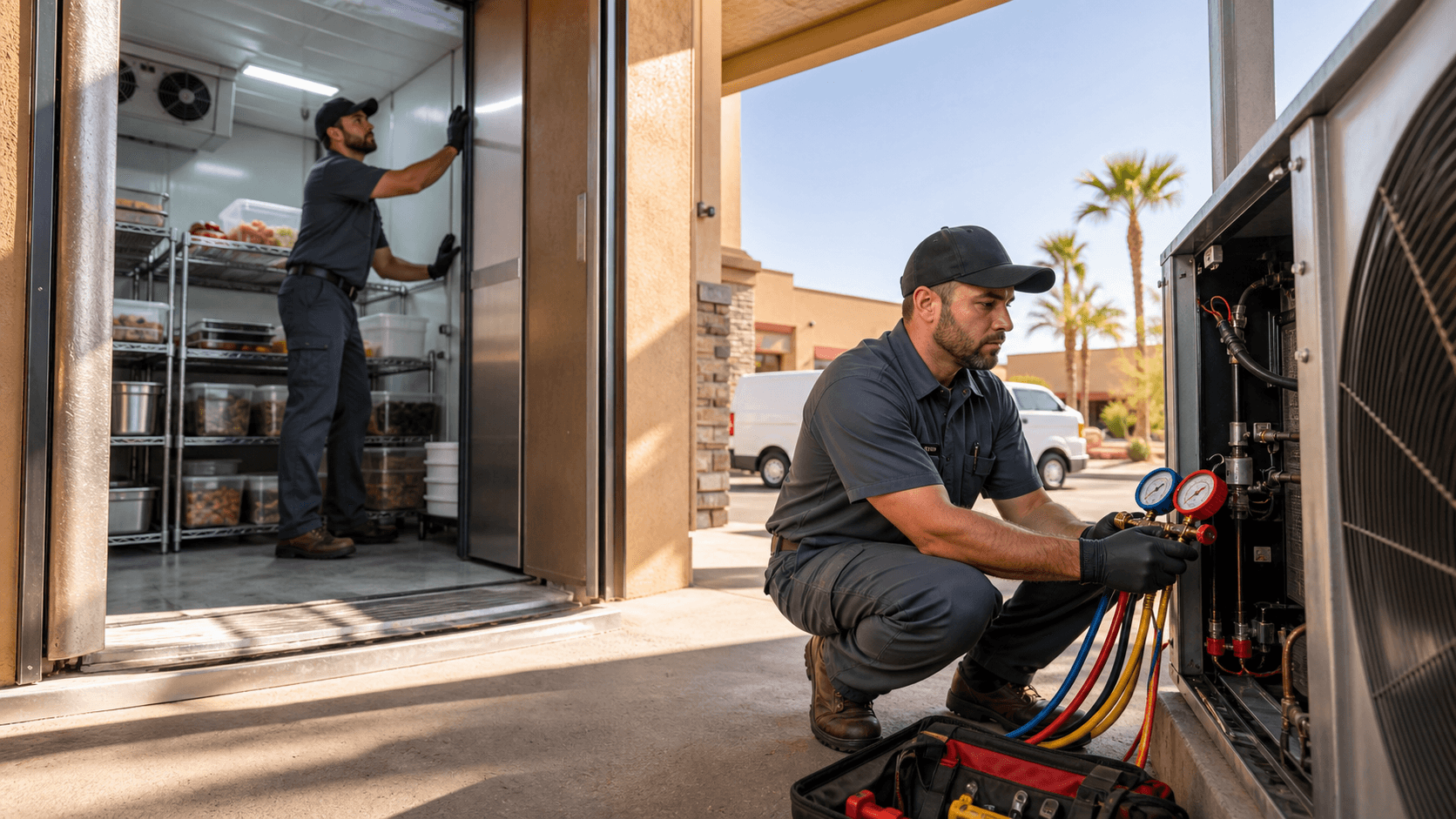
Every walk-in cooler is doing one basic job: it pulls heat out of the box and dumps it outside through the condenser. In Arizona, that "outside" is often 110 to 118 degrees, and many condensers sit on dark, sun-baked roofs that feel even hotter. When the air around the condenser is already extremely hot, the system has a harder time rejecting heat. That stress typically shows up as:
- Higher head pressure on the refrigeration system
- Longer run times to pull temperature down
- Slower recovery after door openings or deliveries
- Shorter rest cycles for the compressor
On a typical Tempe or Phoenix strip-center rooftop, technicians see condensing units lined up in the full sun. In the midafternoon, the metal roof and surrounding surfaces store heat, so the air going across those coils is far from "cool." In practical terms, that usually means the cooler struggles most during peak heat and peak traffic, leading to:
- The cooler never quite hitting its setpoint in the afternoon
- Temperatures creeping up a few degrees during lunch and dinner rush
- Compressors running almost nonstop
- Higher electric bills and more mechanical stress
Older or undersized systems are hit hardest. Many small restaurants in older centers were built before current heat loads and traffic patterns, so equipment that was "fine" in the spring can start showing its limits once the first major heat wave arrives. Over time, box temperatures can inch higher and recovery times can get longer each week.
Airflow, Coils, and the Hidden Enemies on the Roof
In fieldwork across the Valley, one theme shows up over and over: restricted airflow around the condenser. Even a well-designed system cannot perform if it cannot breathe. Common rooftop issues include:
- Condensing units installed too close to walls or parapets
- Storage items, pallets, or old equipment stacked around units
- Trash, cardboard, and plastic bags caught in the coil or guards
- Nearby equipment blowing hot exhaust directly at the condenser
On restaurant rooftops near hood exhausts, coils often get caked with a mix of dust, grease, and desert grit. That layer bakes on in the sun and acts like a blanket that traps heat. Dirty condenser coils are one of the fastest ways to cripple an otherwise healthy system.
When rooftop airflow and coils are in bad shape, operators down below tend to notice familiar performance problems, including:
- Longer pull-down times after large deliveries
- Higher box temperatures in the late afternoon even with doors managed well
- Compressors sounding louder, rougher, or cycling on safety controls
- Nuisance trips that reset but keep coming back on hot days
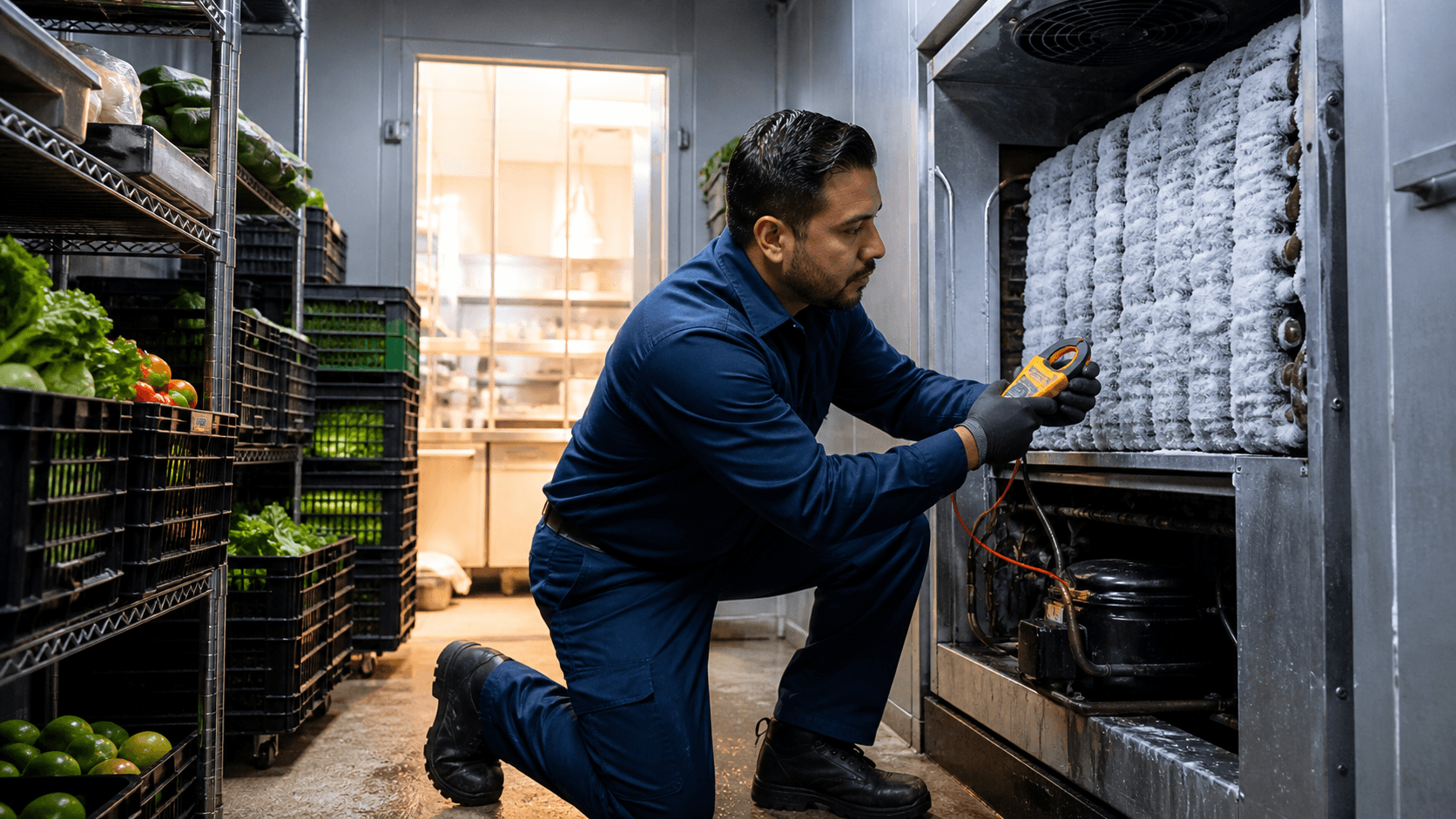
Airflow problems are not only on the roof. Inside the walk-in, evaporator coils can ice over or get blocked by product, which reduces air circulation and cooling capacity. Warning signs on the evaporator side include:
- Ice building up on or around the coil
- Frozen product directly under or near the fan
- One side of the cooler much colder than the other
- Staff constantly adjusting the thermostat to "force" colder temps
Issues like these are a big reason many managers end up needing walk-in cooler repair in Tempe, AZ right in the middle of the busy season.
Doors, Foot Traffic, and Loading Habits That Wreck Temperatures
Even a perfectly sized system will struggle if the door is treated like a garage bay instead of a cooler entrance. Every door opening pulls hot, often humid air into the box that the system must remove. Technicians commonly see door-related problems such as:
- Doors propped open for deliveries or trash runs
- Drivers leaving doors cracked while checking paperwork
- Grab-and-go reach-in doors not closing fully
- Worn or broken door closers allowing doors to stay ajar
Loading habits also play a big role in whether temperatures stay steady or swing. When large loads of warm product enter the box, or when airflow paths are blocked, the walk-in has to work much harder to recover. Common problem patterns include:
- Moving large amounts of warm product into the cooler all at once
- Stacking cases tight against the evaporator or walls
- Blocking return airflow with pallets, carts, or racks
- Placing very hot items directly under the fan in an attempt to cool them faster
Those patterns often lead to noticeable operational consequences. Instead of holding a stable temperature, the walk-in can see bigger swings and more moisture problems, which can create:
- Temperature spikes above safe food ranges, especially near the door
- Concern during health inspections when log sheets show swings
- Frost and moisture around the door frame and threshold
- More ice forming on the evaporator coil as it tries to remove extra moisture
Training staff on simple door and loading practices can sometimes drop box temperatures several degrees without touching the equipment.
Evaporator Fans, Temperature Swings, and Early Warning Signs
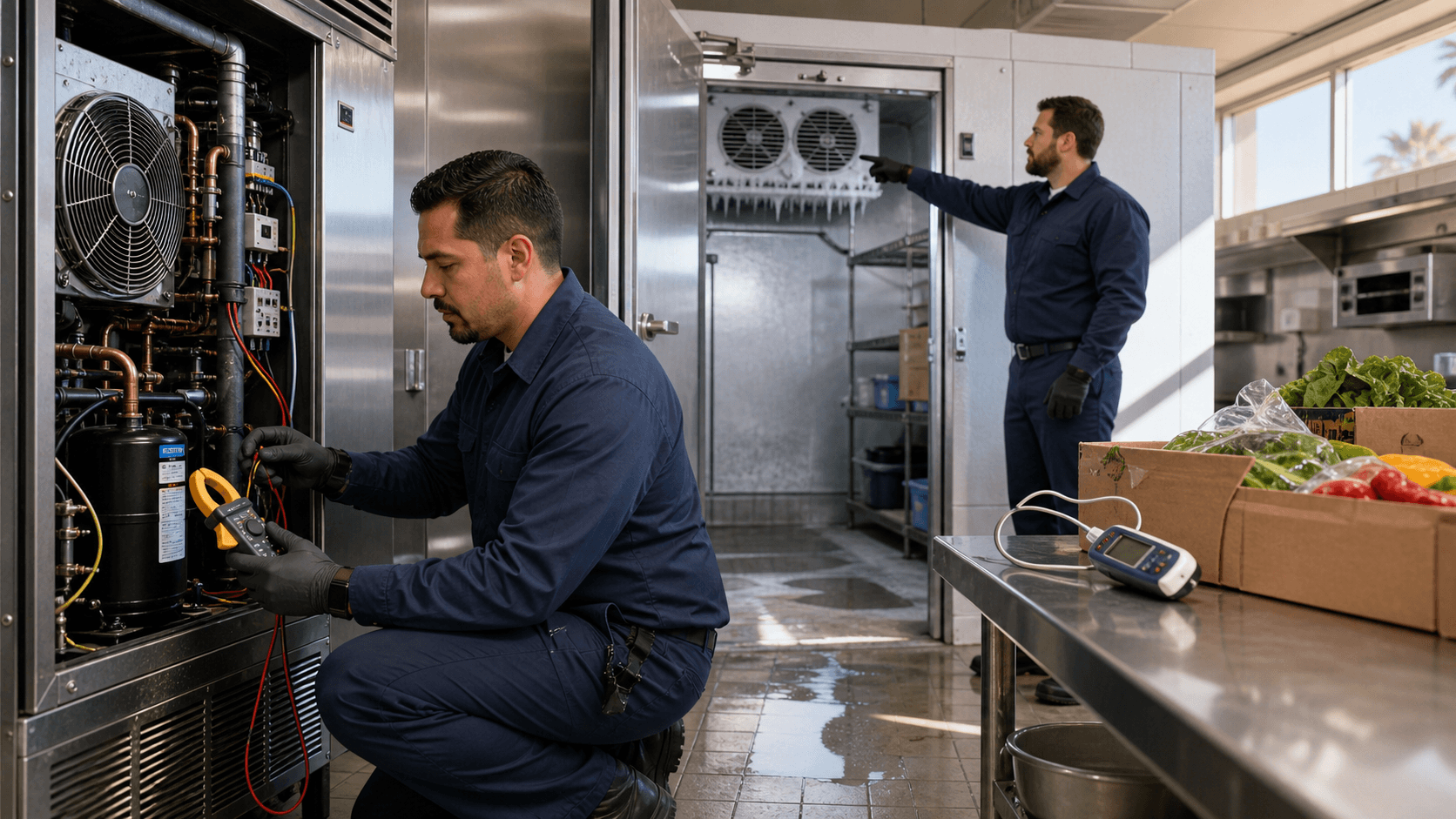
Inside the box, the evaporator fans are the workhorses that spread cold air evenly. When they are not moving enough air, everything else starts to drift, even if the refrigeration system is otherwise capable. Typical fan-related problems technicians see include:
- Fan motors slowing down or stopping intermittently
- Damaged or dirty blades reducing airflow
- Fans running noisy, rattling, or grinding
- Ice or product contact with the fan shroud
From the operator's side, reduced airflow usually shows up as uneven temperatures and day-to-day inconsistency. Many teams notice:
- Digital thermometers bouncing several degrees during the day
- Product near the door feeling warmer than product in the back
- Nighttime temperatures looking fine, but daytime temps drifting higher
- Certain shelves staying just a bit too warm for dairy or raw meats
There are also clear warning signs that something is about to fail. Catching these symptoms early allows for a simpler repair or adjustment instead of an after-hours failure, spoiled inventory, and more complex walk-in cooler repair in Tempe, AZ. Watch for:
- New or unusual noises from fan motors or the evaporator area
- Noticeable reduction in airflow when you stand near the fan
- Frost or ice building on the coil, especially in patterns or thick layers
- Water dripping from the ceiling that was not there before
- Bottled drinks not feeling as cold as they used to
- Dairy products or meats feeling softer or warmer than expected
Practical Summer Maintenance to Avoid Product Loss
Good refrigeration performance in an Arizona summer is not an accident. It comes from a mix of day-to-day checks by your team and regular professional maintenance from a commercial refrigeration contractor.
Your staff can handle several simple checks that prevent small problems from becoming expensive emergencies. These day-to-day actions help protect airflow, reduce heat gain, and catch issues early:
- Keep the area around outdoor and rooftop units clear of storage and debris
- Look at doors and gaskets for gaps, tears, or areas where light shows through
- Make sure door closers are working and doors are not dragging or binding
- Check for ice buildup on the evaporator, around the door, or on the floor
- Log and review walk-in temperatures once or twice a day, especially midafternoon
A professional preventive maintenance visit geared for Arizona heat goes deeper and focuses on the components most stressed during prolonged high temperatures. It usually includes:
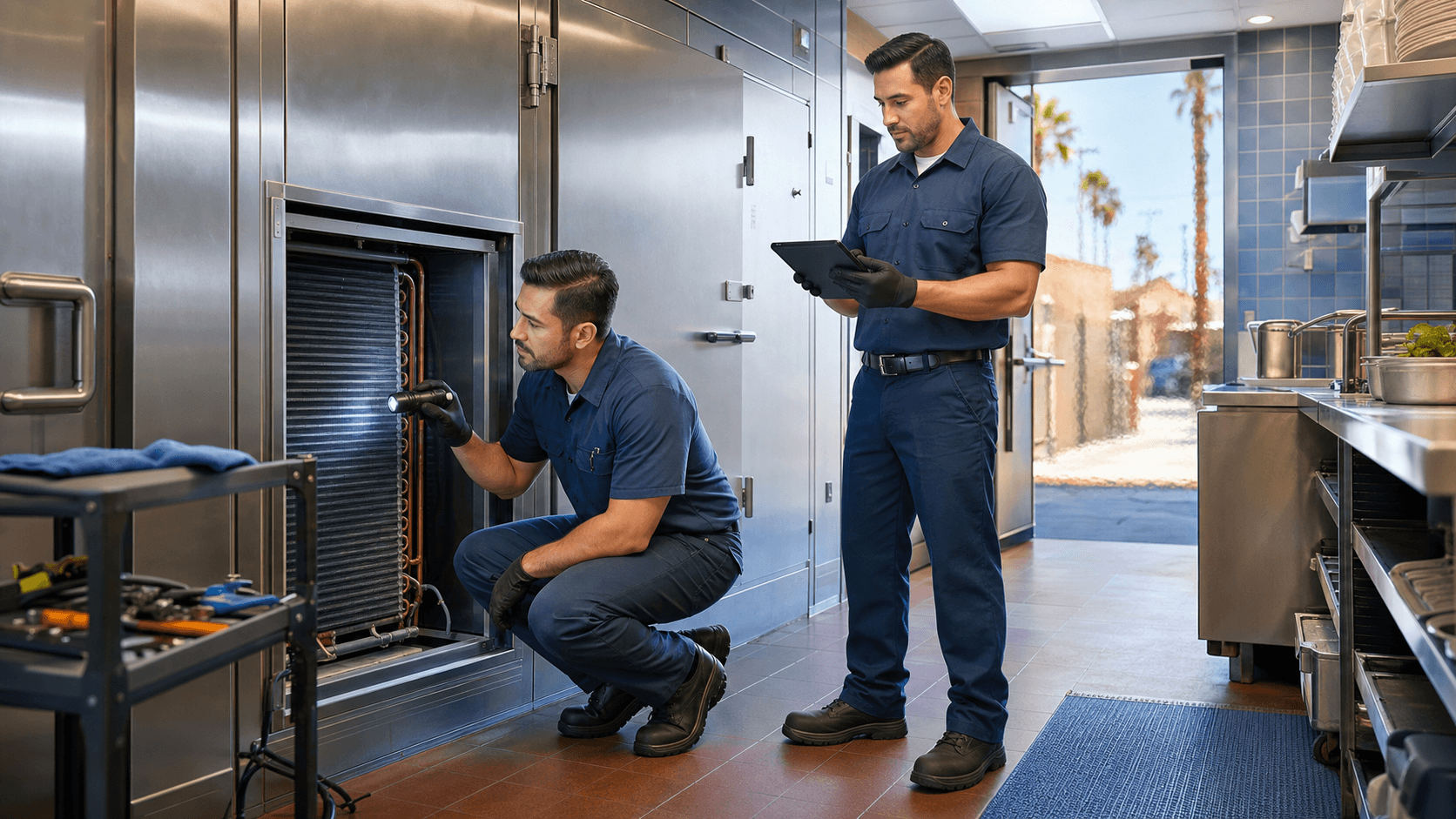
- Thorough cleaning of condenser coils to remove dust, grease, and grime
- Inspecting and cleaning evaporator coils, drain pans, and fan areas
- Checking fan motors and blades for wear, noise, and airflow problems
- Verifying refrigerant levels and looking for signs of leaks
- Inspecting electrical connections, contactors, and controls stressed by heat
- Confirming thermostat and control calibration against actual product temperature
In our area, it is common to find coolers that fail right before a busy weekend simply because spring maintenance was skipped. Units on older rooftops often have years of dust and debris baked into the coils, and once that buildup is removed and airflow is restored, the system can finally hold temperature again during the afternoon rush. Planning this work before the hottest part of the year and building it into your regular operating routines is far less stressful than reacting when the box is already warm and product is at risk.
Need Help Getting Your Walk-in Ready for 115°F Days?
If you operate a restaurant or convenience store in Tempe, Chandler, Mesa, or Phoenix and you're seeing temperature swings, ice buildup, or longer recovery times in your walk-in cooler, schedule a commercial refrigeration service visit before the next heat wave hits. A technician can clean coils, verify airflow, check refrigerant charge, and address worn components so your cooler can hold safe temperatures during your busiest hours.
Keep Your Walk-In Cooler Running at Peak Performance
If your cooler is struggling to hold temperature or showing signs of a problem, we can diagnose and repair it before it impacts your inventory. At Frosty Fox AC, our technicians specialize in reliable walk-in cooler repair in Tempe, AZ to keep your business running smoothly. Reach out today to schedule a service visit, and we will work with your timeline to minimize downtime and protect your product.