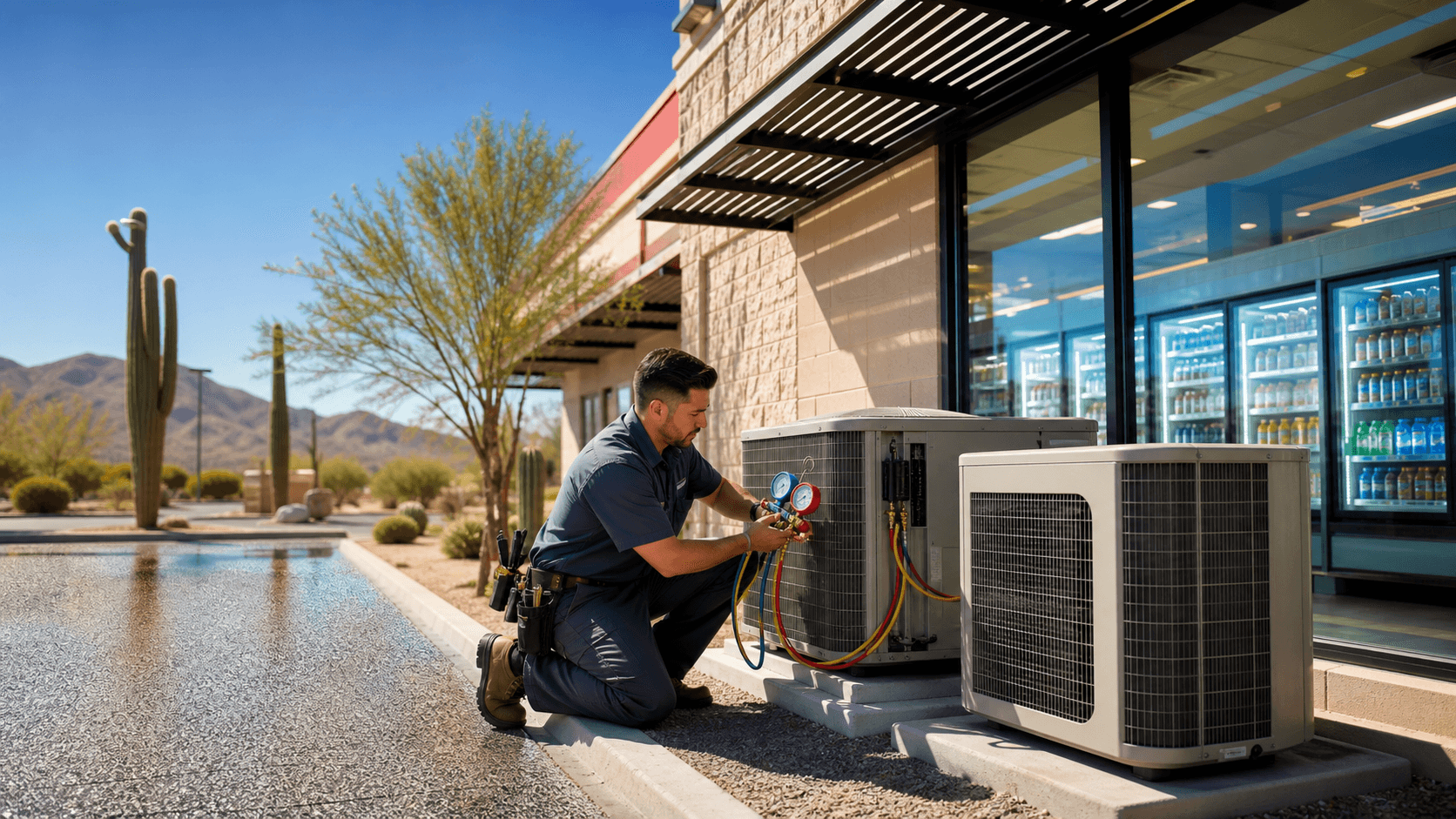
How Arizona Heat Impacts Commercial Refrigeration Systems
Arizona heat is hard on people, buildings, and especially on commercial refrigeration. When outdoor temperatures push into the triple digits day after day, your walk-ins, reach-ins, and refrigeration racks are working in survival mode, not comfort mode. If you run a restaurant, grocery store, or retail space in the Phoenix metro area, understanding how that heat affects your equipment is key to protecting your product and your bottom line.
In this article, we will walk through how extreme temperatures stress condensers and compressors, push head pressures and energy use higher, and increase the odds of breakdowns. We will also share practical steps Arizona businesses can take to keep commercial refrigeration reliable, from smart equipment placement to targeted refrigeration maintenance Arizona facilities can count on during peak heat.
Why Arizona Heat Is Tough on Commercial Refrigeration
On a typical summer afternoon in Phoenix, it is normal to see 110 degrees or more. Parking lots, rooftops, and patio pavers soak up that heat and radiate it back long after the sun goes down. Any outdoor refrigeration equipment is sitting in that hot bubble of air day and night.
That creates challenges that are very different from those in cooler or coastal regions. Restaurants along Scottsdale Road, grocery stores in Chandler, and retail centers in Glendale all deal with:
- Outdoor units that rarely see a cool evening
- Surfaces that trap and reflect radiant heat at condensing units
- Hot back rooms with limited ventilation where small units are crammed in
When the air around the condenser is already extremely hot, the system has less room to reject heat. That drives up condenser temperatures, puts more load on compressors, and raises head pressures. The result is higher energy use, shorter equipment life, and a much higher risk of food loss and spoilage if something fails.
For these reasons, it helps to work with HVAC services in Phoenix, AZ that understand how our local conditions affect refrigeration, not just comfort cooling.
How Extreme Heat Overloads Condensers and Compressors
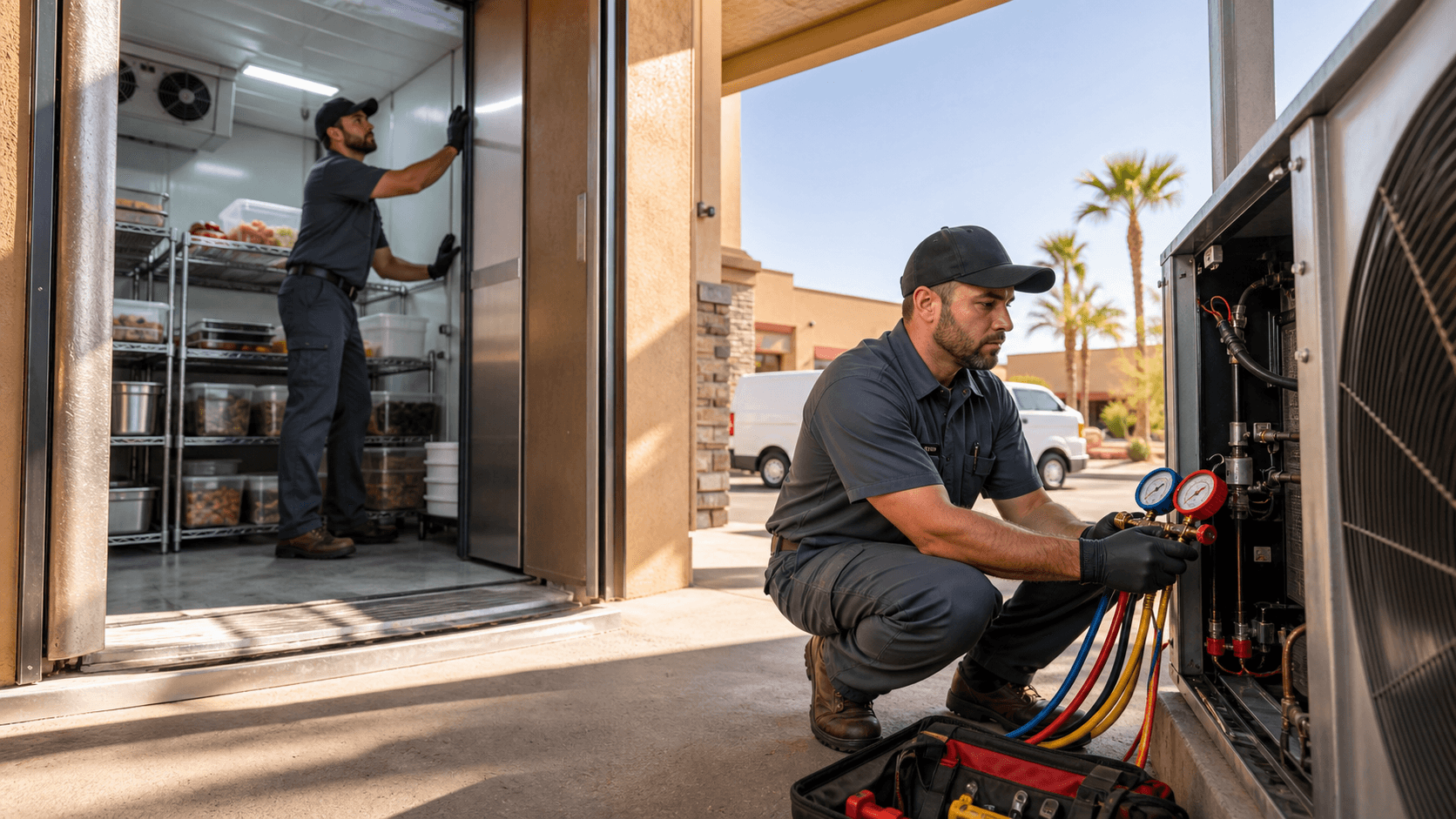
The condenser on a commercial refrigeration system is responsible for rejecting heat from inside the cases or walk-ins to the outdoor air. It does that by passing hot refrigerant through coils while fans blow outside air across them. When outside air is already 110 to 115 degrees, that job becomes much harder.
Here in the Valley, we see common stress points such as:
- Rooftop condensers in Mesa sitting over dark, sun-baked roofing
- Units on west-facing walls in Tempe getting hammered by afternoon sun
- Coils coated with dust, pollen, and desert debris that block airflow
When airflow is limited and outside air is blazing hot, the condenser runs hotter and longer than it was ever meant to. That extra heat and runtime shows up in the compressor. The compressor has to:
- Work against higher temperatures and pressures
- Run longer cycles with fewer cool-down periods
- Deal with oil that can break down under sustained heat
All of this increases mechanical stress. Bearings, valves, and windings are pushed to their limits, which shortens compressor life and raises the risk of a midsummer failure. In this environment, small issues such as a dirty coil or a weak fan motor are not minor annoyances. They can quickly snowball into a no-cool situation that shuts down a line of coolers or an entire walk-in.
Rising Head Pressure, Hot Nights, and Energy Spikes
Head pressure is the pressure on the high side of the refrigeration system that the compressor must push against. As outdoor temperatures go up, head pressure naturally rises. In a mild climate, this usually happens for a few hours in the afternoon, then drops back at night.
Phoenix is different. Triple-digit afternoons blend into warm evenings and nights, often staying in the 90s. That means head pressure stays elevated nearly all day, giving equipment almost no recovery time.
High head pressure affects your business in several ways:
- The compressor draws more amps to maintain proper refrigerant flow
- Run times stretch out, especially on reach-ins and walk-ins with frequent door openings
- Line coolers and prep tables struggle to pull temperatures down during busy periods
All of this shows up on your electric bill. Busy kitchens and markets can see big jumps in energy consumption simply because the refrigeration systems are working against extreme conditions.
Sustained high head pressure also stresses the entire refrigeration circuit. It can lead to nuisance trips on pressure controls, safety shutdowns that require manual resets, and refrigerant leaks at weaker joints and fittings. Over time, coils, valves, and compressors in commercial refrigeration Arizona businesses depend on are more likely to develop chronic issues if they never get a break from the heat.
Real-World Impacts on Arizona Restaurants, Grocers, and Retailers
For restaurants in Phoenix, high outdoor temperatures combine with hot kitchens to create a perfect storm. Common summer complaints include:
- Prep coolers struggling to stay cold during lunch or dinner rush
- Bar coolers warming up when placed on exterior walls near patios
- Undercounter units installed next to ovens or fryers running constantly
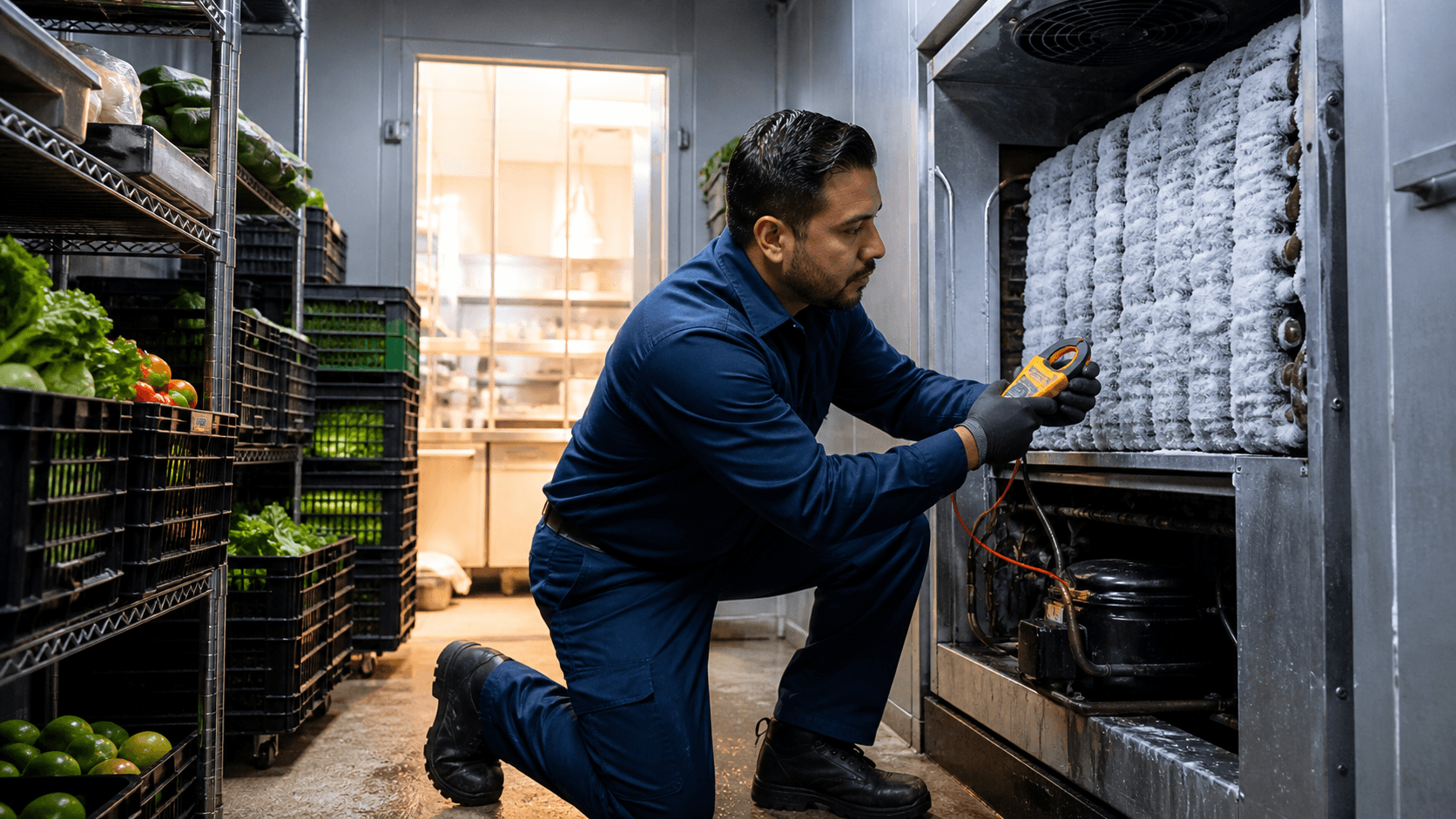
When equipment is already marginal, extreme heat pushes it over the edge. Temperatures creep up, food safety becomes a concern, and staff has to shuffle product between units just to keep things under control.
Grocery and convenience stores across Gilbert, Peoria, and similar cities face their own challenges. Large refrigeration rack systems may run near their design limits for long stretches of time. This can look like:
- Display cases frosting up as systems work harder
- Case temperatures drifting out of range, especially on end caps and open cases
- Large amounts of product at risk if a condensing unit fails late at night or on a weekend
Retail and mixed-use spaces rely on smaller specialty units that often do not get much attention. Beverage coolers, floral cases, and medical or specialty refrigeration can be installed in tight, poorly ventilated back rooms or on hot rooftops. When heat builds up there, failures seem to come out of nowhere.
The cost of that downtime is not just the refrigeration repair Phoenix businesses need in the moment. It includes product loss, food safety risks, staff time spent managing the crisis, and lost sales during the outage. In many cases, those costs far outweigh what it would have taken to address problems during planned refrigeration maintenance in Arizona's milder seasons.
Preventive Measures to Protect Equipment in Peak Heat
The good news is that Arizona heat does not have to control your refrigeration systems. With the right steps, you can reduce failures and stabilize performance, even in the hottest part of the year.
Mechanical and setup improvements to consider:
- Make sure condensers are correctly sized for high local design temperatures
- Provide clear airflow, with enough space from walls, parapets, and other equipment
- Use shading methods like awnings or light-colored roof coatings that lower radiant heat without blocking airflow
- Verify fans, motors, and belts are solid and moving the right volume of air
Maintenance strategies tailored to Arizona conditions:
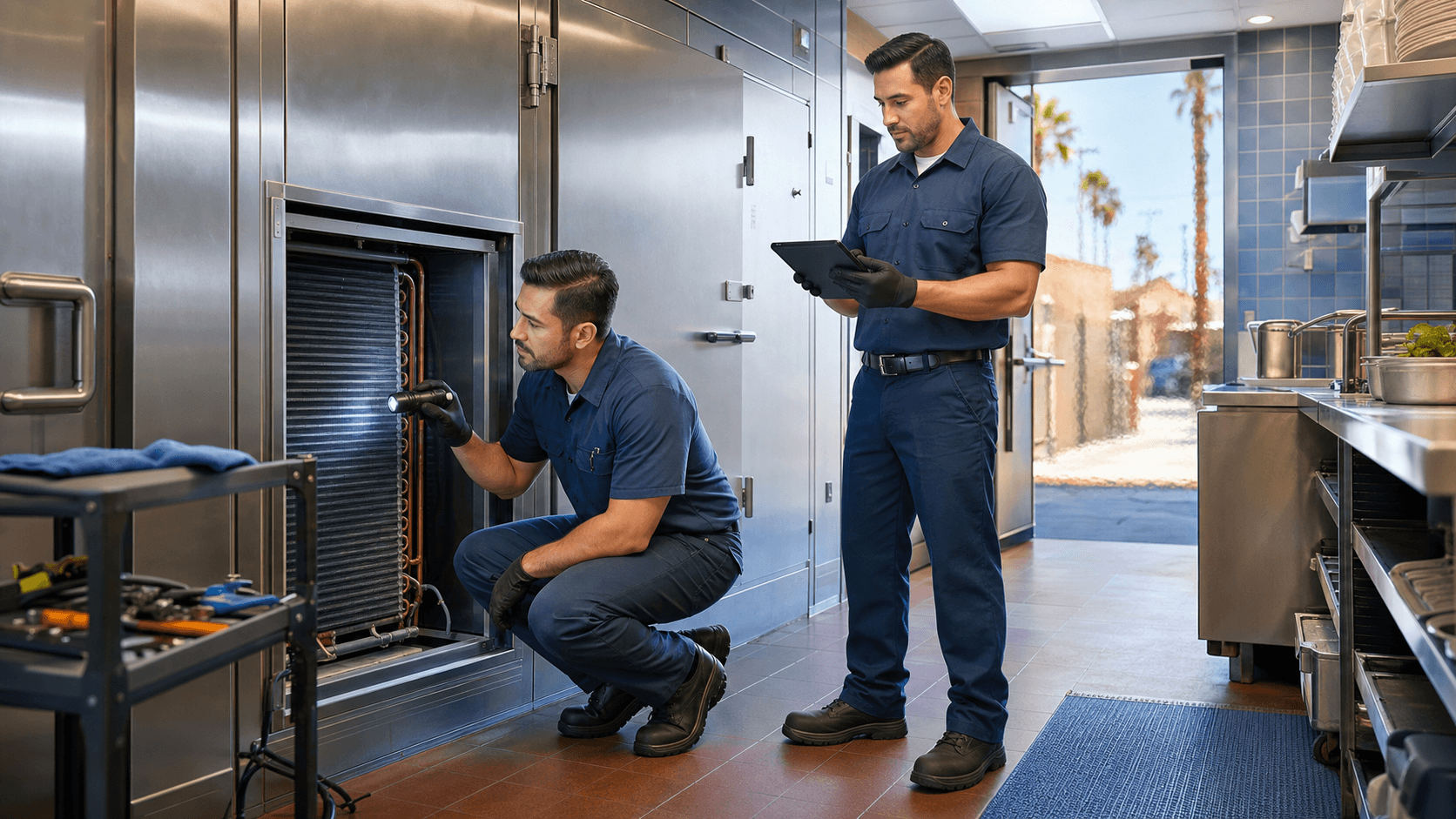
- Schedule regular coil cleaning to remove dust, cottonwood fluff, and other debris
- Check refrigerant charge, contactors, capacitors, and electrical connections before peak summer
- Inspect door gaskets, strip curtains, and hinges on walk-ins and reach-ins to cut down on warm air infiltration
Operational best practices for owners and managers:
- Train staff to keep doors closed as much as possible and avoid stacking items against interior evaporator coils
- Keep outdoor condensers clear of storage, shrubs, or trash that can choke airflow
- Use temperature monitoring and alarms on critical cases so you get early warning if temperatures start creeping up
- Work with experienced providers of HVAC services in Phoenix, AZ to create a refrigeration maintenance Arizona plan based on your specific equipment, layout, and hours of operation
Planning ahead, rather than reacting to emergencies, is the most reliable way to keep your coolers, freezers, and cases running even when the heat outside feels relentless.
Get Started With Your Project Today
If you are ready for reliable comfort in every season, our team at Frosty Fox AC is here to help. Explore our HVAC services in Phoenix, AZ to find the right solution for your home or business. We will walk you through your options, explain pricing clearly, and schedule work at a time that fits your day. Reach out now so we can get your project on the calendar and keep your space comfortable.