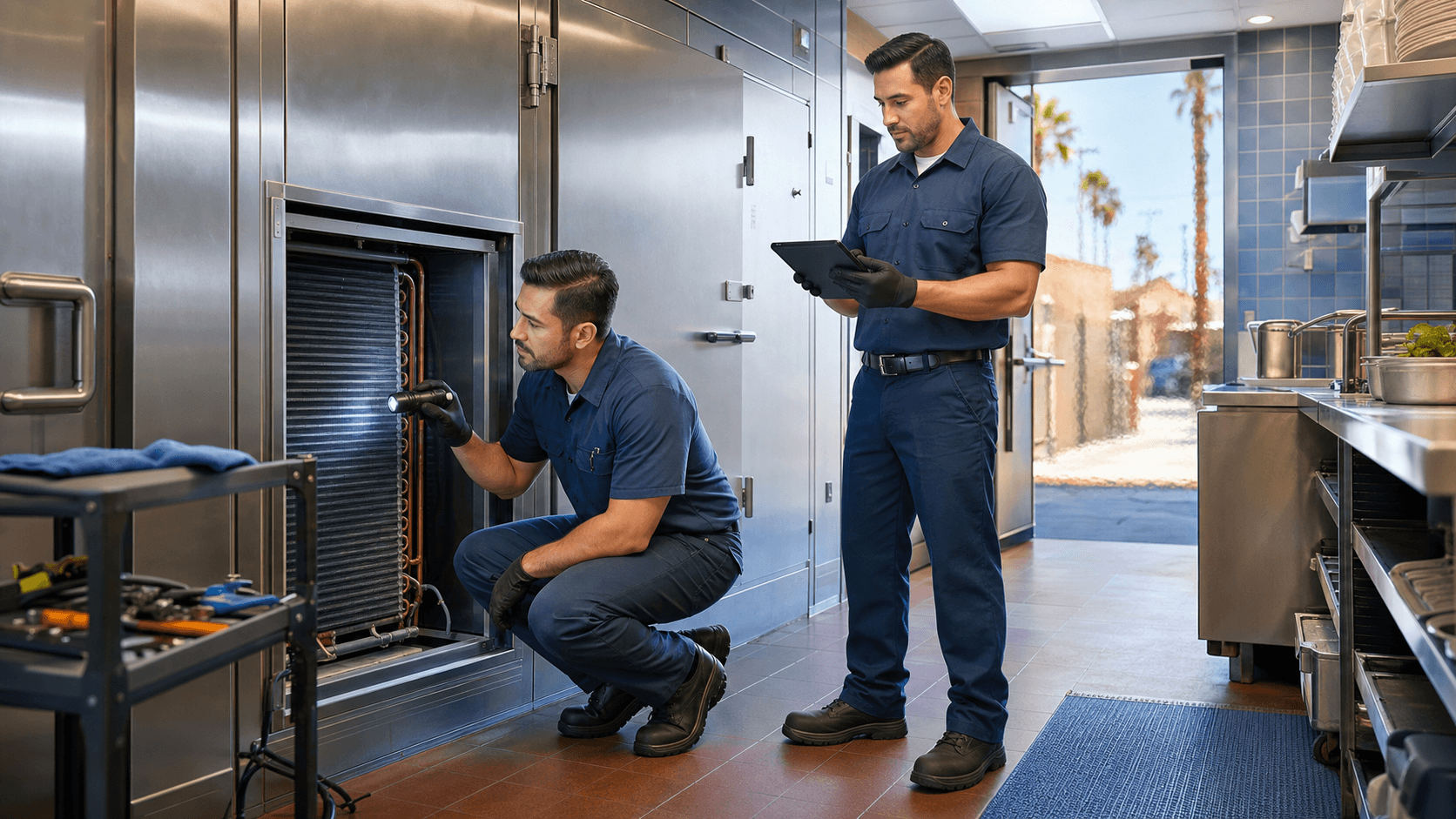
Refrigeration Maintenance: Protecting Products in Arizona Heat
Commercial refrigeration in the Phoenix metro area is under constant stress. Long, hot seasons, busy kitchens, and heavy door traffic push coolers, freezers, and display cases hard every single day. When those systems slip even a little, food temperatures creep up, energy bills climb, and equipment is more likely to fail at the worst possible time.
In restaurants, grocery stores, markets, convenience stores, and commercial kitchens, a single failed cooler can mean thousands of dollars in lost product and potential food safety issues. That is why commercial refrigeration maintenance is really about protecting your inventory, your reputation, and your bottom line, not just keeping the equipment running.
Poor or irregular maintenance often leads to:
- Food spoilage and product loss
- Health code headaches and food safety risks
- Strained compressors and early equipment failure
- Higher electric bills as systems work harder in the heat
- Emergency refrigeration service Phoenix business owners would rather avoid
Refrigeration preventive maintenance is a business investment. When it is planned and consistent, systems run more efficiently, last longer, and are far less likely to surprise you with an after-hours breakdown. Partnering with a licensed contractor that also provides HVAC services in Phoenix, AZ gives you one trusted team watching over your cooling, heating, and commercial refrigeration so your operation stays steady year-round.
Walk-in Coolers and Freezers: Daily and Monthly Care Essentials
Walk-in coolers and freezers are the backbone of many Arizona restaurants, bars, and grocery stores. These units are opened constantly, especially during lunch rushes and deliveries, so small issues can escalate quickly if nobody is paying attention.
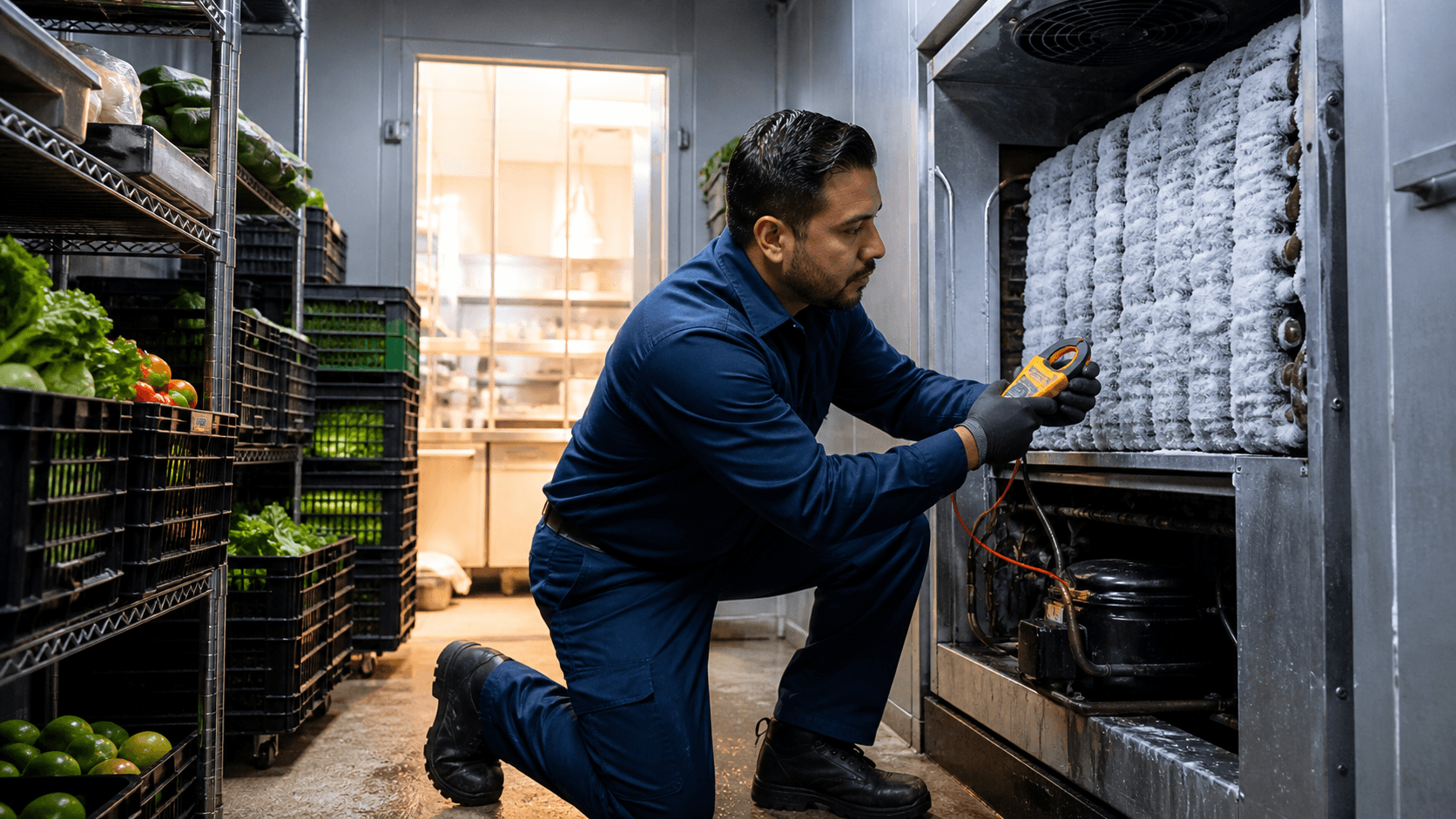
Start with airflow. Your evaporator coils and fans need open space to move cold air. In the Phoenix heat, when doors are opening more often, restricted airflow makes the system run longer and harder.
Good daily and monthly habits include:
- Keeping aisles clear in the walk-in and never stacking product right against the coil or fan guards
- Avoiding overloading shelves so air can circulate around boxes and containers
- Checking that boxes are not pushed against return air openings
Door gaskets are another quiet trouble spot. When gaskets are cracked, torn, or loose, hot air sneaks in, ice builds up, and the compressor runs more than it should.
We recommend that staff:
- Inspect gaskets for tears, gaps, or hardened rubber
- Look for condensation, frost, or moisture around the door frame
- Clean gaskets regularly with mild soap and water, not harsh chemicals, to keep them flexible
Temperature monitoring is just as important. Relying only on the built‑in display can hide issues if that sensor is off or if the door thermometer is not accurate.
Smart temperature practices include:
- Using a calibrated thermometer or data logger inside the unit
- Logging temperatures at regular intervals each day
- Watching for slow upward trends that may signal a refrigerant, airflow, or door seal problem
Staff training ties all of this together. Everyone who uses the walk-in should know to keep the door closed, avoid propping it open during deliveries, and report unusual noises, heavy frost, or water on the floor right away.
Reach-in Refrigerators and Display Cases: Keeping Components Clean
Reach-in refrigerators, undercounter units, prep tables, and glass door display cases work constantly in Phoenix food service and retail spaces. These units are often right in the kitchen or sales area, near doors that open to the outside, so Arizona dust and debris collect quickly.
Condenser coils are the first line of defense. When coils get covered with dust, dirt, and desert grit, heat cannot escape properly. That forces the compressor to run hotter and longer, which can lead to breakdowns and higher electric use.
Safe basic condenser coil cleaning usually involves:
- Unplugging the unit to work safely
- Gently vacuuming or brushing off loose dust and dirt from the coil surface
- Wiping nearby surfaces so debris does not blow right back onto the coil
If the coil is heavily matted with grease or packed with debris, that is the point where, professional refrigeration service from Phoenix technicians is the safer choice. Aggressive DIY cleaning can bend fins or push dirt deeper into the coil.
Evaporator coils need attention too. Ice, dirt, or mold on the evaporator can:
- Block airflow and cause temperature swings
- Interfere with proper defrost cycles
- Lead to excess moisture or ice inside the cabinet
Fan guards and vent areas should be clean and clear so air can move freely. When vents are blocked by product, dust, or price tags, units work harder, especially during hot afternoons when store doors open repeatedly.
Drain pans and drain lines on display cases are easy to forget until they cause a mess. Regular checks can prevent:
- Standing water under cases
- Musty or sour odors around the display
- Algae or slime buildup that leads to clogs and leaks on the sales floor
Drain Lines, Door Gaskets, and Temperature Checks That Prevent Breakdowns
Drain maintenance deserves its own spotlight. In Phoenix kitchens, dust from outside and grease from cooking combine inside condensate pans and lines. Over time, this sludge can slow or block drainage.
Common warning signs include:
- Water on floors near coolers or cases
- Musty smells inside or around the unit
- Ice buildup near the evaporator fan or along the back wall
Regular drain line flushing is a simple way to avoid these headaches. During refrigeration preventive maintenance visits, technicians can clean pans, clear lines, and check that condensate is draining properly so you are not dealing with surprise leaks during a busy rush.
Door gaskets are just as important on reach-ins, prep tables, and display cases as they are on walk-ins. In the Arizona heat, even a small gap pulls a steady stream of warm air into the cabinet, which forces compressors to cycle more often and shortens equipment life.
We suggest:
- Including gasket checks in daily walk-throughs
- Replacing damaged or hardened gaskets promptly
- Making sure doors close fully and are not blocked by stacked product
Temperature monitoring ties all of these maintenance pieces together. Good habits include:
- Setting cooler and freezer temperatures according to current food safety guidelines
- Using external digital thermometers or Bluetooth sensors for key units
- Looking for repeat temperature spikes during lunch, dinner, or delivery times that may point to door or airflow issues
When temperatures are checked and logged consistently, you are far more likely to catch small problems before they turn into an emergency call, and you are better prepared for health inspections.
Professional Refrigeration Preventive Maintenance Plans in Phoenix
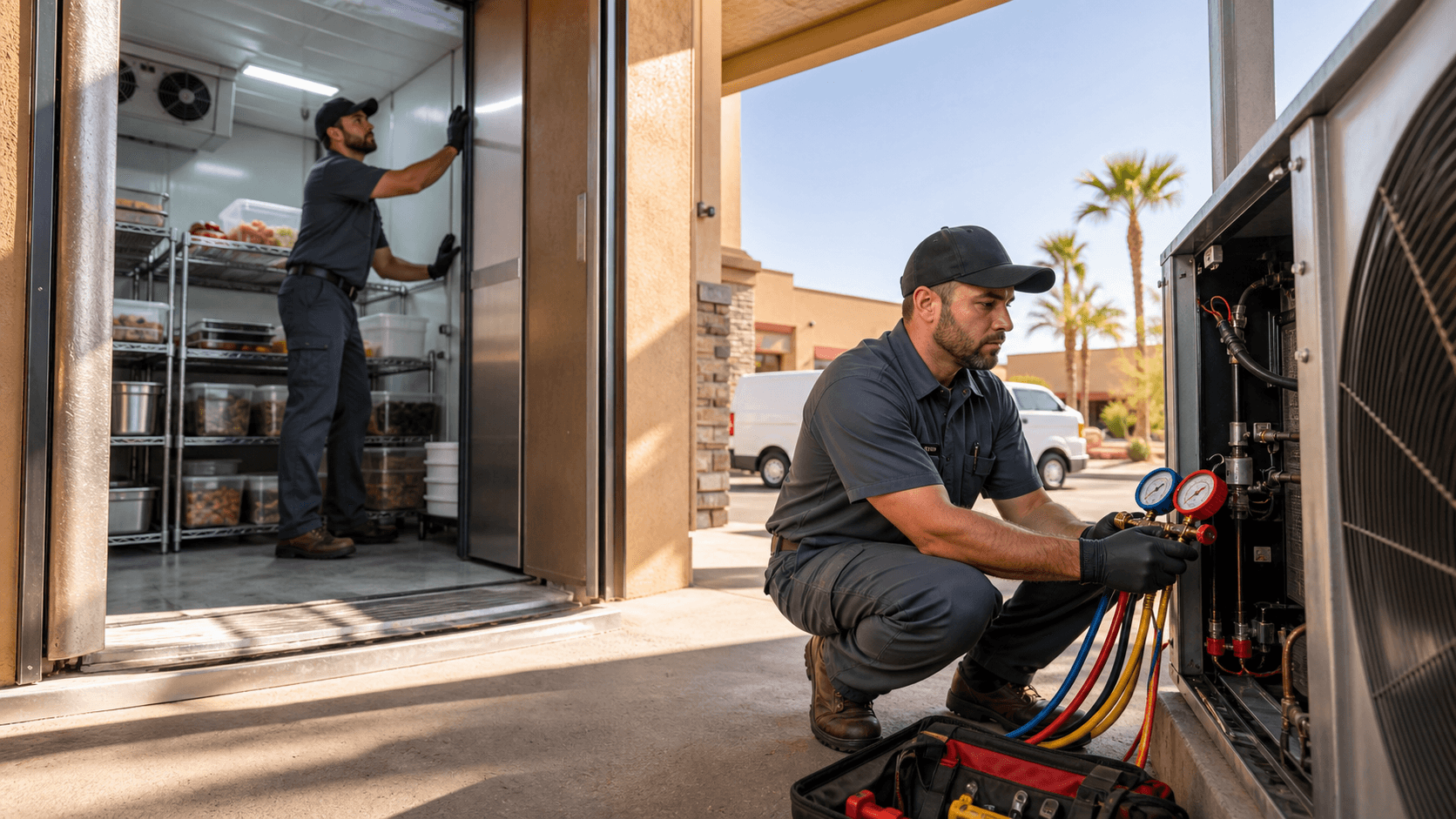
Even with a strong in‑house routine, commercial refrigeration systems need professional attention. A preventive maintenance plan tailored to Phoenix businesses focuses on what the heat and heavy use do to your equipment.
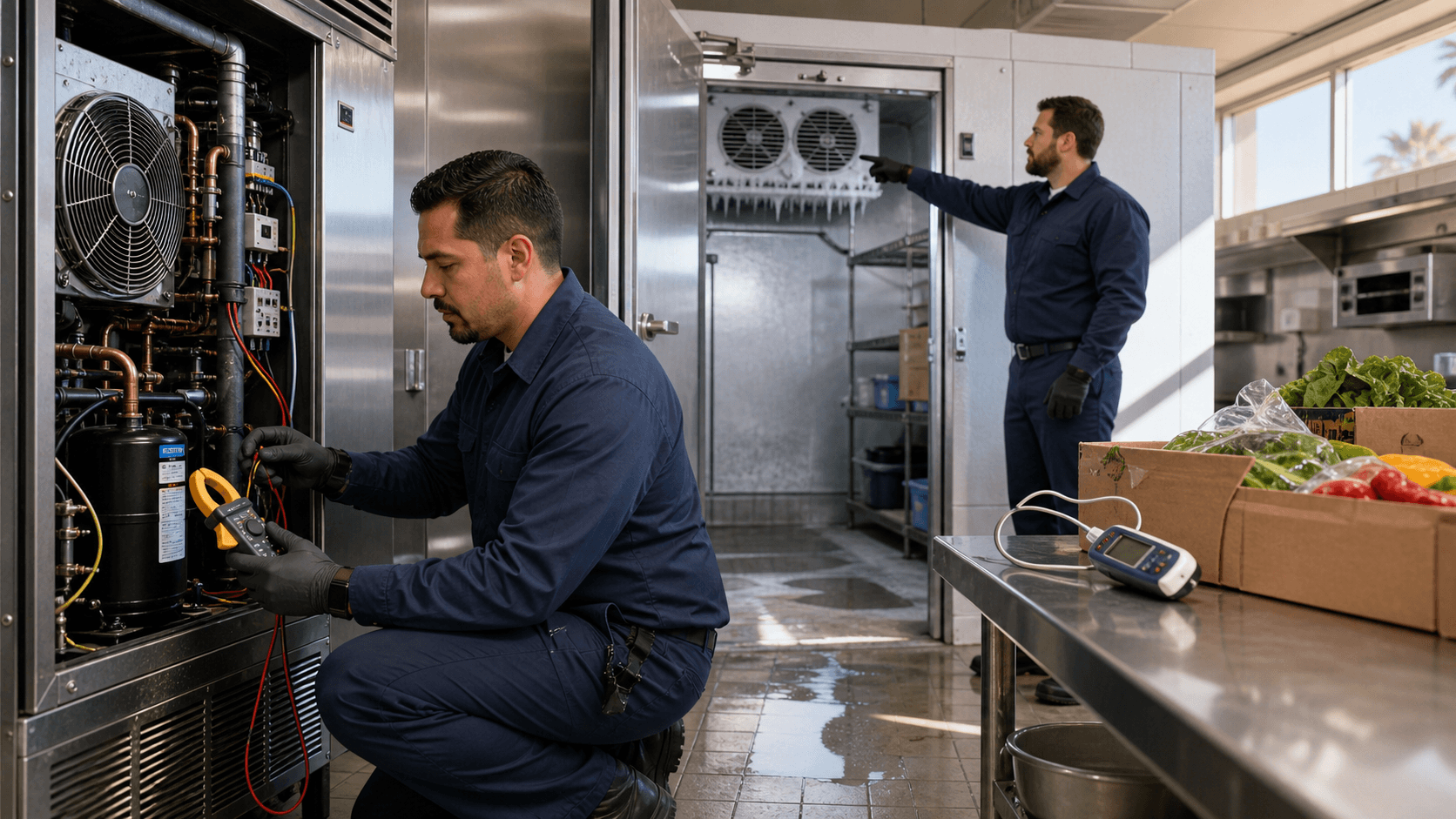
Typical professional refrigeration preventive maintenance can include:
- Detailed inspection of compressors, fans, motors, wiring, and controls
- Checking and testing defrost systems and pressure controls
- Full coil cleaning that goes beyond surface dust removal
- Drain pan and drain line service to clear buildup
- Refrigerant level checks and system performance testing
- Temperature calibration and verification of case and room sensors
When these visits are scheduled ahead of time, you reduce the odds of breakdowns during the hottest, highest-demand periods. Equipment often runs more efficiently, which helps control operating costs, and components like compressors and fans are less likely to fail early.
Different operations around the Phoenix metro will need different maintenance intervals. For example:
- Busy commercial kitchens with long operating hours may need more frequent checks
- Schools and cafeterias may schedule maintenance around academic calendars
- Medical facilities and grocery stores may plan service more often because of sensitive or high-value inventory
Working with a local contractor that understands Arizona heat and local health department expectations matters. When that contractor also offers HVAC services in Phoenix, AZ, you gain a coordinated approach to both comfort cooling and refrigeration, which is especially helpful when the entire building is under heavy load.
Partnering with a Local Expert to Protect Your Cold Storage
Shifting from reactive repairs to planned refrigeration preventive maintenance is one of the best moves any Arizona business can make to protect product and avoid surprise downtime. Instead of waiting for something to fail during a dinner rush or weekend event, you build a routine that keeps equipment cleaner, cooler, and more reliable.
A simple way to start is to create a basic checklist for your team that covers:
- Daily door and gasket checks
- Quick temperature logs for all critical units
- Visual checks for water, ice, or unusual noises
- Weekly light cleaning around coils, vents, and drain pans
The deeper technical inspections, performance testing, and thorough cleaning should be left to a licensed commercial refrigeration and HVAC contractor with experience in Phoenix conditions. By reviewing your current maintenance schedule, your recent repair history, and any product losses you have had, you can decide if it is time to move toward a proactive service plan that better protects your cold storage and keeps your operation steady.
Get Started With Your Project Today
If you are ready to improve your indoor comfort, our team at Frosty Fox AC is here to help with expert HVAC services in Phoenix, AZ. We will assess your home's needs, explain your options clearly, and recommend solutions that fit your budget and timeline. Reach out today to schedule your appointment so we can keep your system running efficiently and your home comfortable all year.