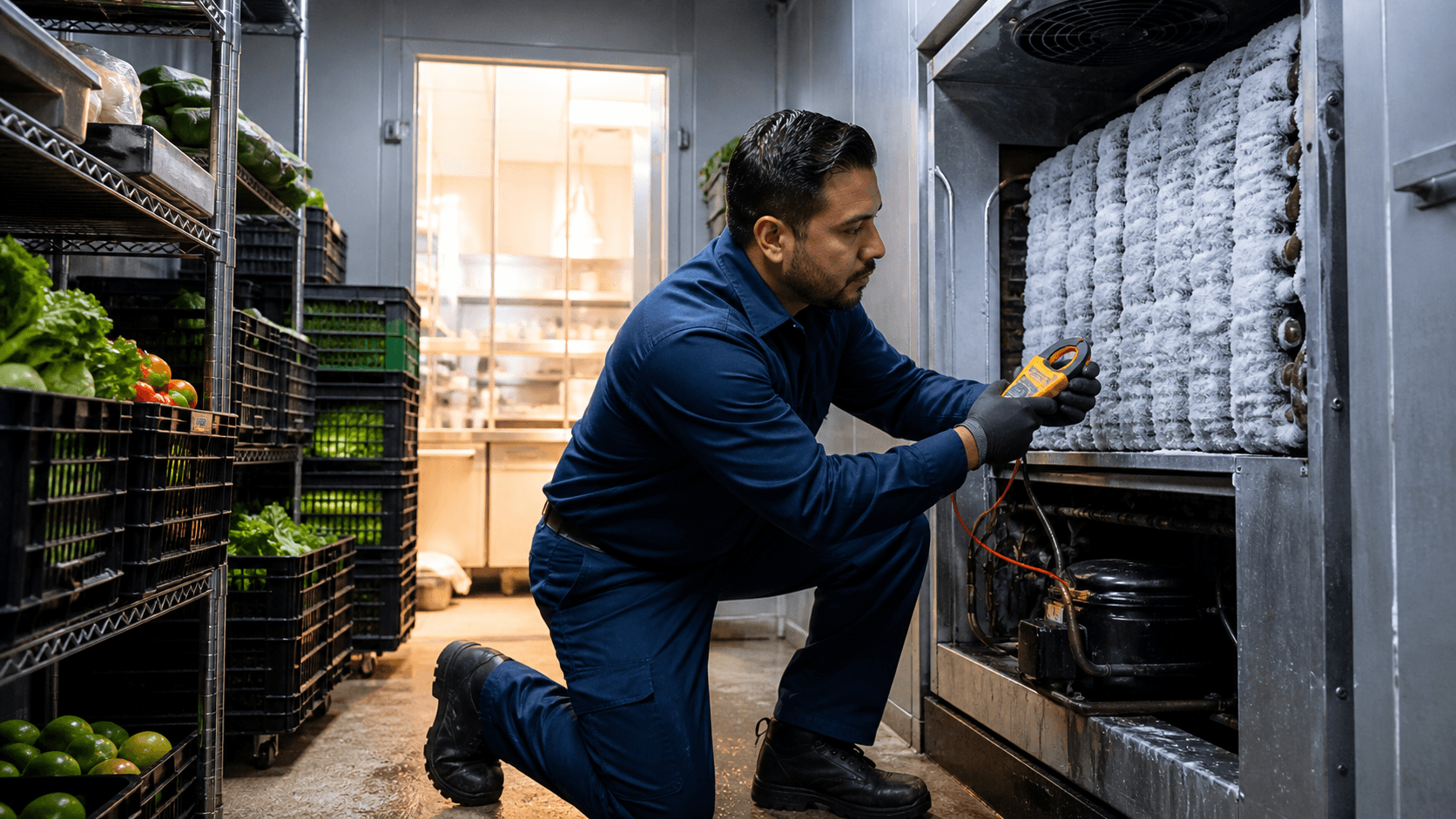
When to Call for Emergency Walk-In Cooler Repair in Mesa, AZ
When you run a restaurant, bar, or small grocery in Mesa or the East Valley, your walk-in cooler is the heartbeat of your kitchen. If it goes down, your operation can be disrupted fast. Tickets back up, product goes bad, and staff ends up reacting instead of serving guests.
On a busy summer afternoon, you might notice the temperature creeping a little higher than normal. At first, it is only a few degrees. A couple of hours later, you are staring at shelves of meat, dairy, and prep work you are not sure you can safely serve. In that situation, emergency walk-in cooler repair in Mesa, AZ cannot wait.
This guide is for restaurant, bar, and small grocery operators in the East Valley. It will help you:
- Spot early warning signs
- Decide when it is a true emergency
- Perform safe, basic checks before you call
- Build a realistic maintenance plan for Arizona conditions
Early Warning Signs You Cannot Ignore
Many walk-in failures do not start with a loud bang. They creep up slowly, then turn into an emergency at the worst time, especially in our summer heat.
Watch for rising temperatures and short cycling. Warning signs include:
- The box runs a few degrees warmer than normal for several days in a row
- The compressor turns on and off more often than usual
- You hear the system start, stop, then start again in short bursts
That short cycling pattern often means the system is struggling to keep up. In a Mesa afternoon when outdoor temps are well over 100°F, that struggle can turn into warm product quickly.
Next, look for ice buildup and sweating. These are red flags technicians commonly see in East Valley kitchens:
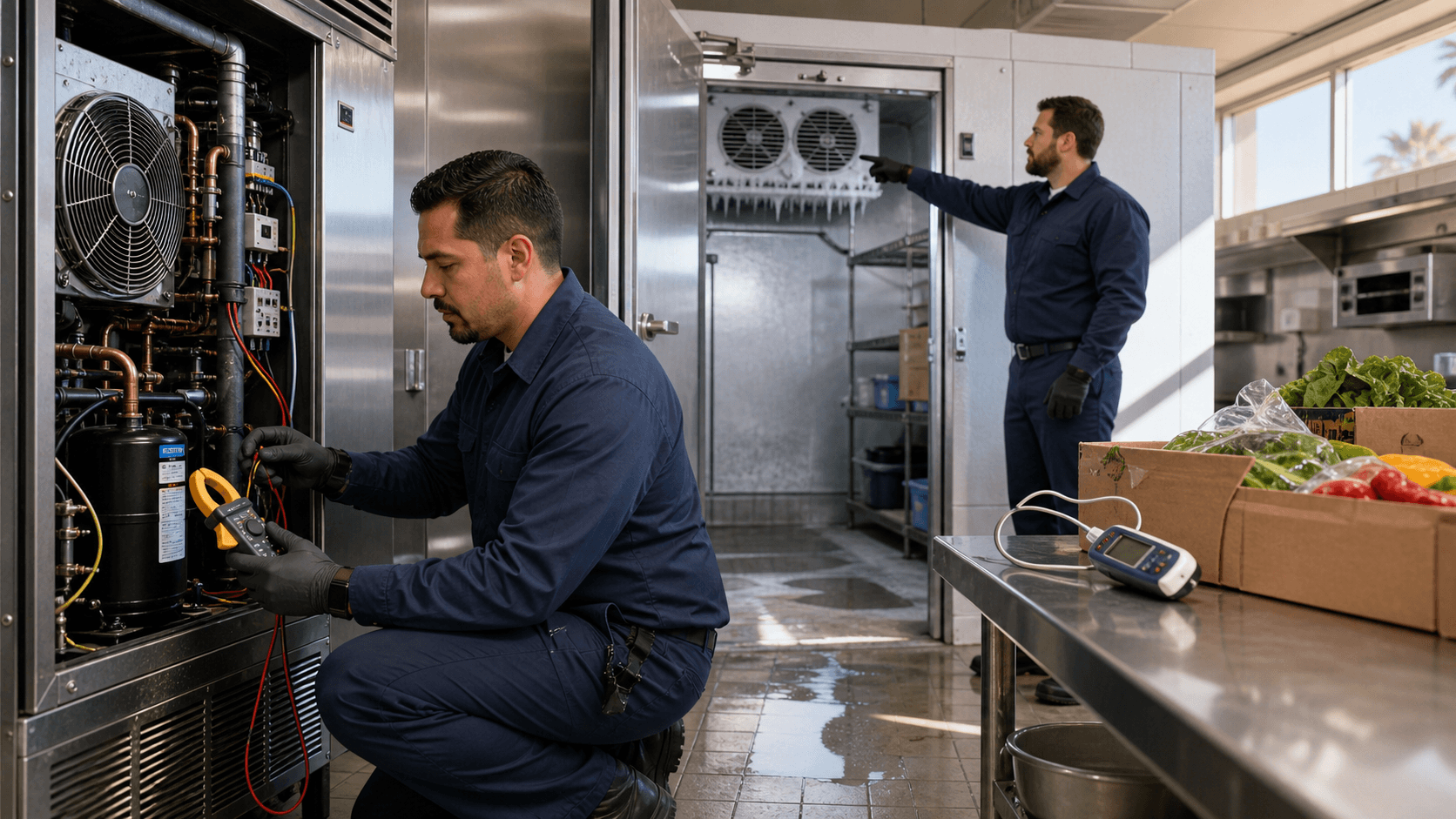
- Frost caked on the evaporator coil or fan guard
- Heavy frost on door frames or on boxes stacked near the coil
- Wet, sweating walls or ceiling panels inside the box
Too much moisture inside the walk-in can lead to mold, soggy packaging, slippery floors, and questions during a health inspection. It also points to problems like poor air flow, defrost issues, or door seal leaks.
You should also pay attention to strange noises, smells, or a power bill that suddenly jumps. In the field, techs often see these right before a breakdown:
- Grinding, buzzing, or rattling from the condensing unit or fans
- Burned or sharp chemical smells that may indicate electrical problems or a refrigerant leak
- A noticeable spike in your utility bill when nothing else in the kitchen has changed
Any of these signs are worth addressing before they turn into an after-hours emergency call.
When Walk-In Cooler Problems Become an Emergency
Some issues can wait for a scheduled visit. Others need urgent attention. Knowing the difference protects your food, your guests, and your bottom line.
Food safety comes first. In Arizona heat, food in a warm walk-in can move out of the safe zone quickly. Air temperature and product temperature do not change at the same speed, but they are tied together. If the box is running warm for hours, product near the door or on top shelves may reach temperatures where bacterial growth becomes a concern.
If a health inspector walks in while your cooler is borderline, they are likely to focus on:
- Your temperature logs
- How long the box has been above safe temperature ranges
- Product stacking and air flow around the coil
Beyond safety, product loss adds up quickly. One failed weekend can put a big dent in a small restaurant or bar. Even if only part of the walk-in is warm, you end up with a gray area of "maybe safe, maybe not" product. Throwing it away hurts, but serving questionable food risks guests getting sick and long-term damage to your reputation.
In a real-world scenario, operators often face:
- Scrambling to rewrite the menu when key items are lost
- Disappointing regulars who came for specific dishes
- Rush orders from suppliers that are more expensive and harder to schedule
Operations take a hit as well. Staff may be:
- Hauling product to backup coolers or freezers
- Buying bags of ice just to get through service
- Running to warehouse stores instead of focusing on line work and guests
If walk-in cooler problems keep coming back, customers start to notice shortened menus and frequent "86" items. Catering clients may think twice about booking large events if they hear about repeated refrigeration issues.
Any time food safety is at risk, product temperatures are climbing, or the cooler will not hold setpoint on a hot day, it is time to treat it as an emergency and call for service.
What to Check Before You Call Emergency Service
You should not try to repair your own walk-in, but a few quick checks can help you understand what is happening and give your technician better information.
Inside the walk-in, look for simple issues:
- Make sure the door is closing fully and not held open by a mat, cart, or box
- Confirm boxes, kegs, or racks are not pushed right up against the evaporator coil
- Compare the wall thermometer to a separate probe or handheld thermometer if you have one
Outside or in the machine area, do a fast walk-around:
- Trash, cardboard, or pallets blocking air flow at the outdoor condensing unit
- Obvious ice on the refrigerant lines or coil
- Loose panels, burn marks, or anything that looks clearly out of place
If you can do it safely, listen for new noises so you can describe them later. For example:
- A rattle that sounds like loose sheet metal
- A squeal from a failing motor or belt
- A loud buzz when the unit tries to start and then shuts off
Last, check controls and power. Confirm that:
- Breakers are on and have not been accidentally bumped off
- Thermostat or defrost settings look the same as usual
If a breaker is tripping, do not keep resetting it and hoping it will hold. That often means a deeper electrical or mechanical problem. Instead, note when it trips and what the unit was doing at the time if you can.
Take quick notes or photos of temperatures, ice buildup, water on the floor, and anything else unusual. This information helps your technician narrow down the issue faster and can reduce your downtime.
Why Arizona Heat Makes Walk-In Problems More Urgent
Our local climate is hard on commercial refrigeration. Long, hot afternoons keep condensers running almost nonstop, and warm nights give equipment very little time to recover. Many Mesa and East Valley kitchens also have:
- Ranges, fryers, and dishwashers packed into a tight space
- Heat from hood make-up air
- Ice machines and hot equipment sharing mechanical rooms
All of this raises the heat load on your walk-in.
In the field around the East Valley, technicians commonly find:
- Condenser coils packed with dust from monsoon storms and nearby construction
- Fan motors and contactors that overheat on rooftops or in tight alleys
- Refrigerant leaks at fittings that started as "it cools, but not enough" complaints
Many emergencies begin with small, fixable items such as:
- Torn or hardened door gaskets
- Worn door closers that let the door stand slightly open
- Missing or damaged strip curtains at the door
Those "small" issues let warm, humid air pour into the box. That extra moisture leads to heavier frost on the coil, longer run times, higher energy use, and, eventually, a compressor that fails, often during your peak rush when the cooler is under the most strain.
Regular maintenance is almost always cheaper and easier than back-to-back emergency calls in the middle of a Mesa summer.
Building a Practical Maintenance Plan Around Your Menu
Your menu, volume, and traffic pattern should help set your maintenance schedule.
For example:
- A taqueria or burger concept with constant door openings, frequent prep, and heavy deliveries needs more frequent service.
- A small office cafeteria or low-volume bar with light use may be able to go longer between professional visits.
In general, heavier traffic, hotter kitchens, rooftop equipment, and older systems all point toward shorter gaps between maintenance visits.
Between those visits, your staff can handle simple, safe tasks:
- Wipe door gaskets regularly and check for tears or gaps
- Keep floor drains clear and watch for standing water inside the box
- Keep boxes and racks away from the coil to protect air flow
- Log temperatures at set times each day, including after deliveries and at the end of the night
Over time, those logs will show trends. If temperatures are drifting up, if it takes longer for the box to pull down after a delivery, or if the cooler struggles on the hottest days, it is time to bring in a technician before it turns into an emergency.
A thorough professional maintenance visit for Mesa and East Valley businesses should include:
- Cleaning condenser and evaporator coils
- Verifying defrost operation and settings
- Confirming thermostat and sensor accuracy
- Inspecting door hardware, heaters, gaskets, and strip curtains for air leaks and moisture issues
- Checking electrical connections, contactors, and fan motors for heat-related wear
You should also receive a clear summary of system performance and recommended repairs so you can plan around busy weekends and events instead of reacting during them.
Need Emergency Walk-In Cooler Repair in Mesa or the East Valley?
If your walk-in cooler is running warm, short cycling, icing up, or showing any of the warning signs described above, do not wait for product loss or a failed health inspection. Contact a local commercial refrigeration service that works every day with East Valley restaurants, bars, and small groceries. A technician familiar with Arizona's heat and common walk-in problems can inspect your system, stabilize temperatures, and help you set up a maintenance plan that reduces emergency calls and keeps your cold storage reliable in the Mesa summer.
Protect Your Inventory With Fast, Reliable Cooler Repairs
If your walk-in is fluctuating in temperature or showing signs of failure, we can step in before it affects your product and your bottom line. At Frosty Fox AC, our certified technicians specialize in walk-in cooler repair in Mesa, AZ so you get precise, long-lasting solutions instead of quick fixes. Reach out today to schedule service, and we will work with your schedule to restore stable, efficient cooling as quickly as possible.