How Monsoon Season Can Wreck Your Home's Cooling
Monsoon season in Phoenix hits right when you lean on your AC the most. The heat stays high, then the sky turns brown with dust, the wind slams your windows, rain dumps all at once, and the lights flicker just as your system is working its hardest. That mix of heat, dust, wind, and sudden rain is rough on air conditioners.
Monsoon weather is tougher on your AC than a normal hot day. Dust blocks airflow, rain and standing water bring new problems, and power surges can hurt the electronics inside your system. All of that stacks up. Your AC has to run longer, work harder, and push through more stress every single day.
For homeowners, that can mean rooms that never feel cool, higher power bills, strange noises, and surprise breakdowns right when every HVAC company in Phoenix is booked solid. Fast help for AC repair in Phoenix, AZ can be hard to get when storms are hitting back-to-back. As a local HVAC team, we work with this weather every year, and we know how to spot problems early so your system has a better chance of staying strong through the season.
How Dust Storms Choke Your AC System
When a haboob rolls through, that wall of dust does not just stay outside your yard. Fine dirt gets into almost everything, including your AC. Your outdoor condenser unit pulls air through its coils to get rid of heat. Dust storms push dirt, leaves, and trash into those coils, and the buildup makes it much harder for the unit to breathe.
When coils and filters are coated in dust, you might notice:
- Warmer air coming from the vents
- Longer run times to reach the same thermostat setting
- Higher energy use without any extra comfort
- More strain on the compressor and blower motor
During monsoon season, it is common to see outdoor units half-buried in leaves or yard debris. Dirt can wash into drain pans and lines, which makes clogs more likely. Filters that might last longer at other times of year can load up very fast when you are getting storm after storm.
Helpful ways to protect your system from dust include:
- Look at your outdoor unit after a dust storm to see if it is buried or blocked
- Keep at least two to three feet of clear space around the AC for airflow
- Watch your air filter and change it more often when dust activity picks up
- Have a professional clean your coils before and after monsoon season
Keeping airflow open is one of the best things you can do for your system. It helps your AC cool better, use less energy, and stay under less stress on the hottest days.
Rain, Humidity, and Hidden Water Damage Risks
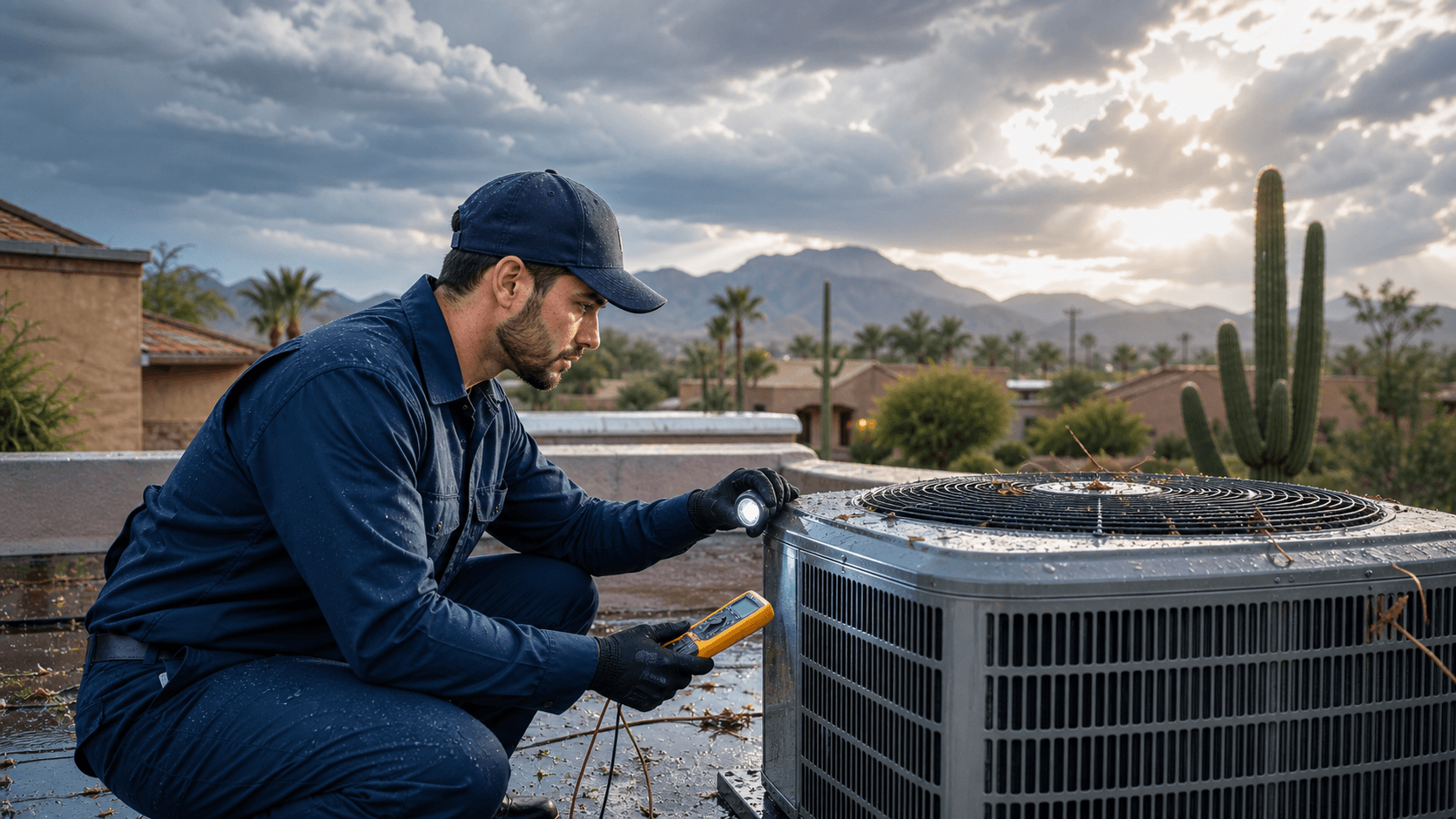
Heavy monsoon rain does not usually hurt the AC unit just by getting it wet. The bigger problem is what happens when too much water shows up too fast. Gutters overflow, dirt shifts, and water can start pooling around your outdoor unit. If water sits there, it can lead to rust, corrosion, or electrical problems.
Inside, your AC pulls moisture out of the air and drains that water away through a condensate line. During monsoon season, that line can clog with dirt, algae, or dust that has washed inside. When that happens, you might see:
- Water dripping from the indoor unit
- Stains or damp spots on ceilings or walls
- A full or overflowing drain pan
Higher humidity also makes the house feel warmer even at the same thermostat number. That sticky feeling can cause your AC to run longer and work harder. If the system is undersized, very old, or dirty, it may struggle to keep up and you will notice uneven temperatures from room to room.
Extra moisture indoors can also:
- Encourage mold growth inside ducts or around vents
- Create musty odors that do not go away
- Make dust and allergens feel worse
Some smart steps to reduce water and humidity issues are:
- Have an HVAC pro check and clear the condensate drain line
- Make sure the outdoor unit is level and not sitting in standing water
- Ask about dehumidification options or system adjustments for monsoon conditions
Keeping water moving where it should go helps protect both your AC and your home.
Power Surges, Overheating, and Emergency Breakdowns
Monsoon storms hit the power grid hard. Lightning, strong winds, and sudden outages can send power surges and brownouts through your home. Those spikes can damage sensitive AC electronics like capacitors, control boards, and thermostats.
At the same time, your system is already running almost nonstop in extreme heat and muggy air. That constant load can lead to:
- Overheated motors and wiring
- Frozen coils from poor airflow or low refrigerant
- Failed capacitors that stop the compressor or fan from starting
Common signs of monsoon-related AC trouble include:
- The system will not start after a storm, even though the thermostat is calling for cooling
- Warm air blows from vents while the outdoor unit is running
- The breaker for the AC trips over and over
- Burning smells from the indoor or outdoor unit
- New buzzing, clicking, or grinding noises
A dedicated surge protector for your AC can help protect the main components from power spikes. It also helps to avoid changing thermostat settings over and over during storms, which can make parts cycle more often and add stress. If a breaker trips more than once for your AC, that is a sign you should have a licensed HVAC technician check for deeper electrical or mechanical issues instead of just flipping it back on.
Smart Monsoon Prep to Extend AC System Life
Getting your AC checked in late spring is one of the best ways to prepare for monsoon season. A preseason tune-up gives a technician time to spot loose wires, dirty coils, weak capacitors, and drainage issues before they get pushed to the limit.
A good monsoon prep visit usually includes:
- Cleaning or checking indoor and outdoor coils
- Inspecting blower components
- Tightening electrical connections and testing key parts
- Checking refrigerant levels
- Confirming proper drainage from the condensate system
On your side, a simple monsoon checklist can make a real difference:
- Change air filters more often when dust storms pick up
- Clear leaves, trash, and dirt from around the outdoor unit after big storms
- Listen for any new sounds when the AC starts or stops
- Look at insulation and exposed refrigerant lines for cracks or damage
When your system is clean and tuned up, it can cool more evenly, use less energy, and is less likely to quit on the hottest, stickiest afternoon. That can help you avoid the stress of trying to get urgent AC repair in Phoenix, AZ when every other homeowner is doing the same thing.
As a local HVAC company, we focus on clear, honest recommendations. That can include talking about energy-efficient upgrades like variable-speed systems or smart thermostats, and also explaining what truly needs repair or replacement now and what can safely wait.
Protect Your Comfort Before the Next Storm Hits
Waiting until the first big haboob or late-summer heat wave to see if your AC can keep up is a gamble. By that point, small issues have already had time to grow into bigger ones. A simple tune-up and monsoon check before storms hit gives your system a better chance of making it through the season without surprises.
At Frosty Fox AC, we understand how Phoenix monsoon weather affects every part of your HVAC system. We provide seasonal maintenance, detailed system inspections, and 24/7 emergency AC repair in Phoenix, AZ when monsoon stress has already taken a toll. With the right prep, steady maintenance, and help from a trusted local team, your home can stay cool, comfortable, and efficient all monsoon season long.
Restore Reliable Comfort To Your Home Today
If your AC is struggling to keep up with the Phoenix heat, we are ready to help you get comfortable again. At Frosty Fox AC, our technicians quickly diagnose the issue and recommend solutions that fit your home and budget. Schedule professional AC repair in Phoenix, AZ so we can get your system running efficiently and reliably. Reach out today to book your appointment and avoid unexpected breakdowns when you need cool air the most.