When the Desert Heat Meets a Weak AC Capacitor
When your AC has to fight off Phoenix heat day-after-day, even a small weak spot can bring the whole system down. One of the most common small parts that can stop everything is the AC capacitor, the electrical component that helps your system start and keep running. When it begins to fail, your home, restaurant, office, or rental property can go from comfortable to hot in a hurry.
Across the Valley, we see the same pattern every summer: 110-degree afternoons, crowded dining rooms, busy offices in Chandler and Mesa, and then an AC that suddenly will not start or keep up. Many of those calls come down to a worn-out capacitor. In this article, we will explain what your capacitor does, why Arizona is so hard on it, the warning signs to watch for, and how fast capacitor replacement in Phoenix can keep a simple problem from turning into a major AC repair in Phoenix, AZ.
How Your AC Capacitor Works and Why Arizona Is So Tough on It
Think of your AC capacitor as a short-term battery that gives your motors the extra push they need. Most central AC systems and rooftop package units have two types of capacitors:
- Start capacitors that help the compressor and fan get moving
- Run capacitors that help those motors keep running smoothly and efficiently
In Valley neighborhoods and commercial areas, many systems sit on rooftops or in tight outdoor corners. Both setups make capacitors work harder than they would in a mild climate.
Arizona conditions are tough on these components for several reasons:
- Extreme heat: Rooftop units in Phoenix, Chandler, or Mesa sit in full sun, and attic-mounted equipment deals with trapped heat. High temperatures stress electrical parts and dry out internal materials in the capacitor.
- Constant cycling: Systems run long hours during summer, with frequent starts and stops. Every start pulls on the capacitor.
- Power fluctuations: Summer monsoon storms and high demand on the grid can cause power dips and surges that strain the capacitor.
Other common reasons capacitors fail early include:
- Poor airflow around the outdoor unit, which raises operating temperatures
- Age, since capacitors naturally weaken over time
- Electrical issues in the system, such as loose connections or damaged wiring
- Low-quality replacement parts that are not properly matched to the system
Because a capacitor seems like a simple part, it can be tempting to treat it as a quick DIY swap. In reality, having a professional handle capacitor replacement in Phoenix helps ensure you get the right size and type, and that any underlying electrical or mechanical problems are caught before they turn into bigger repairs.
Common Warning Signs Your AC Capacitor Is Failing
Capacitors usually do not fail all at once. They often give warning signs that something is wrong. Catching these signs early can keep a small electrical part from damaging expensive motors.
Here are the symptoms we watch for on AC repair in Phoenix, AZ, and AC repair Chandler calls:
- Hard starting or slow starts: The outdoor fan may hesitate, or the compressor may struggle to kick on. You might notice a delay between the thermostat call and the outside unit starting. In some homes or small offices, lights may briefly dim when the system tries to start.
- Clicking or buzzing noises: You may hear repeated clicking from the outdoor unit as it tries to start but cannot. A buzzing or humming sound without the fan or compressor fully engaging is another common clue that the capacitor is not delivering enough power.
- Intermittent operation: The AC might run for a short time, then shut down, then start again. This is especially common during the hottest part of the day, when strain on the capacitor is highest and weak components give out.
- Warm air from the vents: The indoor blower may be pushing air, but if the outdoor unit is not cooling correctly because the compressor or fan motor will not start or run properly, that air will feel warm or barely cool.
- System will not start at all: The thermostat calls for cooling, but the outside unit stays quiet, or you only hear a brief hum before it shuts off. This is one of the most common "AC won't start" complaints that turns out to be a failed capacitor.
If you notice one or more of these, it is a sign that the system is struggling. The longer it struggles, the more risk there is of damage to motors and other components.
Why Fast Capacitor Replacement Protects Your Entire System
Running your AC with a weak capacitor is like trying to start your car every day with a dying battery. Eventually, it is not just the battery that fails; it is the starter too. In AC systems, that starter-equivalent is your compressor and fan motors.
When a capacitor is weak, motors:
- Draw higher electrical current to start
- Overheat more easily
- Experience more stress every time the system cycles
Over time, this can lead to:
- Burned-out fan motors
- Compressor damage
- Tripped breakers and nuisance shutdowns
In real-world Arizona settings, this can be more than an inconvenience. A restaurant that loses cooling during the dinner rush, an apartment community with multiple units down, or a Chandler office building that heats up by mid-afternoon all deal with unhappy customers or tenants and productivity issues.
The frustrating part is that capacitors themselves are relatively inexpensive parts compared to a compressor or full system replacement. Prompt capacitor replacement in Phoenix helps:
- Prevent extended downtime when the heat is at its peak
- Protect motors from overheating and mechanical stress
- Reduce the chance of needing a major AC repair in Phoenix, AZ, later
Responding quickly to the early warning signs keeps your AC from limping along in a state that slowly damages the most expensive components.
When to Call a Pro and What to Expect From AC Repair in Phoenix, AZ
Capacitors are small, but they store electrical energy even after the power is off. That stored charge is the main reason they are not a safe DIY project. Without the right tools and training, there is a real risk of electrical shock. There is also the risk of installing the wrong size or type of capacitor, which can shorten equipment life.
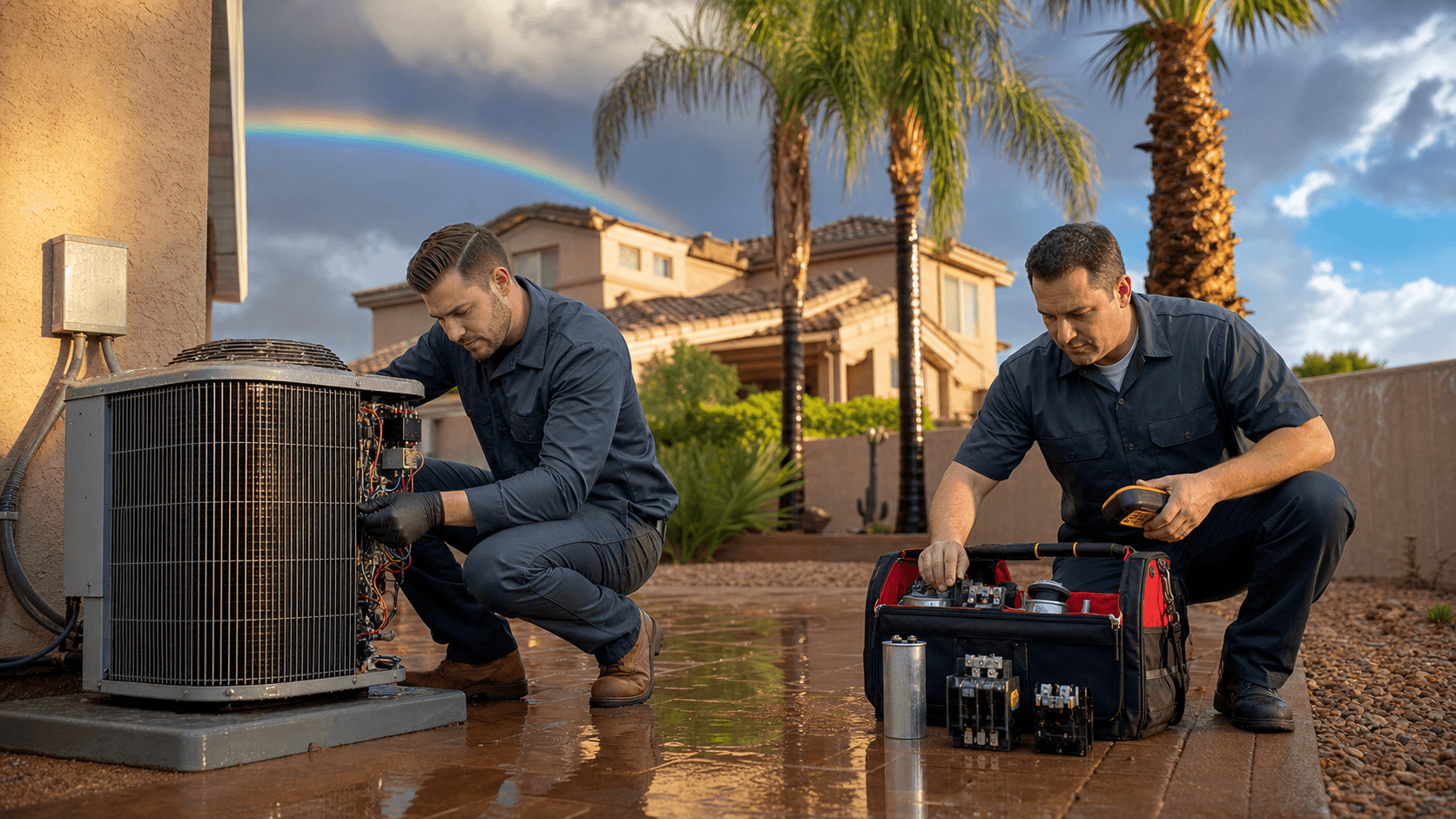
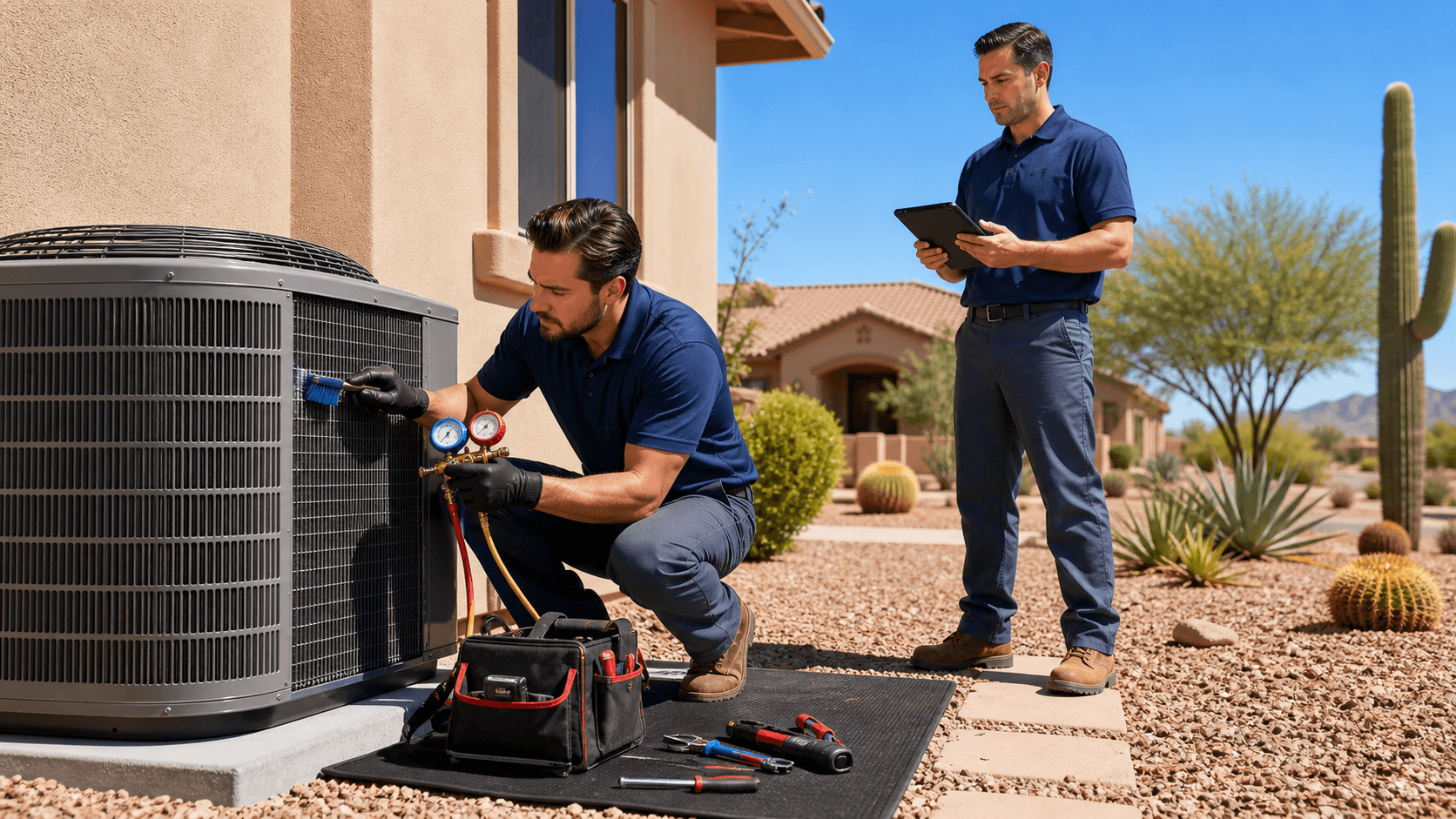
On a typical service call, a licensed technician will:
- Inspect the outdoor and indoor units for obvious signs of damage or overheating
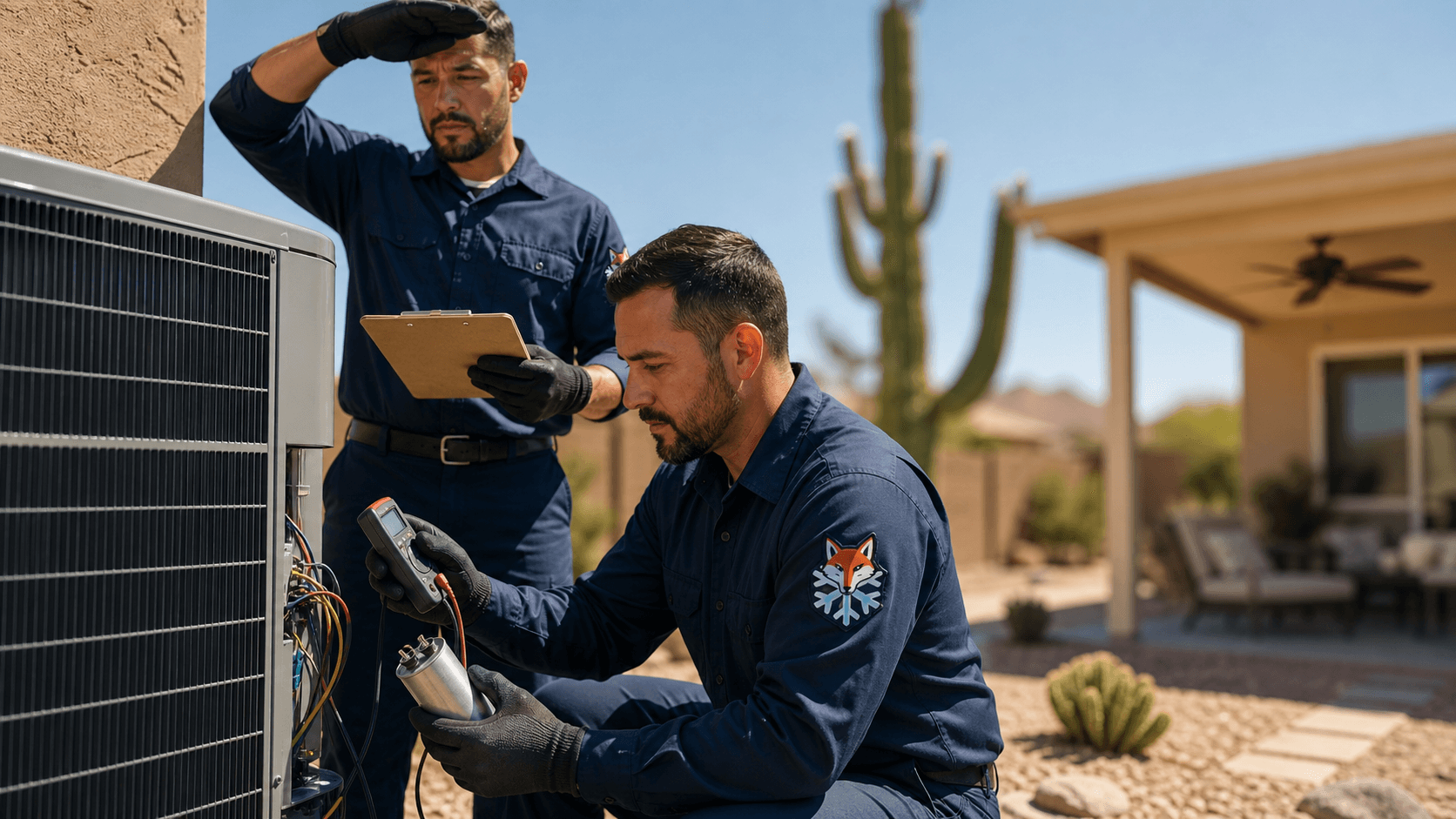
- Test the capacitor with a meter to check its actual capacitance, not just visual condition
- Verify voltage and electrical connections
- Check related components, such as fan motors, contactors, and wiring, for signs of stress or failure
- Look for underlying issues like airflow problems or debris around the outdoor unit that may have contributed to the failure
At Frosty Fox AC, we provide AC repair in Phoenix, AZ, and AC repair Chandler for homeowners, property managers, and commercial facilities across the Valley. Our team focuses on finding the real cause of the problem, not just swapping parts, and we offer recommendations to improve reliability when systems are working in extreme heat day after day.
Stay Ahead of AC Breakdowns in the Valley Heat
The earliest signs of capacitor problems are often easy to ignore. A little clicking here, a slightly slower start there, or air that feels just a bit warmer than usual might not seem urgent. In our climate, those are the cues to take seriously. Treating them as a reason to schedule professional AC service can keep your system from failing during the hottest part of the day.
For Arizona homeowners, businesses, and property managers, regular maintenance is one of the best ways to catch weak capacitors before they fail completely. During routine visits, technicians can test capacitors, check electrical connections, and make sure rooftop and outdoor units have the airflow they need to run as cool as possible. That kind of attention reduces surprise "AC won't start" situations, especially when temperatures are high and systems are under maximum strain.
Frosty Fox AC is here to help with careful diagnosis, safe capacitor replacement in Phoenix, and reliable AC repair Chandler and across the Valley, so your home, business, or property stays cool and comfortable through the heat.
Restore Reliable Comfort To Your Home Today
If your system is struggling to keep up in the Arizona heat, we are ready to help you get your cooling back on track quickly and reliably. Schedule expert AC repair in Phoenix, AZ with Frosty Fox AC and our technicians will diagnose the issue and explain your options clearly before any work begins. We focus on practical solutions that fit your home and budget, so you can feel confident about every repair decision you make.