What Newer San Tan Valley Homes Need From HVAC
Newer homes in San Tan Valley look pretty similar from the street. Most are built in the last 10 to 15 years, sit in HOA communities, and have open floor plans with big kitchens and great rooms. Many are two stories, with bedrooms and lofts upstairs and long hallways that all share the same system.
That modern style is nice to live in, but our Arizona heat puts a lot of pressure on the HVAC system. Long stretches of extreme heat, monsoon humidity spikes, and mild winters all change how your equipment runs. A system that might be fine in another state can struggle here if it is not sized and set up for this exact kind of house.
We are focusing here on San Tan Valley homeowners with newer construction, not full remodels or older historic homes. If you want to understand what kind of HVAC services in San Tan Valley, AZ make sense for your place, how to avoid common mistakes, and when to stop trying DIY tricks and call a pro, this guide is for you.
How Newer San Tan Valley Homes Are Different for HVAC
Newer homes usually have tighter construction. That means:
- Better insulation and sealed walls
- Dual-pane windows
- Radiant barriers or reflective roof materials
All of this is good, but it changes how AC sizing and airflow should be handled. A common mistake in newer San Tan Valley homes is oversized AC units. Bigger is not always better. When the unit is too large for the house, it cools the air fast but shuts off too quickly. This short cycling can lead to:
- Humidity staying high inside
- Temperature swings that feel uncomfortable
- Extra wear on motors and electrical parts
Features like radiant barriers and efficient roofing can lower cooling loads, so a system that would be right in an older house might be too large in a newer one.
Two-story and open-concept homes bring another set of issues. Many owners complain about:
- Hot upstairs bedrooms at night
- Lofts that never feel as cool as the downstairs
- Rooms at the far end of long hallways staying warmer
Open layouts can create hot zones near big windows and cold zones closer to the thermostat if the ductwork and vents were not planned well. Proper zoning, enough return air, and smart supply vent placement help a lot in these newer subdivisions. When these are missing, the system has to work harder just to keep everyone somewhat comfortable.
Then there is the reality of HOA communities and builder-installed systems. Many homes start out with basic, builder-grade HVAC equipment. It usually runs fine for a while, but it is not designed to handle years of hard summer use without good care. In the field, technicians often see:
- Undersized return air grilles that choke airflow
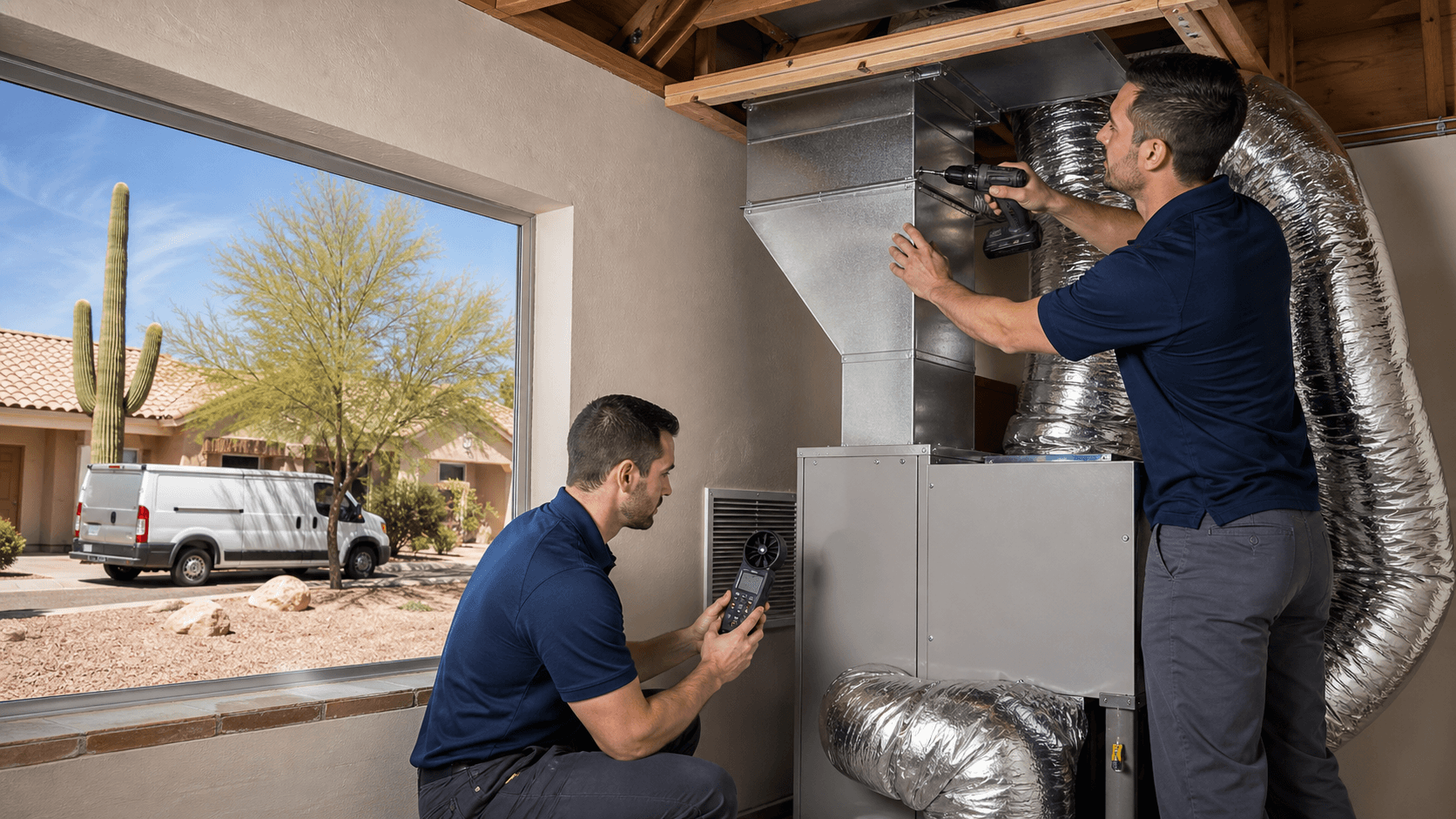
- Minimal attic platforms that make service hard
- Condensers crammed in tight side yards with poor air space
- Roof or wall penetrations that are not sealed well
Because of this, new homeowners should not assume that a newer system is automatically in perfect shape. Scheduling a professional system check within the first year of moving in can catch issues before they turn into major repairs.
Core HVAC Services in San Tan Valley, AZ for Newer Homes
Our summer heat gives AC systems a heavy workout. Some of the repair problems we often see in newer homes include:
- Weak cooling or air that feels barely cooler than the room
- Tripped breakers when the system starts up
- Frozen indoor coils from airflow or refrigerant issues
- Faulty condensate pumps or blocked drains
- Thermostat miswiring or poor thermostat placement
On very hot days, do not ignore warning signs like the system running nonstop, hot rooms at the end of a duct run, or water around the indoor unit. Waiting can allow small problems to grow into compressor damage, larger refrigerant leaks, and much higher power use.
Maintenance is just as important as repair. In the Phoenix metro climate, key AC maintenance tasks for newer systems usually include:
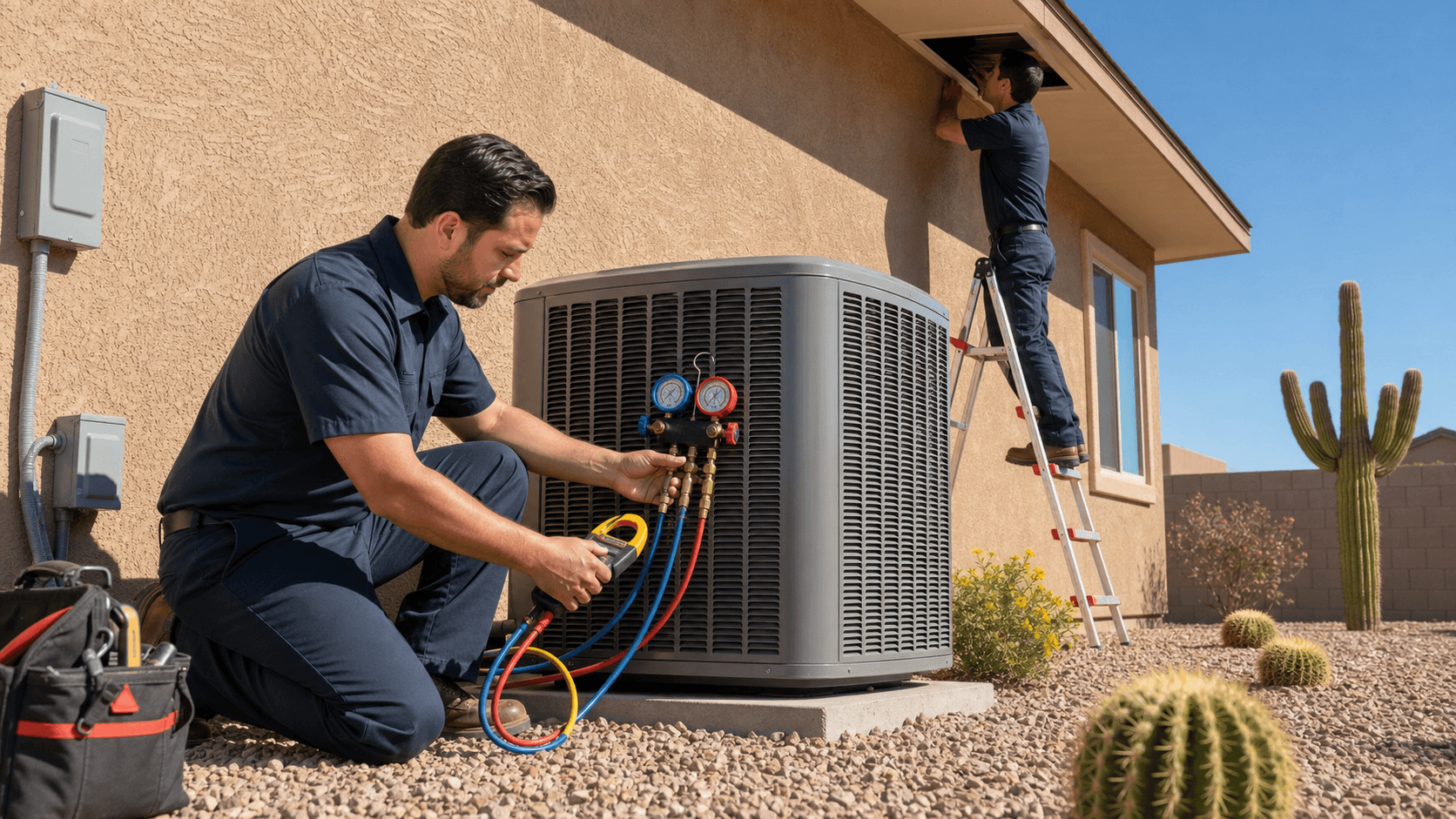
- Cleaning indoor and outdoor coils
- Clearing and treating condensate drains
- Checking refrigerant pressures
- Inspecting attic duct connections for gaps
- Verifying airflow and temperature drop
Dust, desert debris, and full sun exposure on outdoor units in San Tan Valley all speed up wear, even on fairly new equipment. Regular maintenance, often once or twice a year, helps keep warranties valid and can uncover installation issues early.
For heating, the workload is lighter but still matters. Gas furnaces and heat pumps in newer homes should be checked for safe operation and smooth switching between heating and cooling. Common heating problems in these homes include faulty ignitors, dirty flame sensors, heat pumps stuck in cool mode, and noisy attic furnaces. A fall checkup lets you spot issues before cooler evenings arrive.
When to Repair vs. Replace HVAC in a Newer San Tan Valley Home
Builder-installed AC units here often last around a decade or so, sometimes less if maintenance has been skipped. Attic installations, long daily run times, and direct sun on condensers can shorten their practical life. Systems can fail earlier if they were installed poorly or never serviced in their first several years.
Repair is usually the smart move when:
- The system is still fairly new
- The issue is a minor electrical part, like a capacitor or contactor
- There is a small refrigerant leak that can be repaired and rechecked
- The problem is a clogged drain or a thermostat issue
A good technician will look at system age, repair history, refrigerant type, and efficiency before suggesting repair or replacement. It is fair to ask for clear answers about what failed, why it failed, and how likely it is to fail again soon.
Replacement becomes a stronger option when you see red flags like:
- Cracked heat exchangers on furnaces
- Compressors that have failed after years of heavy use
- Major refrigerant leaks in coils
- Repeated breakdowns every hot season
Upgrading to higher efficiency equipment can make sense if you have very high electric bills, poor comfort on the second floor, or very noisy equipment, or if your system uses older refrigerant. Planning replacement before peak summer helps avoid emergency installs and limits on equipment choices.
Maintenance Habits That Protect Comfort and Energy Costs
A simple maintenance schedule works well for most San Tan Valley homes:
- AC-focused visit in early spring
- Heating-focused visit in fall
- Basic homeowner checks in between
Spring service gives time to find blower, capacitor, and refrigerant issues before the hottest days, when appointment times get tight. Many newer equipment warranties expect proof that regular maintenance was done.
There are a few safe tasks most homeowners can handle:
- Changing air filters on time
- Keeping plants and debris away from the outdoor unit
- Looking for damaged insulation on exposed refrigerant lines
- Making sure attic access is clear and safe
Filter choice is important in newer homes. Medium MERV filters are often a good balance. Higher rated filters can clog quickly in dusty conditions and may restrict airflow if the system was not designed for them. Another common mistake is closing too many supply vents in unused rooms. That can raise pressure in the ductwork and strain the system instead of forcing more air where you want it.
Skipping maintenance usually ends up costing more here. In real homes, we see:
- Condensate lines plugging and leaking into ceilings
- Outdoor coils so dirty the unit overheats and trips breakers
- Systems freezing up during the first big heat wave
A neglected system has to run longer and cycle more often, which shows up on SRP or APS bills and still may not reach the set temperature. In newer homes, maintenance is less about checking a box and more about keeping comfort steady and avoiding early equipment failure.
Plan Your Next HVAC Step Before the Next Heat Wave
Newer San Tan Valley homes have tight construction, open layouts, and hard-working HVAC systems. Understanding how your home's design affects comfort, knowing the main HVAC services in San Tan Valley, AZ that matter, and keeping up with maintenance all help your system last longer and perform better.
It helps to take a quick look at where you stand right now. Think about the age of your system, any hot or cold spots in your home, how often it has needed repair, and when a professional last inspected it. With that information, you can decide if your next move should be a maintenance visit, a repair check, or a serious talk about replacement so you are ready before the next long stretch of triple-digit days.
Get Started With Your Project Today
If you are ready to make your home more comfortable and efficient, our team at Frosty Fox AC is here to help. From fast repairs to complete system upgrades, we tailor our HVAC services in San Tan Valley, AZ to fit your home and budget. Reach out today so we can assess your system, explain your options clearly, and schedule a convenient time to get started.