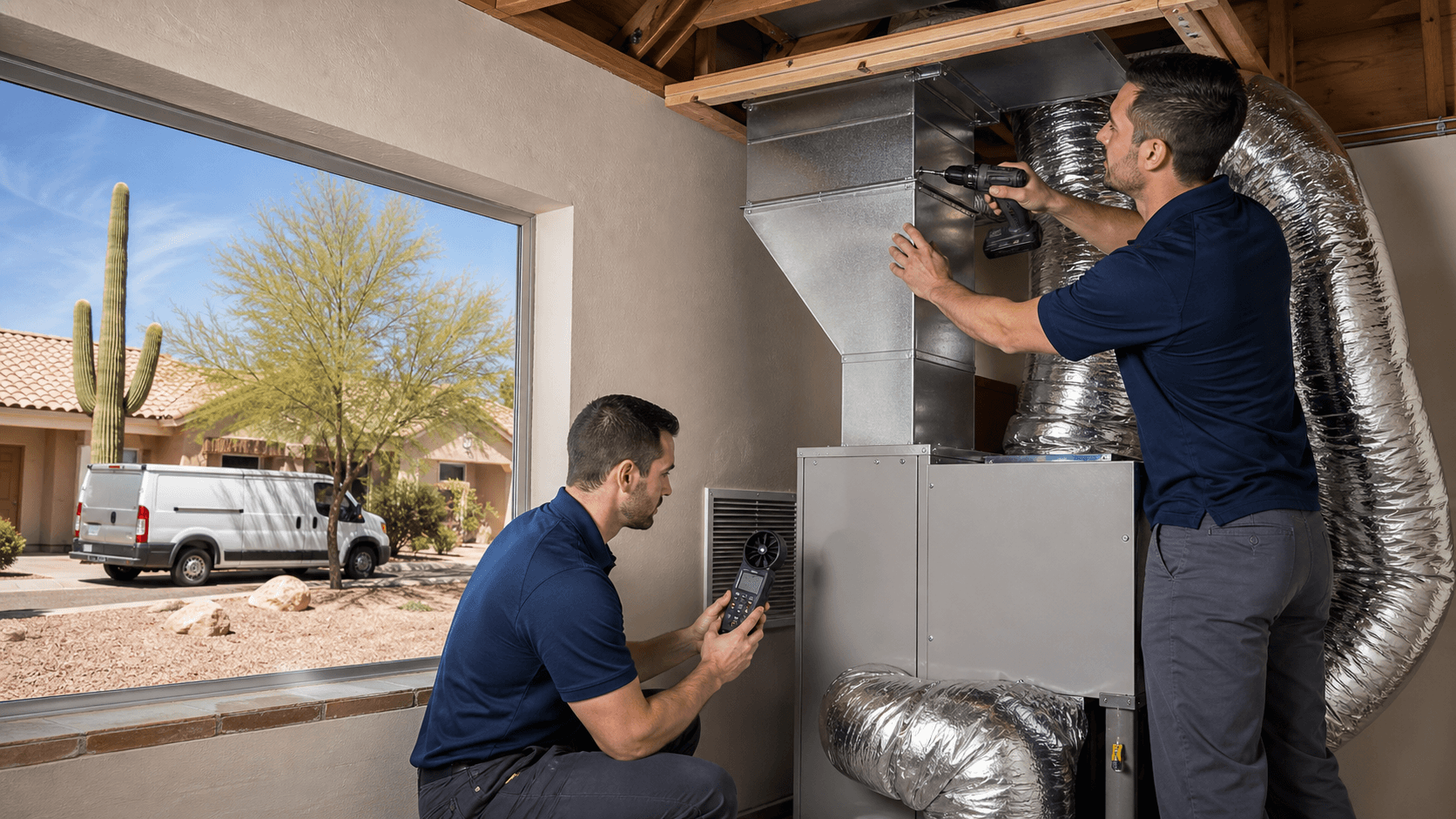
Why Catching Weak Airflow Early Matters in Phoenix Heat
Airflow problems in a Phoenix home usually show up first in late spring, when daytime temps start to climb and the AC runs longer than it did in winter. The air might feel cooler at the vents, but some rooms never quite get comfortable, even though the thermostat says they should. That early warning is easy to shrug off, but it is the best time to catch issues, before you are asking your system to fight through the first stretch of 110-degree days.
When we talk about airflow in an AC system, we mean how much air actually moves across the indoor coil and through the ductwork into your rooms. Your system is built to move a certain amount of air every minute. If that airflow drops, the system has to run longer, your energy bill goes up, and you get hot and cold spots around the house. Small changes now often turn into big headaches later, so it pays to pay attention when something feels a little off.
In many Phoenix block and stucco homes, weak airflow shows up as warm back bedrooms, stuffy hallways, and one room that always seems to lag behind. Because our systems already work hard in long periods of heat, any airflow problem means extra strain on motors, coils, and ducts. Catching those problems early can keep your AC running steady instead of constantly playing catch-up.
Everyday Signs Your AC Airflow Is Slipping
One of the first signs of trouble is rooms that never reach the set temperature. This is common in:
- Back bedrooms on the west side that heat up in the afternoon
- Upstairs rooms that stay warmer than downstairs
- Bonus rooms or additions with only one or two vents
It is normal for a room with more sun to run a little warmer, maybe a couple of degrees. But if vents in that room barely move air, or the temperature difference is more than just a slight change, you may be dealing with a real airflow issue. On very hot days, restricted airflow can keep the system running almost nonstop, and the room still will not cool down.
You can also do a simple hand test at your supply vents. With the system running in cooling mode, place your hand a few inches from each vent and compare:
- Does one room feel much weaker than the others?
- Does the whole house feel weaker than you remember from last season?
- Is one vent blocked by furniture, curtains, or a thick rug nearby?
One weak vent can mean a damper problem, a crushed or loose duct, or a blocked register. When airflow feels weak in almost every room, that points more toward a dirty filter, blower issue, or coil problem. In Phoenix homes, we often see vents hidden behind couches or beds that have been moved slowly over time, which chokes off airflow without anyone noticing.
Your ears can help too. With airflow problems, you might hear:
- Whistling sounds at return grilles when the system starts up
- Rattling or flapping noises from ducts in the ceiling
- A loud "whooshing" from a grille that is partially blocked
High-pitched whistling at a return grille often means the return is undersized for the system or the filter is clogged and the blower is pulling too hard. Sharp metal popping or heavy vibration around the air handler is more urgent and can signal duct or motor issues that should be checked quickly.
Common Airflow Problems Phoenix Technicians See Most
In our desert climate, clogged filters are one of the most common causes of weak airflow. Dust from open areas, nearby construction, and monsoon dust storms all end up in your return. Many homeowners are told to change filters every three months, but in heavy AC use, that often needs to be more like every 30 to 45 days. Technicians often find filters bowed in toward the blower or covered in a gray mat of dust, which starves the system of air.
Blocked or undersized return air grilles are another frequent problem in older homes or remodels. Many houses simply do not have enough return area for the size of the system. We often see:
- Large beds or dressers pushed right in front of wall returns
- Decorative panels or screens covering returns
- Returns sharing a hallway with doors that stay closed most of the day
When returns are choked off, you can get noisy grilles, wide temperature swings, and extra strain on the blower motor.
Duct problems in hot Phoenix attics are also a big airflow killer. Attic temperatures can climb very high, and any flex duct that is loose, crushed, or poorly sealed will lose a lot of air before it ever reaches the room. Common issues include flex duct pulled loose from a boot, crushed sections from storage boxes or someone stepping on a run, and failed tape or mastic on older metal ducts. Leaks in the attic not only reduce airflow, they also let hot, dusty air get pulled into the system, which the AC then has to cool.
When Weak Airflow Signals a Failing Component
Sometimes weak airflow is not just a filter or a blocked vent. Blower motor and fan problems can affect airflow in every room at once. Signs of a failing blower can include:
- Low airflow throughout the house
- A humming sound from the indoor unit without strong air movement
- The system shutting off on very hot days, then coming back on after it cools down
Older systems often use PSC motors with fixed speeds, while many newer systems use ECM or variable-speed motors. Variable-speed motors can slowly lose performance over time, so airflow might drop off gradually instead of failing all at once. In the field, technicians look for dirty blower wheels, loose or slipping belts in older units, and motors that are overheating because airflow has been restricted.
Dirty or freezing evaporator coils are another big cause of weak airflow. Low airflow causes the indoor coil to get too cold, which can lead to ice forming on the coil and refrigerant lines. Homeowners might notice:
- Airflow that starts out okay, then gets weaker as the cycle goes on
- Ice on the copper lines at the indoor unit or outside at the condenser
- Water around the air handler from melting ice
Coil cleaning is not a simple spray and wipe job, especially in tight indoor closets that are common in Phoenix homes. Access is often limited, and the wrong cleaner or method can damage the coil or create leaks.
Thermostat and control issues can also mimic airflow problems. If the thermostat is in direct sun, near a hot kitchen, or in a hallway that stays cooler than the rest of the home, it may shut the system off before the other rooms are ready. Short cycling, where the system turns on and off frequently, can make uneven temperatures feel worse. A professional will usually check the temperature split across the coil, measure static pressure in the ducts, confirm blower speeds, and compare airflow to the size of the equipment.
Simple Checks Phoenix Homeowners Can Do Before Calling for Service
There are a few basic checks most homeowners can safely do. Before you pick up the phone, walk through your home and:
- Look at the air filter and replace it if it is dirty or discolored
- Open all supply registers and make sure nothing is blocking them
- Clear at least a couple of feet in front of each return grille
- Feel airflow at several vents and note which ones feel weak
A simple indoor thermometer can help you compare room temperatures and spot patterns, like back rooms that always run warm or a single area that never seems to catch up. It also helps to look at attic access doors, doors to guest rooms, and other doors that stay closed. Closed interior doors can sometimes throw off airflow balance in homes with limited returns.
Seasonal prep is another good habit. A late winter or early spring walkthrough before the first heat wave gives you time to find airflow issues. At that point, it is usually easier to get service scheduled before the busy season. Many people also use that time to clear leaves and clutter from around the outdoor unit and make sure the condensate line is not obviously clogged or dripping inside.
There are clear signs that it is time to stop troubleshooting and bring in a pro:
- Ice on the refrigerant lines or indoor unit
- Burning or electrical smells from the air handler
- Breakers that trip more than once when the AC runs
- Airflow that suddenly drops off in most or all rooms
Running the AC with severe airflow problems can lead to frozen coils, water leaks, compressor damage, and full system failure. A licensed technician has the tools to check static pressure, inspect ducts in the attic, and safely track down problems you cannot see from inside the home.
Schedule Professional Airflow Testing Before Phoenix Summer Hits
Weak airflow is not just a minor comfort issue for Phoenix homeowners. It is often an early warning that your system is working much harder than it should, especially once we hit triple-digit afternoons. When airflow is low, we routinely see coils freeze, drain pans overflow into ceilings, and compressors overheat and fail sooner than they should.
If you have rooms that never cool down, vents that barely move air, or returns that whistle when the system starts, do not wait for the first 110 degree week. Schedule a dedicated airflow check and AC inspection before peak summer. During that visit, a technician can:
- Measure static pressure and airflow through your system
- Inspect ductwork in your attic for crushed runs and leaks
- Check filter size and return grille sizing
- Confirm blower operation and coil condition
If you are in Phoenix and notice weak airflow or uneven cooling, contact Frosty Fox AC to schedule a pre-summer airflow and system performance visit. Catching and correcting airflow problems now can help your AC run more reliably through our hottest months and reduce the risk of costly mid-season breakdowns.
Get Started With Your Project Today
If you are ready to improve your home comfort and efficiency, our team at Frosty Fox AC is here to help. Explore our HVAC services in Phoenix, AZ to find the right solution for your cooling and heating needs. We will walk you through your options, clearly explain pricing, and schedule service at a time that works for you. Reach out today so we can get your project on the calendar and keep your home comfortable all year long.