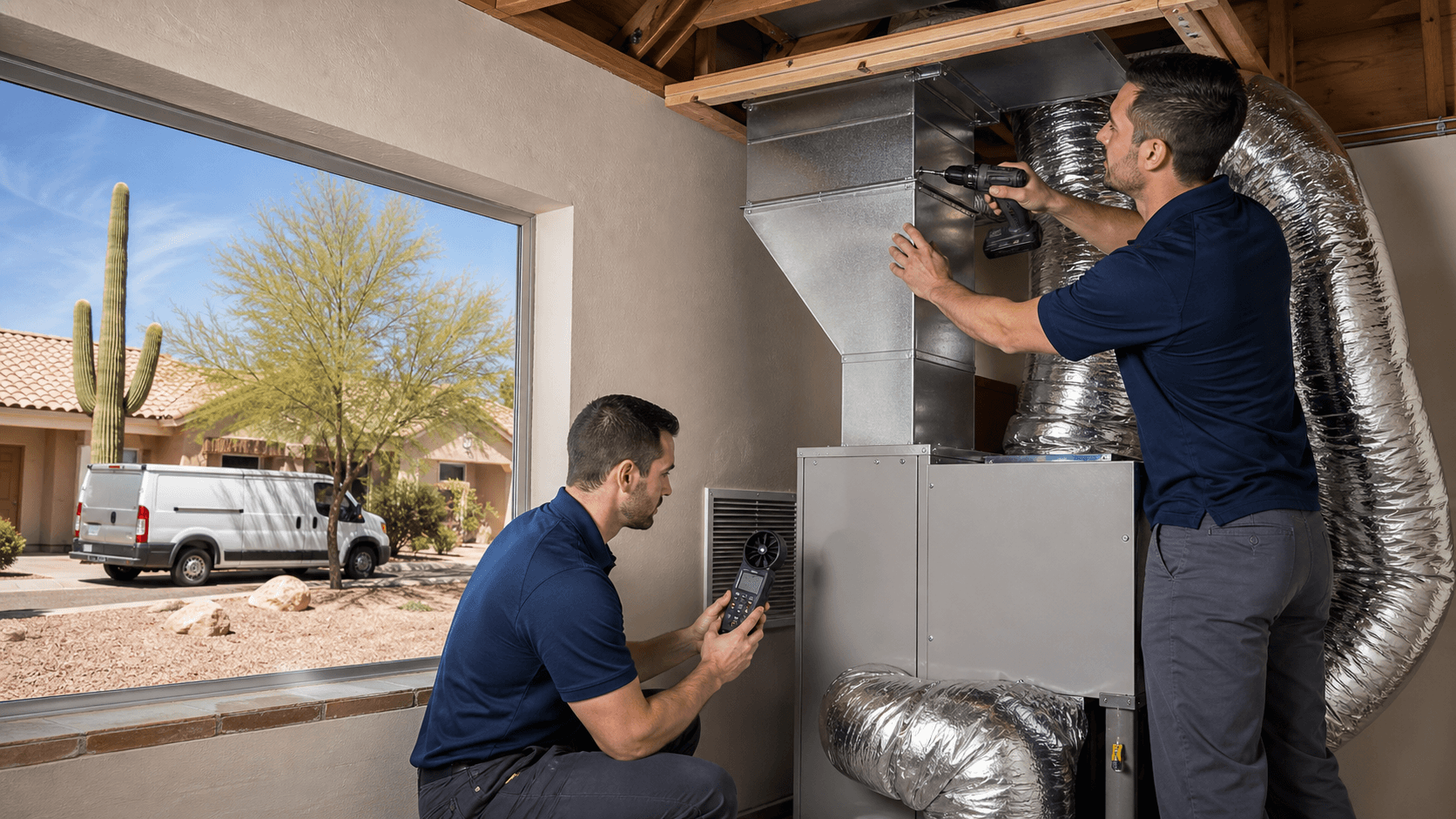
Why HVAC Duties Matter in San Tan Valley Rentals
Clear HVAC rules are not just paperwork in San Tan Valley. In our heat, they are about tenant safety, system life, and keeping your phone from ringing at 10 p.m. when the AC quits. For residential landlords and property managers in San Tan Valley and the East Valley, a simple line in the lease can be the difference between a quick filter swap and a full system failure.
Frosty Fox AC technicians see these issues regularly in rental homes across the East Valley. Tenants do not always know what they should touch and what they should report. Landlords think the lease covers it, but the wording is vague. Here, we will walk through how Arizona looks at "habitability," smart HVAC lease clauses, what tenants can reasonably handle, what should stay with the owner, and when it is time to bring in professional HVAC services in San Tan Valley, AZ.
How Arizona Law Views HVAC in Rental Homes
Arizona heat is not a small comfort issue. Cooling is part of basic habitability. While laws are written in general terms, in Maricopa and Pinal County heat, a rental without working cooling is usually seen as unsafe very quickly.
Landlords are responsible for providing and maintaining an operable cooling and heating system. You can give tenants some light tasks, like changing filters, but you cannot shift the duty to keep the system safe and functional. If the AC stops working, the responsibility to get it working again still sits with the owner.
Reasonable repair time depends on the weather and the problem. In extreme heat, waiting several days for service can easily cross the line from "inconvenient" to "unsafe." In milder weather, there may be a little more flexibility, but delays still add risk and tenant complaints.
Courts and code enforcement tend to look hard at patterns, such as:
- Repeated AC breakdowns that never get fully fixed
- Systems that run all day but cannot keep the home within a livable range
- Units with electrical or refrigerant issues that are left running anyway
When that happens, landlords may face habitability claims, rent disputes, or enforcement action. A clear HVAC plan and steady maintenance with a qualified company like Frosty Fox AC are usually far cheaper than legal trouble.
Writing Lease Clauses That Actually Work in the Desert
In the East Valley, we usually see the same HVAC-related lease clauses over and over. Some work well. Some cause fights. Key areas to cover are:
- Filter changes
- Thermostat use
- Access for scheduled maintenance
- Tenant reporting duties
- Rules about smoking or pets near equipment
You can reasonably assign tenants things like:
- Changing filters on a set schedule
- Keeping supply and return vents clear
- Keeping the outdoor unit free of clutter and debris
- Reporting odd sounds, smells, or performance drops early
Landlords should keep these jobs:
- All repairs and part replacements
- Refrigerant issues
- Electrical work and breaker problems
- Annual professional maintenance and inspections
Clear wording helps. Do not just write "tenant will change filters." Spell it out. For example:
Bad clause:
"Tenant is responsible for all AC maintenance."
Better clause:
"Tenant will change the 1-inch return air filter, size 16 x 20, every 30 days during cooling season and every 60 days during cooler months. Filters are stored in the hall closet. Tenant will notify landlord in writing within 24 hours if the AC stops cooling, makes new loud noises, trips the breaker, or leaks water."
Frosty Fox AC often sees leases that blame tenants for "all HVAC damage," even when the system is old or never serviced. Those clauses rarely hold up and they create tension. Simple, specific language works far better for everyone.
Tenant Versus Landlord HVAC Tasks in Real Life
On paper, duties look neat. In the field, it can get messy. Here is a basic split that works well for most San Tan Valley rentals.
Typical tenant tasks:
- Change filters on the schedule in the lease
- Keep furniture and boxes away from return grills and supply vents
- Keep plants, trash, and stored items away from the outdoor condenser
- Use the thermostat in a reasonable range and avoid constant large swings
- Report unusual noises, smells, or poor cooling quickly
Typical landlord tasks:
- Install and replace HVAC systems
- Handle all repairs, including motors, capacitors, and contactors
- Address refrigerant leaks and frozen coils
- Deal with electrical issues, breakers, and low-voltage wiring
- Arrange blower and coil cleaning and duct inspections
- Set up and support smart thermostats if used
Here are real patterns Frosty Fox AC techs see on service calls:
- A frozen indoor coil because the filter has not been changed in months. Airflow drops, the coil ices over, the tenant runs it harder, and the system shuts down on a hot afternoon.
- A compressor failure in an older system that has gone years without professional cleaning or checks. Heat, dust, and worn parts slowly build up until the failure hits mid-summer.
When responsibilities are blurred, the result is almost always delays, finger-pointing, higher energy use, and shorter system life. A clear split helps techs diagnose problems faster and helps you decide what is normal wear and tear and what might be neglect.
Filters, Thermostats, and Early Warning Signs to Watch
Filters are the easiest thing to manage in a San Tan Valley rental and also the one most often skipped. For standard 1-inch filters:
- No pets, light use: about every 60 days
- One or more pets or heavier use: closer to every 30 days
- During heavy summer use: lean toward the shorter schedule
Landlords should show tenants, or explain in writing:
- Where the filter is located
- What size filter is needed
- How to slide the old filter out and the new one in, with the arrow facing the airflow
- How to close panels or grilles securely
Thermostat basics help a lot too. Tenants should know:
- Not to keep flipping the system on and off, which can cause short cycling
- Why extreme settings do not cool faster, they just make the unit work harder longer
- How to use simple schedules if the thermostat is programmable
Ask tenants to report warning signs right away, such as:
- Warm or slightly cool air instead of cold air
- Weak airflow from some or all vents
- Musty, burning, or chemical smells when the system runs
- New rattling, grinding, or buzzing sounds
- The unit turning on and off very often
- Ice on the refrigerant lines or indoor unit
- Water on the floor near the air handler or closet
These are the kinds of issues Frosty Fox AC technicians see early on jobs. When caught early, fixes are usually smaller and less stressful for everyone.
When It Is Time to Call for Professional HVAC Service
Some problems should always trigger a professional visit for a rental property. For landlords and property managers, that usually includes:
- No cooling or no airflow in hot weather
- Breakers that trip when the unit starts
- Burning smells, smoke, or signs of electrical problems
- Visible refrigerant leaks or icy coils
- Water damage from clogged drains or overflowing pans
A steady maintenance plan with Frosty Fox AC helps avoid the worst mid-summer emergencies. We often line up seasonal tune-ups with:
- Tenant move-in inspections
- Lease renewals
- Tenant move-out walkthroughs
This lets you document system condition, catch failing parts early, and plan replacements instead of dealing with surprise breakdowns.
Frosty Fox AC has seen low cost spring maintenance visits that find weak capacitors, dirty coils, or marginal contactors before peak heat hits. Fixing those issues early often prevents a no-cooling emergency later, along with upset tenants and after-hours calls.
Need Help with HVAC in Your San Tan Valley Rentals?
If you manage rental homes in San Tan Valley or the East Valley and want a clear HVAC plan, documented maintenance, and faster responses when systems fail, schedule service with Frosty Fox AC. We can inspect your existing equipment, set up a practical maintenance schedule around your leases, and handle repair calls so your tenants stay cool and your properties stay protected in Arizona's heat.
Keep Your Home Comfortable With Expert Local HVAC Care
If you are ready to fix persistent comfort issues or prevent the next breakdown, our team at Frosty Fox AC is here to help. Schedule professional HVAC services in San Tan Valley, AZ and we will assess your system, explain your options clearly, and recommend what truly fits your home. We focus on honest guidance, dependable workmanship, and long-term comfort so you can feel confident in every season.