How to Tell If Your Last AC Tune-Up Was Actually Done
When your AC is fighting 110-degree afternoons in Phoenix, a rushed or fake tune-up shows up fast. You feel it in hotter rooms, higher bills, and a system that just never shuts off. If you are paying for maintenance, you should know what you actually got.
In this guide, we will walk Phoenix homeowners through simple proof points you can check after an AC visit. You do not need tools, and you do not need to be an expert. You just need to know what should be clean, what should be tested, and what should be written down, so your system stays reliable and your warranty and safety are protected in our extreme heat.
What Phoenix Homeowners Can Check After an AC Tune-Up
Summer here is hard on AC systems. Units run long hours, pull in dust, and deal with monsoon mess. When a tech skips steps, your system usually tells on them pretty quickly with:
- Longer run times
- Rooms that will not cool down
- Power bills that jump for no good reason
The problem is that some "tune-ups" are just a quick look and a hose on the outdoor coil. No real testing, no real cleaning, nothing checked inside. Our goal is to give you a clear checklist so you can look around after a visit and see signs that real work was done.
We are talking about the typical residential split systems and package units you see all over Phoenix neighborhoods. Bigger commercial systems are a different story. At home, proper maintenance is also about safety and warranty. Many manufacturers expect regular documented care from qualified Arizona HVAC providers. If something fails, having those reports can make a big difference.
Visible Outdoor Unit Checks You Can See in Minutes
Start with the outdoor unit, since it takes the most beating from dust storms and monsoon mud.
Condenser coil condition
After a proper cleaning, you should see:
- Fins that are mostly clear of heavy dirt and cottonwood fuzz
- Little to no grass clippings or mud splashed and stuck on the coil
- No big matted areas where air clearly cannot pass
A quick way to check is to shine a flashlight through the fins from one side. You should see light through most of the coil, not a solid dark wall. If you see thick dirt all around, pooled mud at the base, or fins smashed from a pressure washer, the cleaning step may have been skipped or rushed.
Work area and components
Take a look around the unit:
- Service caps snug on the refrigerant ports
- All panel screws reinstalled and panels sitting flush
- Electrical whip and disconnect box undisturbed and closed
- No tools, screws, or trash left in the rocks or on the pad
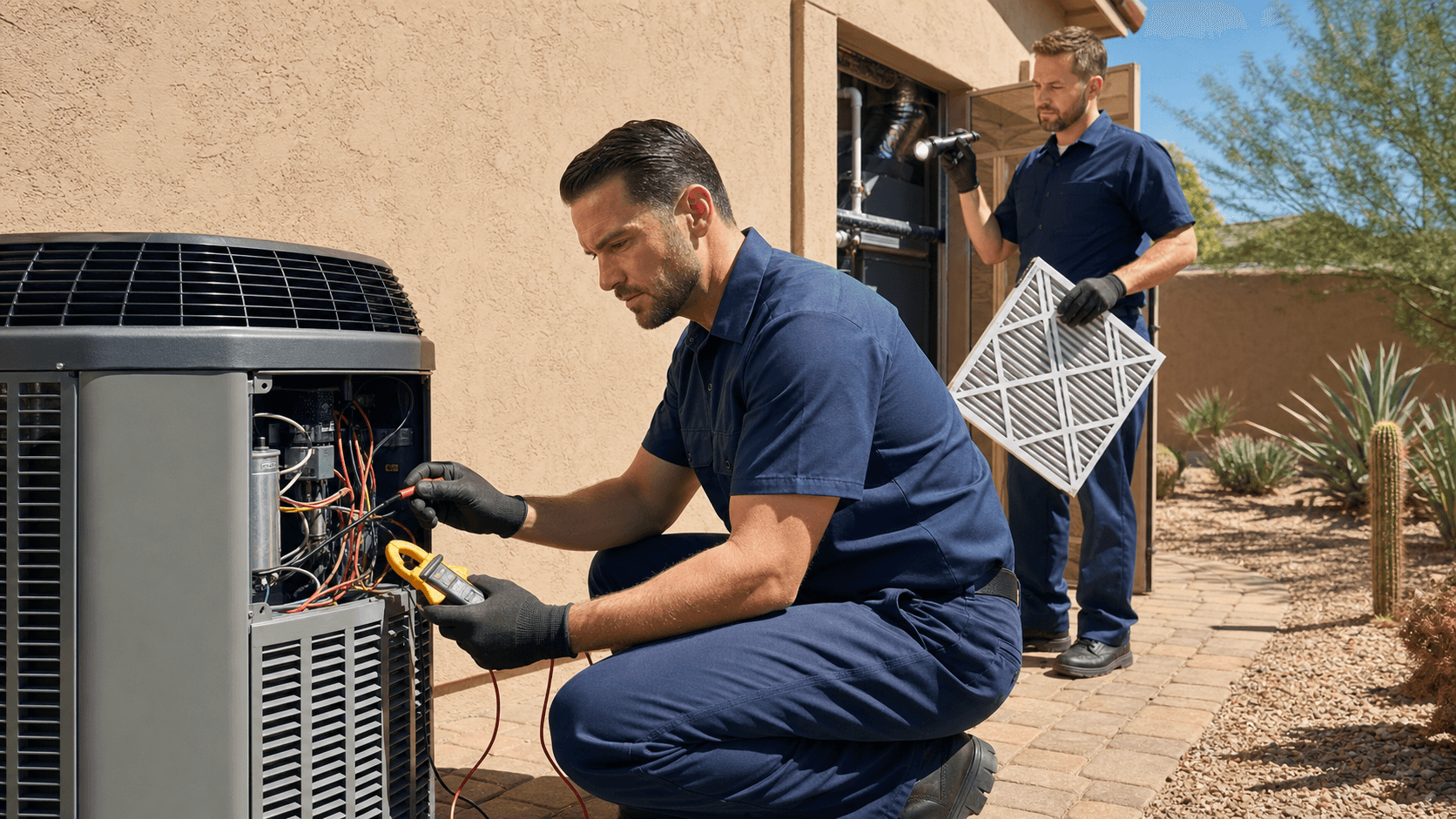
If a tune-up included opening the electrical panel, you may notice the panel sits just a bit "reset" from where it was or has clean hand prints. You should not see wires hanging out or panels rattling.
In Phoenix, dust and debris build up fast. Haboobs, monsoon splash, and nearby landscaping all coat the coil. That is why coil cleaning is not a "maybe" task here; it is one of the main jobs during residential AC maintenance in the Valley.
Indoor System Proof Points You Can Check Without Tools
Next, walk inside and look at what you can see around the return, indoor unit, and thermostat.
Air filter and return air
After a tune-up, you should expect:
- A clean filter, correctly sized and facing the right direction
- The old filter removed from the property or clearly shown to you
- The filter sitting snug in the slot, not loose with big gaps
Good techs check for airflow bypass, which is common in older homes where the return filter rack is bent or oversized. As a homeowner, you can look for a date written on the new filter and then feel airflow at a few supply vents. It should feel at least as strong as before, often a bit better.
Indoor Coil, Blower, and Drain Clues
Most homeowners should not pull indoor panels, especially if they are taped or sealed. But you can still look for signs that someone actually worked there:
- Access panels reinstalled with all screws in place
- No new gaps or whistling around the furnace or air handler door
- A drain cleanout cap in place and the drain line looking recently touched or flushed
If your system uses drain tablets or pan treatments, you might notice a fresh tablet or the tech may have mentioned it. Many techs will also rinse the drain into a bucket or outside. You might see damp areas near the drain outlet shortly after service.
Thermostat and Basic Operation
During a tune-up, the tech should start the system, let it run, and listen to it. When they are gone, run a simple test:
- Change the thermostat by 3 to 4 degrees cooler
- Wait a few minutes and confirm the system starts
- Check that it runs steadily, not on and off every minute
The system should not short cycle, and it should not struggle to change a few degrees when it is not the hottest part of the day.
Numbers, Paperwork, and Real Testing
A true tune-up is more than cleaning. It includes measurements that tell how the system is really doing.
Temperature split
Temperature split is the difference between air going into the return and air coming out of a nearby supply vent. A healthy system in Phoenix is usually in a middle range, often around a 16 to 22 degree difference, depending on indoor conditions and the system design.
You do not need to measure it yourself, but you should feel that the air from the vent is noticeably cooler than the air around you. A smart question to ask your tech is, "What was my temperature split today?" They should be able to answer and explain what it means for your system.
Electrical and refrigerant checks
Common readings during AC maintenance include:
- Compressor and fan motor amp draws
- Capacitor microfarad readings
- Line voltage
- Refrigerant pressures and related temperatures
You do not have to know what each number means, but they should be written on your invoice or service report. A report that only says "system OK" with no readings, no notes on pressures, and no mention of electrical checks is a red flag.
Service report details
A solid maintenance report for a Phoenix home should list:
- Equipment model and serial numbers
- Indoor and outdoor conditions at the time of testing
- Key readings and any recommended repairs or watch items
Keep these reports. Over a few years, they help show if performance is dropping, if certain parts are failing more often, or if it is time to start talking about replacement instead of constant repair. Good documentation also helps if you ever need to discuss warranty concerns or compare advice from different local contractors.
Performance and When to Question the Work
After the visit, your system's behavior in real Phoenix heat tells you a lot.
Performance and Comfort
On a 110-degree afternoon, most systems will not drop the house temperature quickly, but they should be able to hold a steady setpoint without literally running nonstop. After a real tune-up, many homeowners notice:
- Faster cool-down in the evening
- Fewer hot spots at the far rooms
- Less up and down temperature swings
Within a week, be alert for red flags like the system running constantly and still not reaching the setpoint, long cycles even at night, or one or two rooms lagging far behind the rest of the house.
Energy Use and Power Bill Patterns
If you watch your power use through a smart meter or utility app, compare similar hot days before and after the tune-up. You might not see a huge drop, but you should not see a sudden spike in use right after "maintenance," unless the weather jumped at the same time or something else in the home changed.
Noise and vibrations
After a good visit, you often hear a smoother start and fewer rattles. The outdoor unit should not buzz loudly, and panels should not vibrate. If new noises show up right after the tech leaves, like rattling, scraping, or a louder hum, that can mean a panel or wire was not secured correctly.
When to question the work
It is reasonable to ask questions if:
- The tech was on-site less than about 20 minutes
- No panels were removed inside or outside
- Nobody checked the indoor unit or drain
- Your invoice has almost no notes or readings
In Phoenix, things like clogged drains, dirty outdoor coils, and weak capacitors on older units are common issues that deserve attention during a residential AC tune-up. A "drive-by" visit might miss these, and our summer heat will bring those problems out quickly.
If something feels off, contact the office soon after the visit. Explain what you saw and what concerns you, and ask for a clear explanation of what was done and what was tested. Many times, a good company will walk you through it or send someone back to review the work.
Keep Your Phoenix Home Comfortable All Year Long
If it has been a while since your last tune-up, now is the perfect time to schedule professional AC maintenance in Phoenix, AZ. At Frosty Fox AC, we inspect, clean, and fine-tune your system to help prevent breakdowns when you need cool air the most. Our technicians focus on honest recommendations and long-term reliability, not quick fixes. Schedule your appointment today so we can keep your home comfortable and your energy bills in check.