How Long Should an AC System Last in Phoenix Homes?
An AC system in a Phoenix home is not a luxury; it is basic survival equipment for much of the year. From spring through fall, most homes rely on cooling every single day, often for long stretches of time. That kind of workload is very different from what manufacturers have in mind when they quote ideal equipment lifespans.
Manufacturers often talk about 15 to 20 years, but what we see in Phoenix single-family homes is usually closer to 10 to 15 years, and sometimes less. In this article, we will explain why that gap exists, how our local climate affects your system, what maintenance really does for lifespan, and how to tell when it is time to start planning for replacement instead of authorizing one more AC repair in Phoenix, AZ.
Phoenix AC Lifespan Compared to Cooler Climates
In a mild coastal or northern climate, a central AC might run a few hours a day on the hottest days, then sit idle for long stretches. That is very different from a Phoenix system running 10 to 14 hours a day through a heat wave, with very little overnight relief.
Because of that workload, realistic expectations for our area look different from national averages you might see online. In many Phoenix neighborhoods, central AC systems and heat pumps that are reasonably maintained often land in a range around 10 to 15 years. Some well-maintained systems make it into the mid-teens, while neglected units can start having serious, repeated issues around the 8- to 10-year mark.
Rooftop package units that are common on Phoenix homes often age even faster. They sit in full sun, on roofs that are significantly hotter than the air temperature, and they take the brunt of wind-blown dust. That combination bakes electrical components and speeds up wear on plastics, insulation, and sealants.
This is why national advice can be misleading. An article aimed at cooler states might talk about 20-year lifespans and long service vs. replacement timelines. A local contractor providing AC repair in Phoenix, AZ may recommend earlier replacement because the system has seen far more runtime hours in fewer calendar years than that national article assumes.
How Extreme Heat and Long Runtime Shorten System Life
Our local reality includes stretches of 110° afternoons and nights that never really cool off. During monsoon season, high heat is often paired with humidity and dust. All of that translates to a huge number of runtime hours every year.
When a system in Phoenix runs almost nonstop through a week of 115° highs, every component is under stress. Compressors and fan motors run hot, capacitors and contactors are constantly cycling, and electrical connections are carrying heavy loads for long periods with very few breaks.
Key ways this shortens lifespan include:
- Compressors running at high pressure and temperature for extended periods
- Fan motors operating in hot, dusty conditions, which wears bearings and windings
- Capacitors failing earlier from constant cycling and heat exposure
- Contactors pitting and burning faster under heavy loads
For rooftop units, roof surface temperatures can climb far above the outdoor air temperature. That extra heat, combined with intense UV exposure, hardens insulation, cracks wire jackets, and weakens plastic parts. All of this quietly shortens how long the system can operate reliably.
Maintenance, Dirty Coils, Airflow, and Refrigerant Issues
Maintenance history is one of the biggest differences between a system that lasts closer to the upper end of the local range and one that fails early. A unit that only gets attention when it breaks is almost always going to have a shorter life than one that gets regular professional care.
Common maintenance-related problems that shorten equipment life include:
- Dirty outdoor coils clogged with dust and pollen, which trap heat
- Clogged filters and returns that reduce airflow and overwork the blower
- Neglected condensate drains that back up and cause water damage or safety shutdowns
- Weak capacitors that go unchecked until they cause hard starts or compressor strain
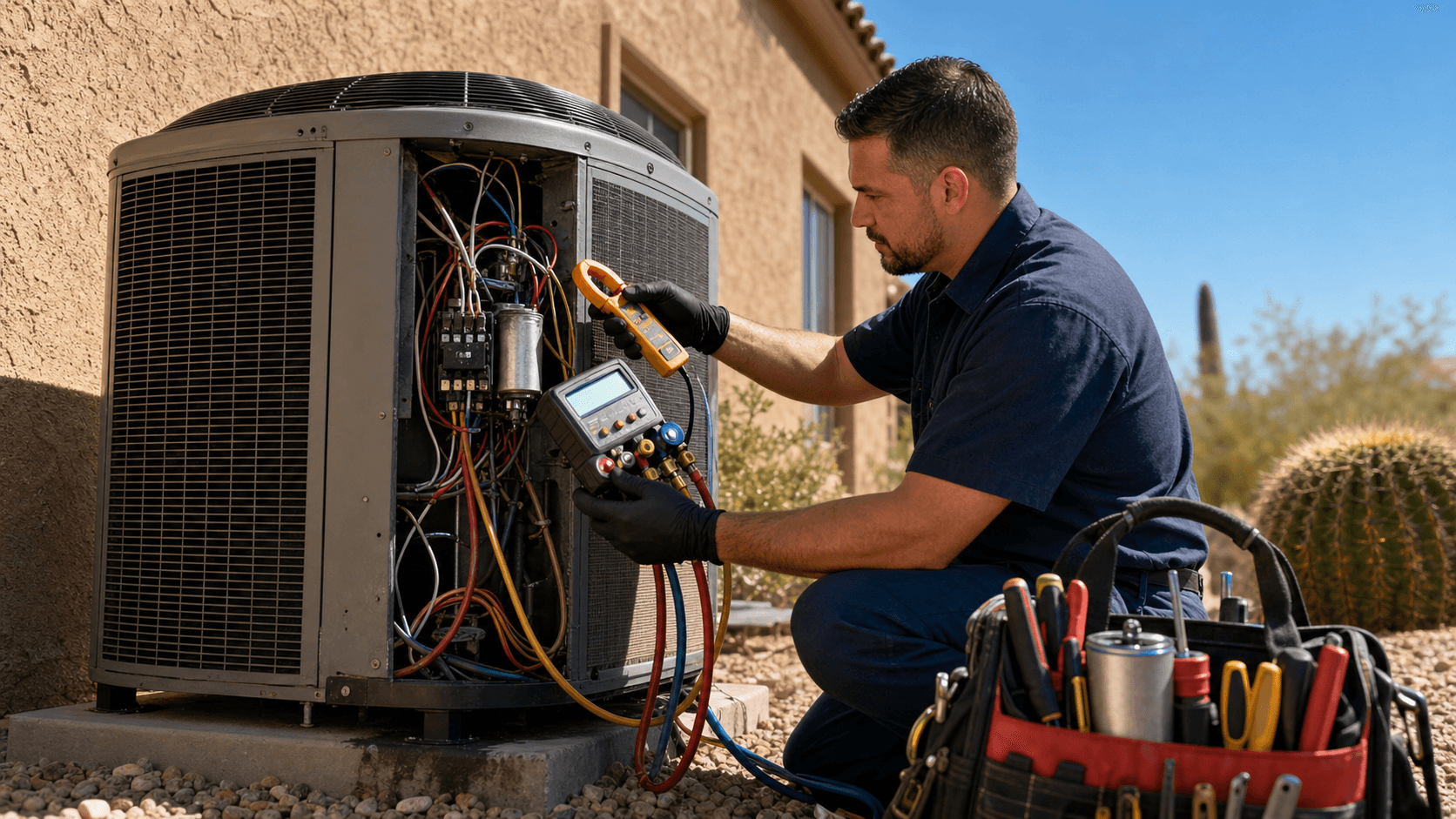
In Phoenix, technicians often find condenser coils so impacted with dirt that the system is forced to run at high head pressure. That is hard on compressors and can lead to repeated breakdowns. A long-overdue capacitor replacement can lead to hard starting, overheating, and eventually compressor failure.
Specific problems that quietly cut years off system life include:
Dirty Coils
- Outdoor and indoor coils naturally collect dust, desert pollen, and lint.
- When they get coated, heat transfer drops and the system must run longer to move the same amount of heat.
- In Phoenix homes with pets, indoor coils can get covered in fine hair and lint, which can cause icing, poor airflow, and compressor stress if ignored.
Airflow Issues
- Undersized or blocked return grilles, closed supply vents, and heavily clogged filters are common in Phoenix homes.
- Low airflow can cause the indoor coil to freeze. When it thaws, you get water issues and more strain on parts.
- Poor airflow also drives up refrigerant pressures and puts extra load on fan motors.
Refrigerant Problems
- Slow leaks may leave a system slightly low on charge for years, which causes overheating and breaks down the internal oil that protects the compressor.
- Some homeowners choose to top off refrigerant every summer instead of fixing the leak. Over time, this usually shortens compressor life, leads to more frequent AC repair in Phoenix, AZ, and increases operating costs.
Warning Signs Your AC Is Nearing the End
Age is only part of the story, but in our area, 10 to 15 years is often the tipping point where it makes sense to start talking seriously about replacement. That is especially true if the system has already had several major repairs like a compressor, evaporator coil, or multiple fan motors.
Common patterns that suggest a system is reaching the end of its life include:
- More frequent summer breakdowns, especially during heat waves
- Service visits that come with longer repair lists each time
- Repairs that start approaching a significant percentage of the cost of a new system
Rising energy bills and declining comfort are also big red flags. Older systems lose efficiency and may struggle to keep up during the hottest part of the day. A Phoenix home that used to hold 75 degrees might start creeping into the upper 70s or low 80s on 110° days, even after basic repairs and refrigerant adjustments.
Noise and inconsistent performance are other warning signs:
- Grinding or squealing fan motors
- Loud or harsh compressor sounds
- Frequent short cycling, where the system turns on and off quickly
- Hot and cold spots between rooms, even after airflow adjustments
When several of these issues show up together in an older Phoenix system, it is usually time to move away from relying on emergency repairs and begin planning for replacement.
How Phoenix Homeowners Can Maximize AC Lifespan
While no AC system will last forever in our climate, there is a lot Phoenix homeowners can do to help it reach the higher end of the local lifespan range.
Simple steps you can take at home:
- Replace filters on schedule, more often during dusty or high-use periods
- Keep outdoor units clear of leaves, weeds, and stored items that block airflow
- Avoid stacking yard tools, pool toys, or storage bins around the condenser
- Use reasonable thermostat settings during extreme heat, for example 75 to 78 degrees instead of trying to hold 70 on a 115° afternoon
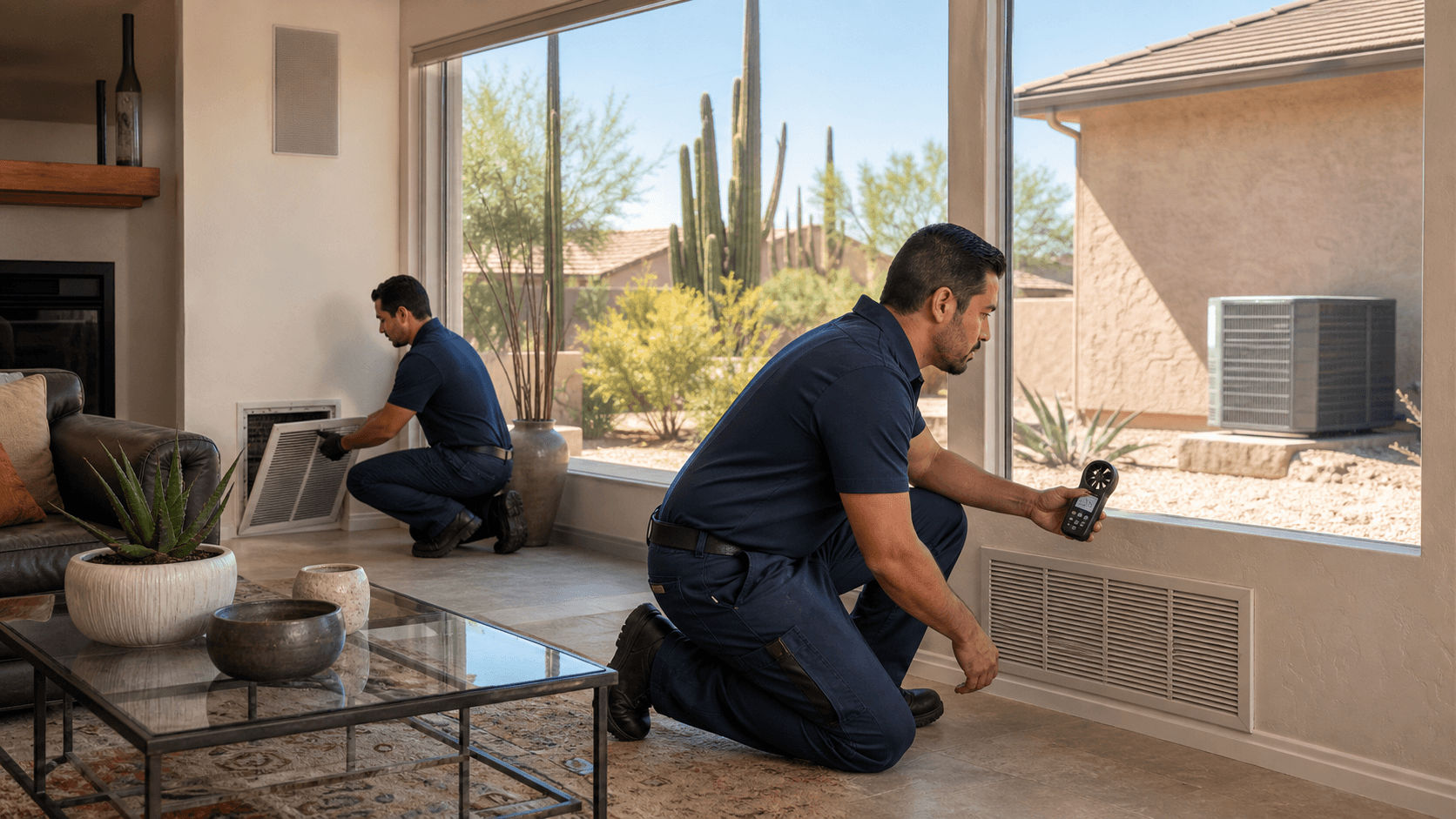
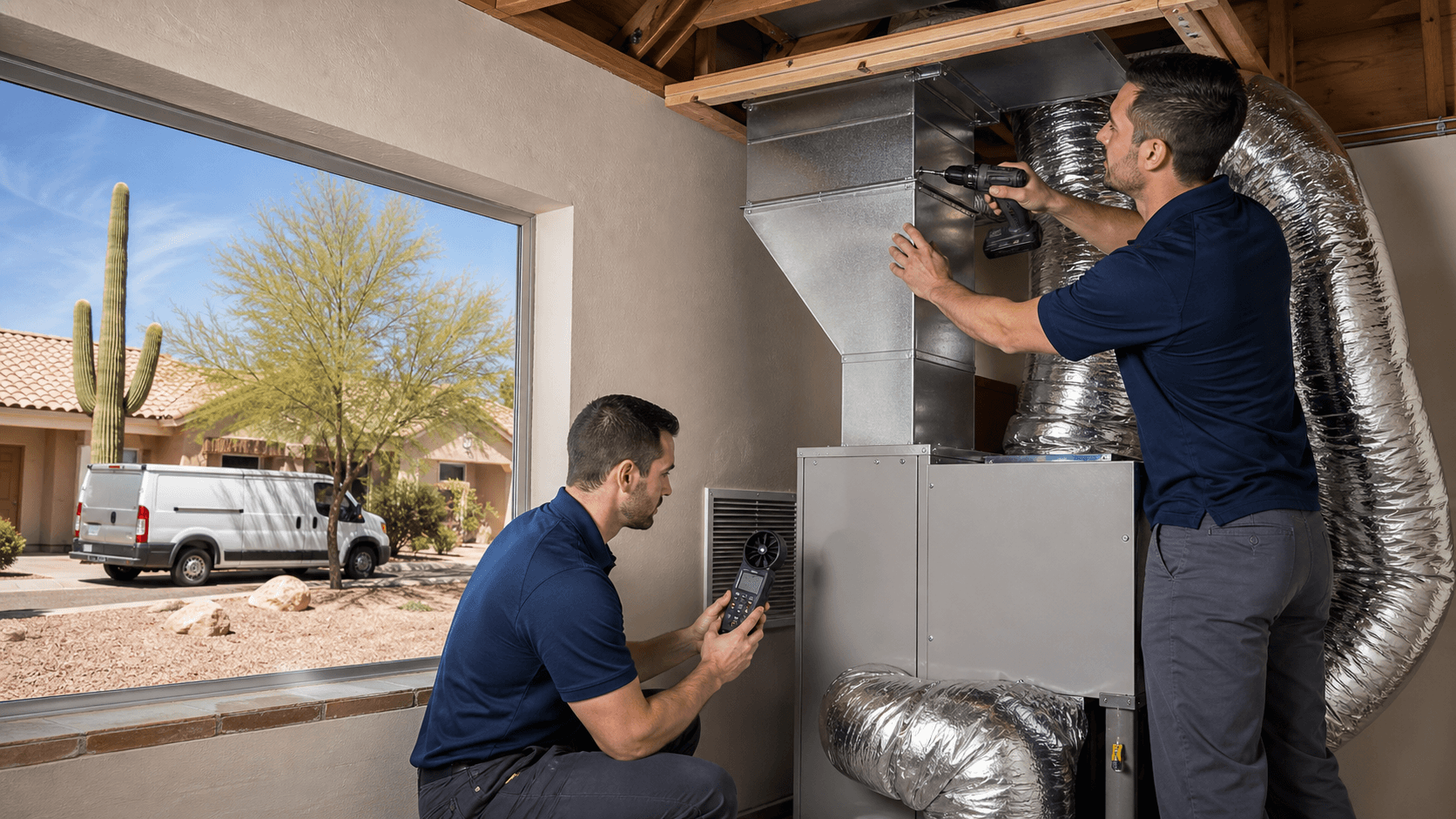
Professional preventive maintenance is equally important. A thorough tune-up in Phoenix typically includes coil cleaning, electrical checks, refrigerant checks, fan and motor inspection, condensate line clearing, and overall performance testing. When this is done in spring before the worst heat, marginal parts can be replaced before they fail on the first serious heat wave.
Long-term planning is smart in our climate. Many Phoenix homeowners benefit from starting replacement discussions around the 10- to 12-year mark, especially if the system is a lower-end builder-grade model or has already needed big repairs. A trusted local contractor can help estimate remaining life based on condition, talk through efficiency upgrade options, and help you budget so that when replacement time arrives, it is a planned project instead of a crisis during the next major heat wave.
Need an Honest Opinion About Your Phoenix AC System?
If your Phoenix air conditioner is 10 years or older and you are seeing more frequent repairs, rising bills, or uneven cooling, it is a good time to have a qualified HVAC technician evaluate it. Schedule a professional inspection and maintenance visit to check refrigerant levels, coil condition, electrical components, and overall system performance. That way you can decide, with real information, whether it makes more sense to plan for one more repair season or begin budgeting for a replacement that is sized and designed for Phoenix heat.
Restore Reliable Cooling To Your Home Today
If your AC is struggling to keep up with the Phoenix heat, we are ready to help you get comfortable again. Our licensed technicians provide fast, thorough diagnostics and repairs tailored to your system and your budget. Schedule professional AC repair in Phoenix, AZ with Frosty Fox AC so small issues do not turn into costly breakdowns. Reach out now and we will work with you to find a convenient time for service.