AC Repair vs Replacement in Phoenix: How to Decide for Your Home
When your AC struggles in the middle of a Phoenix summer, the big question shows up fast: should you put money into AC repair in Phoenix, AZ, or is it smarter to replace the whole system? With our long cooling season and extreme temperatures, that decision has more impact here than in many other parts of the country. The wrong choice can leave you with repeated breakdowns, high energy bills, or a big expense that does not really solve the problem.
Across the Phoenix metro area, air conditioners often run from March through November, and they are pushed hard during stretches of 110°F and higher. That kind of workload accelerates wear on compressors, fan motors, capacitors, and other parts. This guide walks through how we look at repair versus replacement for residential AC systems, so you can feel more confident about what to do with your own system.
Key Factors That Drive Repair or Replacement
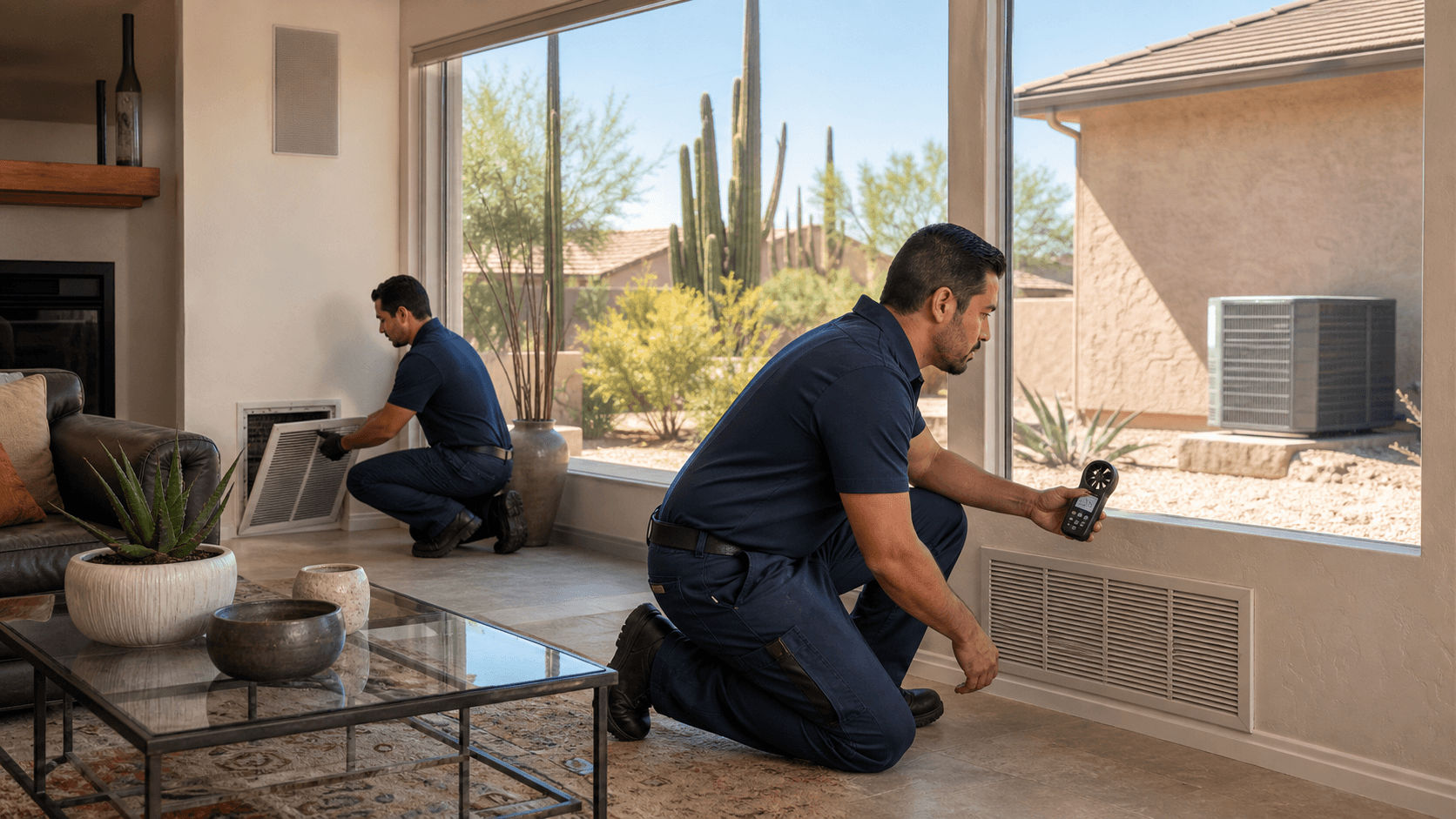
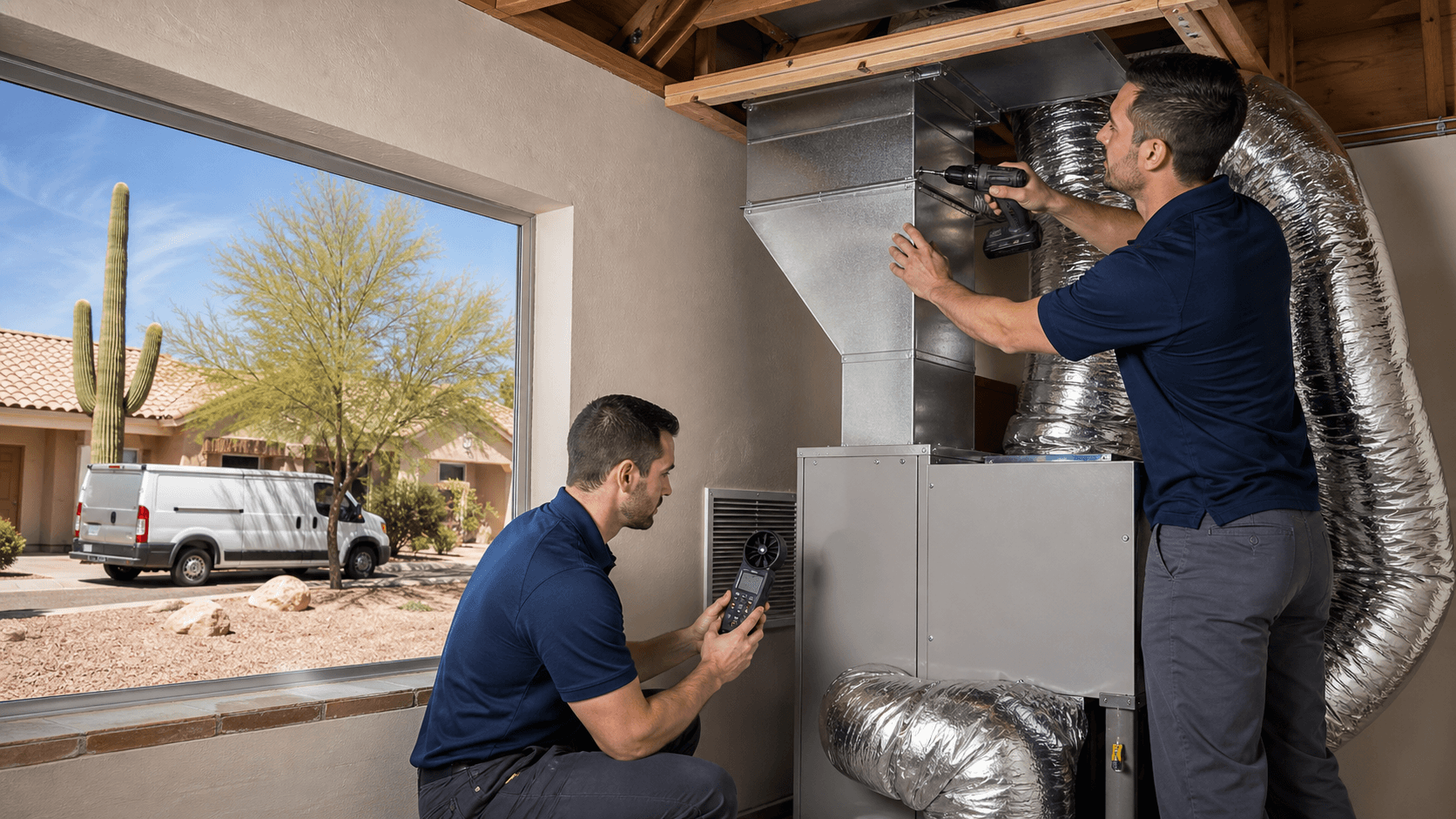
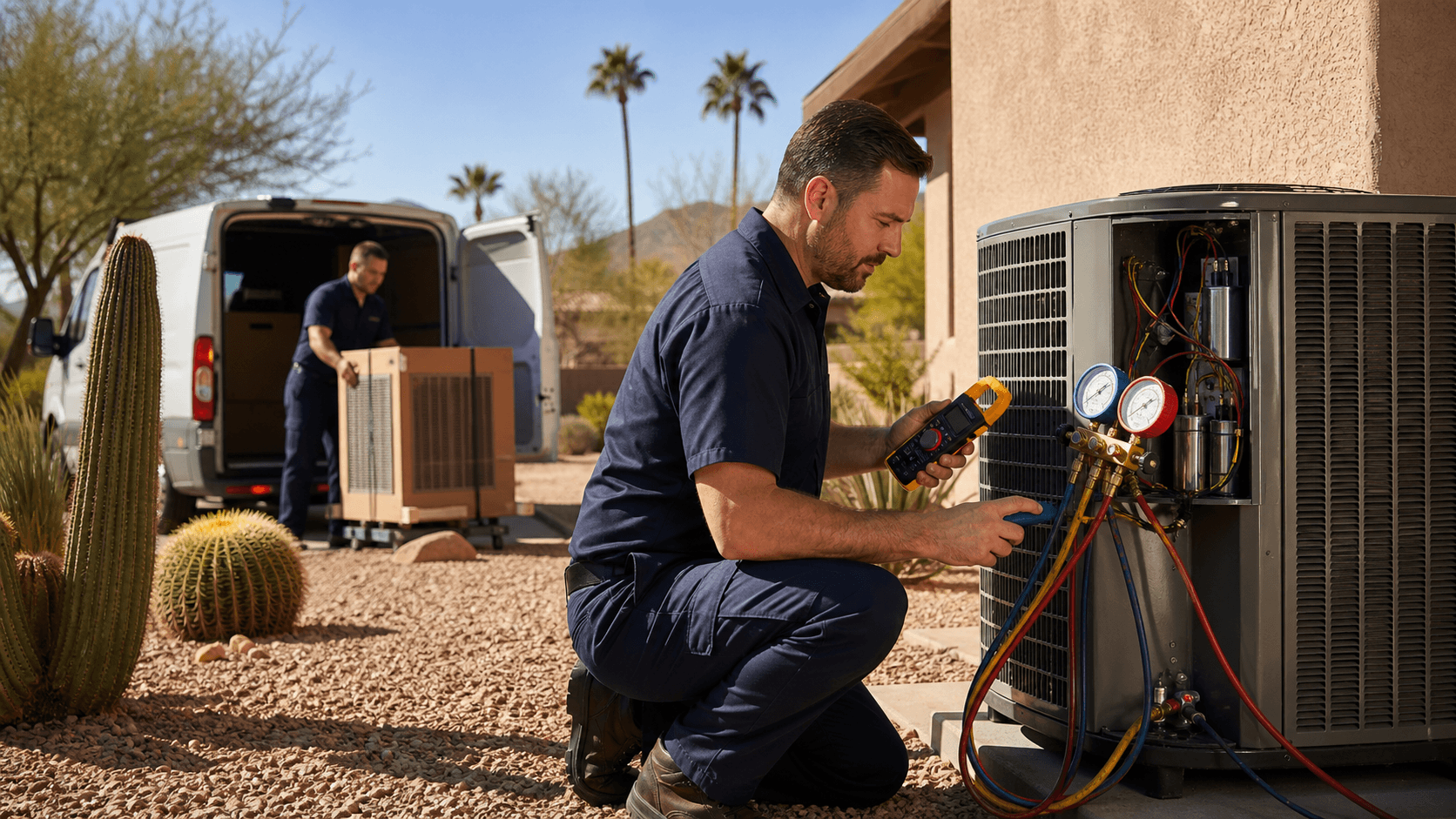
When our technicians evaluate a struggling AC, we look at more than just the immediate problem. We step back and ask whether fixing this issue will give you reliable comfort or just buy a little time.
Some of the main factors we consider are:
- System age and expected life in Phoenix
- Overall system condition
- Frequency and cost of recent repairs
- Energy efficiency and refrigerant type
In Arizona, a well-maintained residential system might last around 10 to 15 years, sometimes less if it has been neglected. If we see rust, coil corrosion, signs of poor installation, or mismatched components, that expected life drops.
We often explain the "50% rule" in simple terms: if a major repair is close to half the cost of a new unit and the system is near the end of its typical life, replacement deserves serious consideration. For example:
- A 9-year-old system that has only needed a capacitor in the past and now needs a fan motor usually leans toward repair, especially if everything else looks solid.
- A 16-year-old system that has had three major repairs in the last two summers is a different story. When another expensive issue shows up, it often makes more sense to look at replacement.
System Age, Repair History, and Remaining Life
Age alone does not decide everything, but it sets the stage. In Phoenix, we generally see these ranges:
- Under 8 years: Often worth repairing, especially for minor issues and well-maintained units.
- Around 8 to 12 years: A gray zone, where we weigh efficiency, repair history, and comfort.
- Over 12 to 15 years: Usually past its efficient lifespan in our heat, especially with outdated refrigerant.
As systems age, we see patterns:
- Mid-life issues: weak capacitors, worn contactors, occasional fan motor problems. These are often affordable repairs.
- Late-life issues: compressor failures, coil leaks, repeated refrigerant problems, blower motor failures. These can be expensive and disruptive.
Here are two realistic scenarios:
- Repair-leaning: A 7-year-old unit has its first major breakdown. The capacitor is bad and the outdoor coil is dirty. In this case, we would usually recommend repairing the part, cleaning the coil, and setting up consistent maintenance.
- Replacement-leaning: A 15-year-old unit has broken down multiple times over recent summers. It has already had an evaporator coil leak and a blower motor replacement, and now the compressor is failing. You could repair it again, but you are likely buying only a short extension of life, with more risk of downtime right when you need cooling most.
Even when an older system can be repaired, frequent outages during 110°F days can be reason enough to consider starting fresh with new equipment.
Efficiency, Refrigerant, and Utility Costs in Arizona
Energy efficiency matters a lot more when your AC runs most of the day. Many older systems were installed with lower SEER ratings compared to newer equipment. In practical terms, that means an older 10 to 12 SEER system can use more electricity than a modern high-efficiency unit to give you the same comfort.
Refrigerant is another key factor:
- R-22 refrigerant is being phased out, is harder to find, and is more expensive when leaks occur.
- R-410A is the standard for newer systems and is often paired with more efficient designs.
Rising utility costs magnify the difference. A homeowner with a 15-year-old system might be paying noticeably more over each cooling season than they would with a newer unit. If that old system also uses R-22 and has a refrigerant leak, the cost of finding and fixing the leak, then recharging, can be significant.
Compare two situations:
- Repair-leaning: A 9-year-old R-410A system has a failed condenser fan motor. The homeowner only plans to stay in the house another few years. Repairing the motor frequently makes sense, since the payback period on a brand new system might be longer than their expected time in the home.
- Replacement-leaning: A 17-year-old R-22 system has a coil leak and struggles to cool the house. The homeowner plans to stay long term and is tired of high electric bills. In that case, investing repair money into efficient new equipment can be a better long-term financial move.
Arizona Climate, Extreme Heat, and When Repair Makes Sense
Phoenix summers punish aging equipment. Long daily run times, super-heated attics, and heat-soaked roofs all put extra stress on compressors, capacitors, and fan motors. A system that just barely keeps up when it is 100°F may fail outright when temperatures push into the mid-110s.
Our technicians often see warning signs before a major breakdown, including:
- Longer run times to reach the thermostat setpoint
- Short cycling, where the system starts and stops frequently
- Ice buildup on refrigerant lines or the indoor coil
- Unusual noises from the outdoor unit
- Warm or weak airflow from supply vents
Even with these challenges, there are many situations where AC repair in Phoenix, AZ is usually the smarter choice:
- A newer system under 10 years old with a single failed component like a capacitor, contactor, or fan motor.
- A system that will not start because of a minor electrical issue or thermostat problem.
- Budget-limited situations where a safe, targeted repair can extend life for a couple of seasons while you plan for replacement.
Before calling for emergency service, it helps to check a few simple things:
- Make sure the thermostat is set to cool, with working batteries.
- Replace a clogged air filter if it has not been changed recently.
- Check that the appropriate breakers are not tripped.
Ignoring small repair needs can be costly. For example, a weak capacitor can cause a compressor to struggle and overheat, which may turn an easy, low-cost repair into a major component failure if left alone during a heat wave.
When Replacement Protects Comfort and Your Wallet
Sometimes replacing an older AC is the more practical and less stressful option, especially in our climate. Situations that often push toward replacement include:
- Repeated breakdowns every summer that lead to emergency visits or time away from home.
- Major component failures on older units, such as compressor burn-out or leaking evaporator coils on systems already past their expected life.
- R-22 systems with recurring leaks or poor performance that would require costly refrigerant charges.
It helps to step back and look at the bigger picture:
- Add up what you have spent on repairs in the last couple of years, and what you are likely to spend if similar problems continue.
- Consider how much a more efficient system might trim from your summer power bills.
- Think about whether your current system cools the whole house evenly, especially upstairs or west-facing rooms.
Comfort and reliability have real value. Newer systems can provide quieter operation, better humidity control, and more even temperatures throughout your home. They also reduce the risk of surprise outages during holidays and peak heat.
For example, take a 14-year-old R-22 system in a two-story Phoenix home that struggles to cool the upstairs. If it has already needed several service calls over two summers and now faces a costly compressor replacement, that homeowner is often better served by investing in replacement, especially if they plan to stay put for many years.
How to Decide and When to Call Frosty Fox AC
When Phoenix homeowners ask us whether to repair or replace, we run through a simple mental checklist:
- How old is the system, and what refrigerant does it use?
- How much has been spent on repairs in the last two or three years, especially in hot months?
- How reliable has it been during extreme heat?
- Are energy bills higher than expected, and how long do you plan to stay in the home?
Before you call, it helps to gather a few pieces of information:
- Approximate age of the unit
- Any past repair invoices or notes
- Average summer utility bills
- Details about when the system struggles, such as time of day or certain rooms
We use this information, along with an in-person inspection and performance testing, to provide clear recommendations about AC repair in Phoenix, AZ versus replacement.
Call to Action: Get Expert Help With Repair vs. Replacement Decisions
If your Phoenix home's AC is struggling and you are unsure whether to repair it again or move forward with a replacement, schedule a residential cooling evaluation with Frosty Fox AC. We will inspect your system, review its repair history and efficiency, and walk you through practical options so you can choose the repair or replacement path that best fits your comfort, budget, and long-term Arizona cooling season.
Restore Comfortable Cooling In Your Home Today
If your system is struggling to keep up with the Phoenix heat, we are ready to help you get reliable cooling back fast. Schedule expert AC repair in Phoenix, AZ with Frosty Fox AC and our technicians will diagnose the issue and walk you through clear solutions before any work begins. We focus on honest recommendations, upfront pricing, and repairs that last so you can feel confident in your home comfort again. Reach out today to set a convenient appointment and let us take the stress out of your next AC repair.