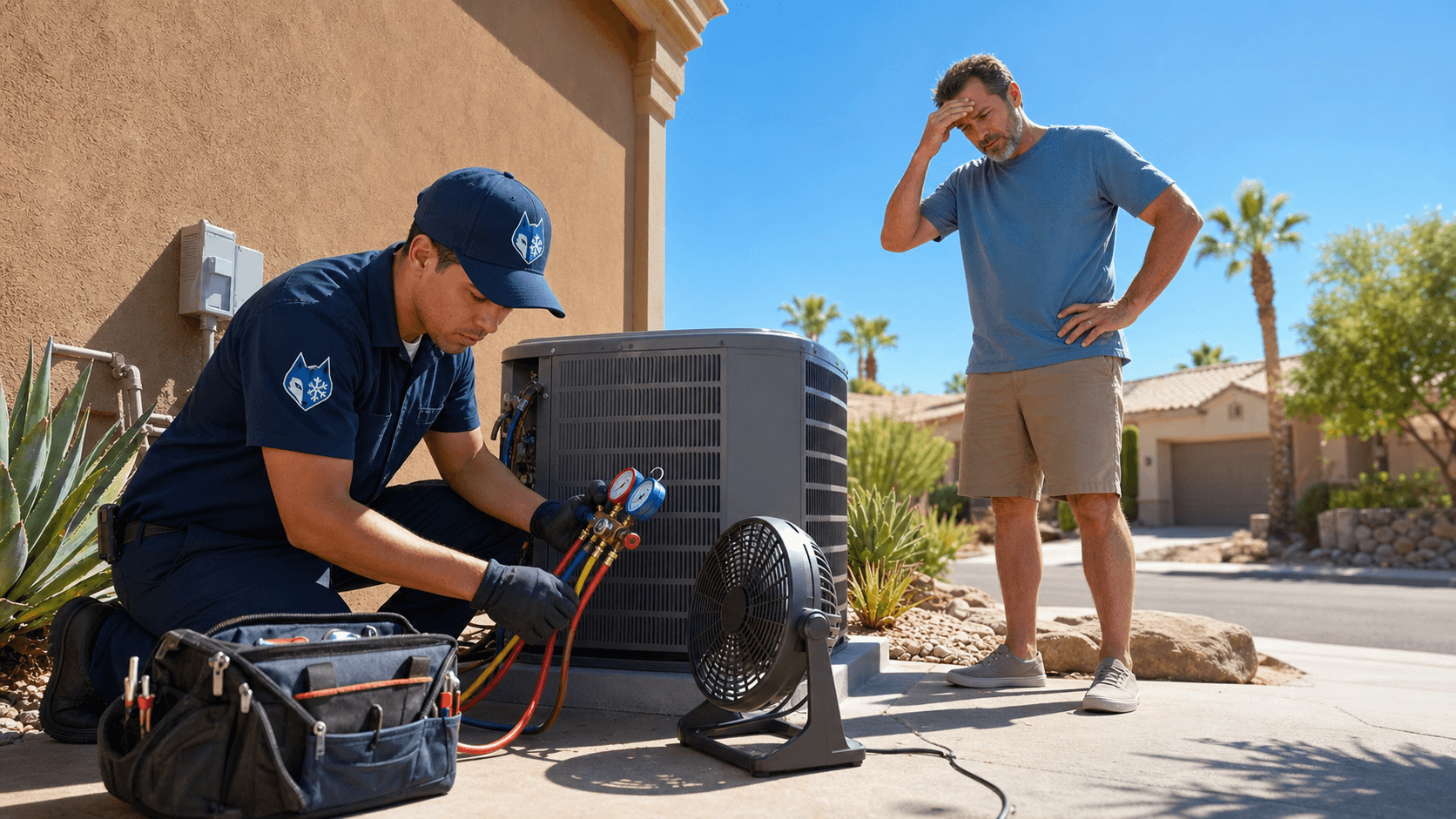
Stay Safe and Cool When Your AC Fails After Hours
An AC problem in Phoenix is never fun, but when it happens late at night, it can feel scary. The air outside is still hot, the house is getting warmer, and you are trying to figure out what to do next. Do you need emergency AC repair right now, or can it wait until morning?
That choice matters for your comfort and for your safety. In desert heat, indoor temperatures can climb fast once your cooling stops. Some situations really are emergencies, while others are stressful but not dangerous. As a local HVAC team that offers 24/7 help, we want you to feel confident about which is which so you can protect your family, your pets, and your home.
What Really Counts as an AC Emergency in Phoenix
In Phoenix, an AC emergency is mostly about safety, not just comfort. Being a little warm is annoying. Being stuck in a house that keeps heating up can be risky, especially for people who are more sensitive to heat.
People at higher risk from indoor heat include:
- Babies and young kids
- Older adults
- Anyone with heart, lung, or other medical conditions
- Pregnant people
- Pets that cannot cool themselves easily
When AC stops working during a hot day or a warm night, indoor temps can rise quickly. If you see any of these, it usually counts as an emergency:
- Complete loss of cooling when it is around 95°F or hotter outside, day or night, and the house heats up fast
- The system is running but blowing warm air and you can feel the temperature climbing
- A strong burning or electrical smell from vents or around the indoor or outdoor unit
- Sparks, popping sounds, or visible damage to wires or equipment
- Water leaks that are soaking ceilings, walls, floors, or that can drip onto lights or electronics
Some issues are not just AC problems but also life safety concerns. In these cases, call 911 or the fire department before you call any HVAC company:
- Visible smoke or fire coming from your AC equipment
- A very strong electrical burning odor that does not fade
- A carbon monoxide detector sounding in a home with a gas furnace or gas packaged unit
Once you know that firefighters have checked for danger, then an HVAC pro can safely look at the system.
Signs Your AC Issue Can Likely Wait Until Morning
Not every late-night AC problem is an emergency. Some things feel urgent but can usually wait for regular business hours, as long as everyone in the home can stay safe and reasonably comfortable.
Common non-emergency issues include:
- The system is still cooling, but the house is a few degrees warmer than the thermostat setting
- One room or area is warmer, but the rest of the home feels okay
- A small amount of condensation near the air handler or drain line, and no active soaking or dripping through ceilings
- New sounds like rattling or light buzzing that do not get louder or sharper quickly
- The AC briefly shuts off, then restarts and goes back to normal cooling
These problems do not usually cause sudden indoor heat spikes or immediate danger to people or property. They are still important to fix soon because waiting too long can lead to bigger breakdowns, but you can often plan on next-day service instead of overnight emergency help.
While you wait for non-emergency repair, a few simple steps can help you get through the night:
- Run ceiling and portable fans to move air around your body
- Close blinds and curtains to keep out heat from outside lighting and the morning sun
- Avoid using ovens, dryers, and other heat-making appliances
- Drink plenty of water and avoid heavy, salty foods late at night
- If you have very young kids, older adults, or pets that seem stressed by the heat, consider staying with friends or family whose AC is working
How to Decide If You Need Emergency AC Repair in Phoenix
When your AC acts up after hours, it helps to have a simple checklist. Ask yourself these questions:
- Is anyone in the home at higher risk from heat, like kids, seniors, or people with medical issues?
- Is the indoor temperature already above 80 to 85°F, or climbing quickly?
- Do you smell burning, smoke, or gas?
- Is water actively leaking, dripping, or pooling around the equipment or through the ceiling?
- Has the system stopped cooling completely, not just a little, but no cool air at all?
If you answer yes to one or more of these, it is more likely you need emergency help, especially in Phoenix heat.
Before you call, do a quick, safe check:
- Look at the thermostat and make sure it is set to Cool and the temperature is set lower than the room
- If the screen is blank or acting odd, replace the batteries if it uses them
- Check the main electrical panel for a tripped breaker for the AC or air handler
- Listen for harsh grinding, screeching, or metal-on-metal sounds
- Peek at the outdoor unit and visible refrigerant lines, and note if you see ice or heavy frost
- If you have a smart thermostat, write down any error codes that appear
When you talk with an HVAC company, share what you see, hear, and smell. A good technician will ask questions, walk you through a few safe checks, and help you decide if immediate dispatch is needed or if it can wait until normal hours. They should also explain how their after-hours service works so you can make a clear choice.
What to Do While You Wait for the Technician
If you have a true emergency, take safety steps first, then focus on staying as cool as you can while you wait.
For safety:
- If you smell burning or see sparks, turn off the AC at the thermostat, and if safe, at the breaker
- If water is leaking, put a bucket or towels under the drip and move valuables, electronics, and soft furniture away
- If the air feels smoky or you smell strong chemicals or gas, ventilate if it is safe and get everyone to a clear area
For comfort and protection:
- Use fans to move air across your skin, since moving air helps sweat evaporate
- Keep doors and windows closed during peak heat, then crack windows later at night only if the outside air feels cooler
- Move everyone to the coolest part of the home, often lower floors or rooms without big windows
- Check on kids, older adults, and pets often, watching for signs of heat stress like heavy sweating, headaches, or dizziness
It also helps to prepare for the visit so repair can be faster:
- Take photos or short videos of leaks, thermostat screens, odd frost, or strange sounds
- Clear a path around the indoor unit and the outdoor condenser so the technician can reach everything
- Secure pets in a separate room so they stay safe and calm
- Make a quick list of what happened, when it started, and anything you already tried
Plan Ahead so Your Next AC Problem Is Less Stressful
The best time to think about emergency AC repair is before you need it. Regular maintenance in spring, before the hottest months, can catch many issues early, like dirty coils, weak parts, or electrical concerns, so they are less likely to turn into late-night surprises. This is true for both homes and commercial spaces that depend on steady cooling.
It also helps to create a simple home cooling plan so everyone knows what to do if the AC fails:
- Decide what indoor temperature range you consider safe and when you would leave
- Note who in your home is more sensitive to heat and what they might need
- Keep a few reliable fans stored and ready
- Know where your breaker panel is and which switches control your HVAC system
- Save the number of a trusted, local 24/7 HVAC company in your phone so you are not searching while stressed
At Frosty Fox AC, we focus on helping people around Phoenix stay safe and comfortable in every season of heat. When you understand what really counts as an emergency AC repair in Phoenix and what can wait until morning, it is easier to stay calm, protect your home, and make smart, confident choices the next time your cooling system has a late-night problem.
Restore Comfort Fast With Trusted AC Experts
If your air conditioning fails, you should not have to wait days to feel comfortable again. At Frosty Fox AC, we provide rapid, reliable emergency AC repair in Phoenix so your home can get back to a safe, cool temperature as quickly as possible. Our technicians are ready to diagnose the problem and recommend straightforward solutions that fit your needs. Reach out today so we can get your system running smoothly again.