Why Fast, Reliable AC Repair Matters in Mesa Heat
When the afternoon temperature in Mesa hits 110 degrees or higher, AC is not a luxury; it is life support for your home or business. Concrete, block walls, and blacktop hold onto heat long after the sun goes down, so a broken system can turn a house, storefront, or restaurant into an oven in just a few hours. For older family members, kids, pets, and anyone working indoors, that can quickly turn into a safety concern.
At Frosty Fox AC, we are a licensed HVAC contractor serving Mesa and the greater Phoenix metro, and we see how hard local systems have to work in this desert climate. We offer same-day and 24/7 emergency service because AC systems rarely choose a convenient time to quit. In this article, we will walk through the common AC issues Mesa property owners face, what realistic repair costs look like, how long repairs typically take, and how Arizona's heat and monsoon season affect reliability and lifespan.
Common AC Problems Mesa Property Owners Face
In the East Valley, AC systems run for long stretches through the hottest months. From June through September, many units barely get a break, especially on west-facing homes and buildings.
Some of the most common summer problems we see are:
- Capacitors that fail after constant high-heat operation
- Compressors and fan motors that overheat or burn out
- Older or undersized systems that cannot keep up with 110-degree days
- Condensers baking in direct sun with no shade or airflow
Block homes and older strip centers along streets like Southern Avenue or Main Street can be especially challenging. Thick masonry walls soak up heat all day, so indoor temperatures climb fast when the AC struggles. Homes in neighborhoods like Dobson Ranch or Eastmark with west-facing backyards often see higher afternoon loads, especially when condensers sit in unshaded side yards.
Then there is monsoon season. Dust storms and haboobs blow dirt straight into outdoor coils, which:
- Restricts airflow and causes overheating
- Reduces cooling capacity so the air feels warmer at the vents
- Increases energy use as the unit runs longer to keep up
Humidity spikes during sticky monsoon nights also make systems feel weaker. The air may technically be cool, but higher moisture makes it feel heavier and less comfortable. Wind-driven rain can find its way into electrical components at the condenser, sometimes shorting contactors or causing intermittent operation.
For commercial properties and restaurants, the challenges grow. Rooftop units on Mesa offices and shopping centers sit on sun-baked roofs, often with limited access and years of deferred maintenance. Kitchens, walk-in coolers, and crowded dining rooms along busy corridors create heavy internal loads. On top of that, many commercial spaces have big front windows, constantly opening doors, and uneven air distribution, which leads to hot and cold spots and frequent comfort complaints.
What to Expect During an AC Repair Visit in Mesa
When the cool air stops, most Mesa owners want to know two things: how fast someone can get there, and how long it will take to fix. In peak heat, call volume across Phoenix and Mesa jumps, so ETAs can vary, but with same-day and 24/7 emergency service, we prioritize homes and businesses that are completely down.
When you call, our dispatcher will usually ask:
- Whether it is a home, office, or restaurant
- The age of the system, if you know it
- What you are experiencing, such as no cooling, ice on lines, breaker tripping, or odd noises
- Where the equipment is located, including rooftop access for commercial systems
When a technician arrives, you can expect clear identification and basic safety steps first. That includes shutting off power at the disconnect or breaker, confirming safe access to the air handler, condenser, or rooftop unit, and making sure ladders or roof hatches are safe to use.
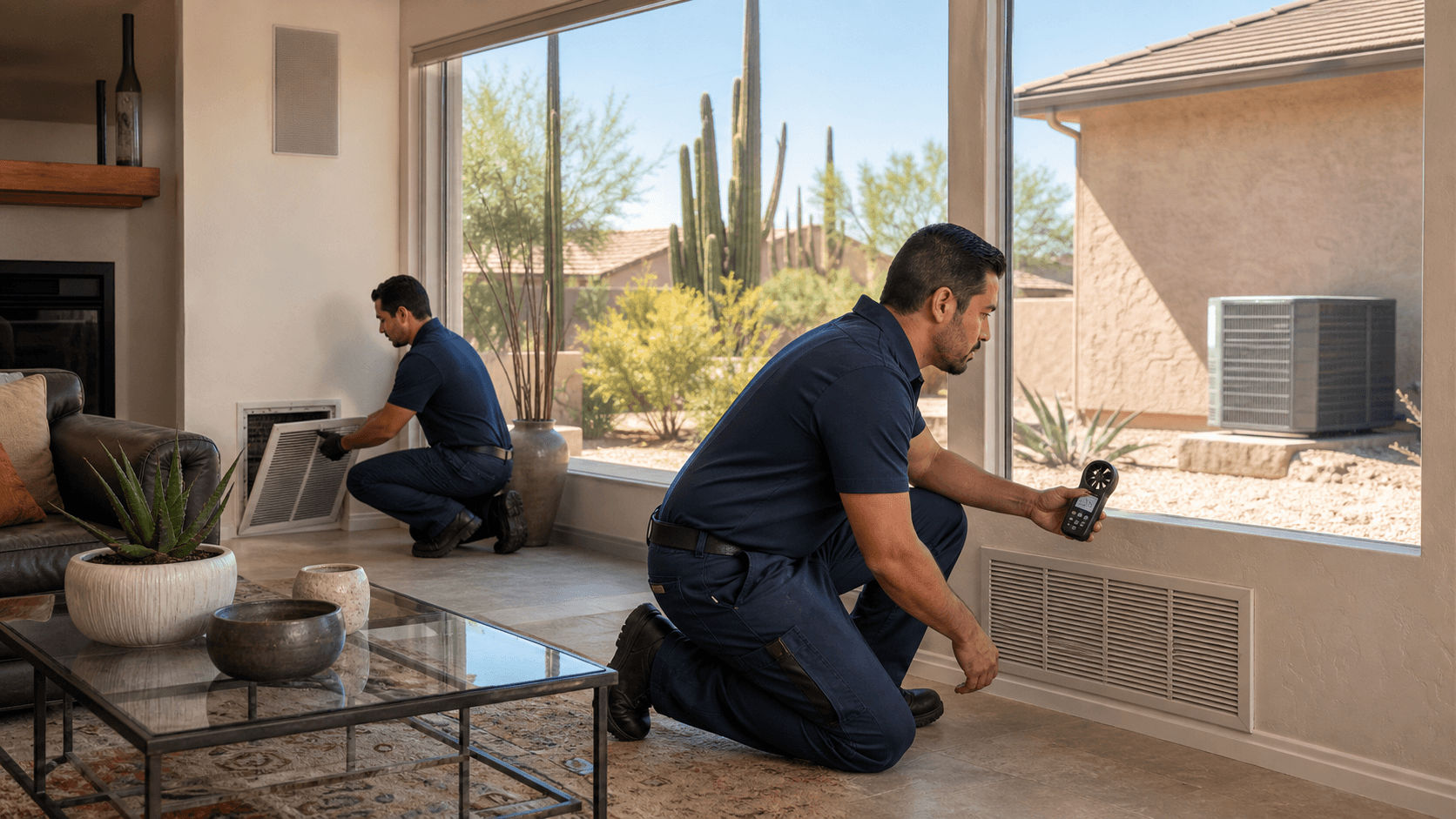
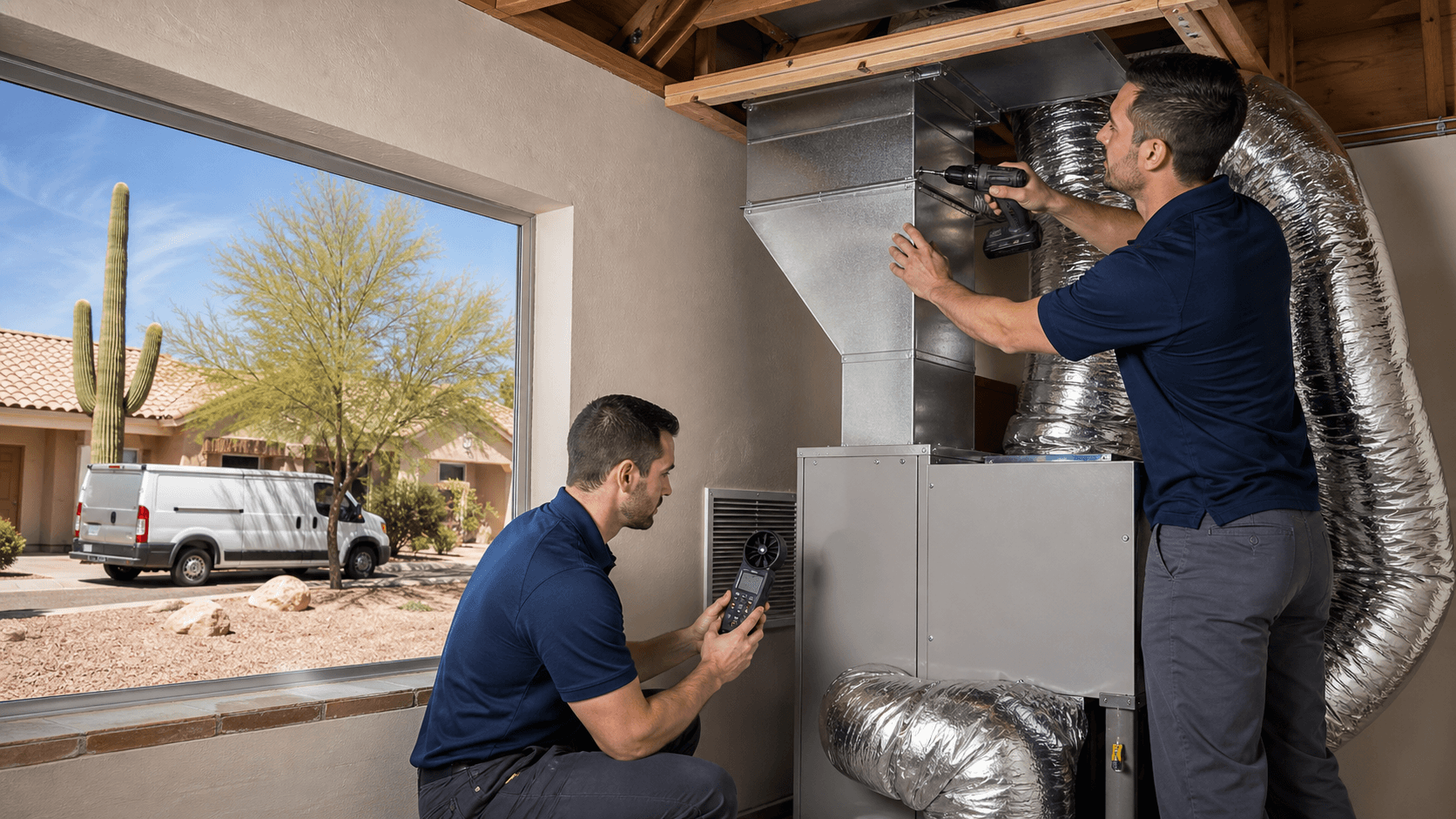
Diagnostics often start at the thermostat, then move through the air handler or furnace, and finally to the outdoor condenser or rooftop unit. In Arizona conditions, techs typically:
- Check thermostat settings and low-voltage control wiring
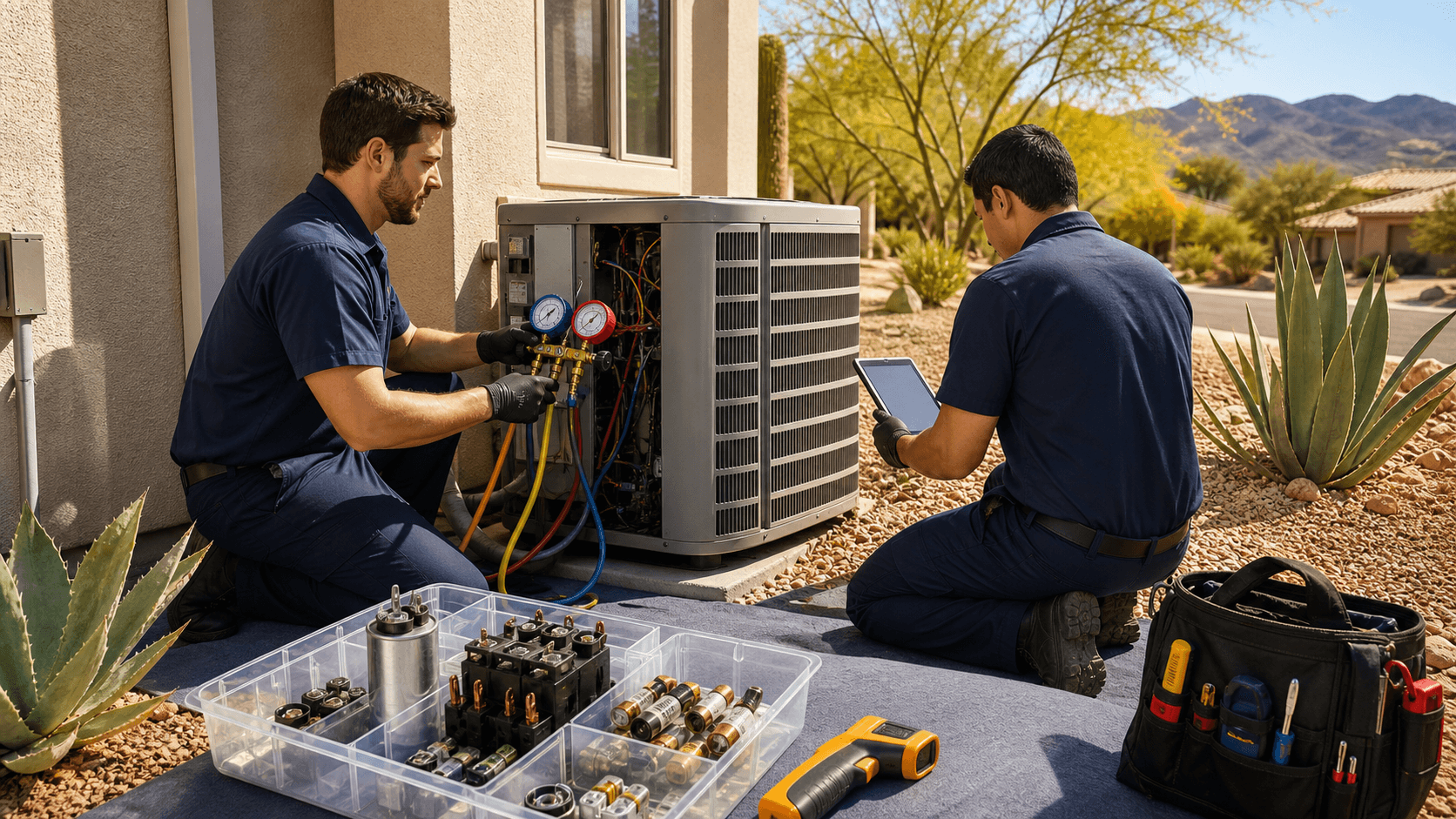
- Inspect capacitors, contactors, and wiring for heat damage
- Measure refrigerant pressures and superheat/subcooling in high outdoor temperatures
- Check temperature split between supply and return air
- Verify airflow to rooms or areas that get the most afternoon sun
For a single-family home, many repairs can be handled in one visit. Common same-visit fixes include:
- Replacing failed capacitors or contactors
- Repairing minor electrical issues
- Swapping certain fan motors that are standard stock
- Clearing simple drain clogs
More complex issues, like specific blower motors, control boards, or certain commercial rooftop components, may require ordering parts. In those cases, techs usually provide a time frame based on local supplier availability in the Phoenix metro.
You should expect a clear explanation of what failed, what your options are, and written estimates covering repair vs replacement recommendations if the unit is older or badly damaged.
AC Repair Costs in Mesa AZ: What Drives the Price
Realistic AC repair costs in Mesa cover a wide range, depending on what failed and what type of system you have. For residential systems, common repairs such as capacitor or contactor replacements, minor refrigerant-related work, fan motor swaps, or thermostat issues usually fall on the lower to mid-end of the cost spectrum. As systems age, parts can become more expensive or harder to find, especially on older models that use discontinued refrigerants.
Factors that affect residential repair cost include:
- Age of the unit and overall condition
- Brand and part availability in local supply houses
- Refrigerant type, especially for older R-22 systems
- Whether the call is during regular hours or an after-hours emergency
After-hours, weekend, or overnight emergency visits often carry premium pricing, particularly during extreme heat when demand is high and technicians are booked solid.
For commercial and restaurant systems in Mesa, repair costs are often higher because:
- Rooftop units are larger and more complex
- Roof access requires extra time and safety measures
- Controls and zoning can be more involved
- Monsoon conditions can make rooftop work slower and more hazardous
Cooling failures in restaurants, grocery stores, or medical offices are especially urgent, since comfort, inventory, and sometimes sensitive equipment are at risk. Larger systems may need multiple components and more labor to restore reliable operation.
At some point, repair costs can signal that it is time to think about replacement. In our climate, many units reach the end of their practical life in roughly 10 to 15 years. If you are facing a major repair like a failed compressor, repeated refrigerant leaks, or significant coil issues on an older system, it may not be the best long-term investment. Newer systems are designed with higher efficiency and better performance in high-heat markets like Phoenix and Mesa, which can deliver better comfort and more reliable operation during extreme conditions.
How Arizona's Climate Affects AC Reliability and Lifespan
Arizona's climate is hard on HVAC equipment. Long daily run times, high attic temperatures, and intense sun all speed up wear.
In Mesa homes, attics can reach extremely high temperatures, which:
- Stresses blower motors and electrical components
- Breaks down wire insulation faster
- Makes ductwork and air handlers work harder to deliver cool air
On commercial buildings, rooftop units sit in direct sun and radiant roof heat. The metal cabinets and components can experience surface temperatures far above the air temperature, which shortens the life of motors, capacitors, and electronics. It is common for systems in the Phoenix metro, including Mesa, to have shorter lifespans than similar equipment in cooler climates simply because they operate for many more hours each year.
Dust and debris are another constant challenge. Haboobs, construction dust, and desert landscaping all contribute to dirty outdoor coils and components. Monsoon storms bring both dust and sudden moisture, which can:
- Cause corrosion if panels and connections are not sealed well
- Create mud-like buildup in coils and drain pans
- Lead to electrical issues when moisture reaches terminals or boards
Clogged outdoor coils and restricted airflow reduce efficiency, increase operating costs, and lead to more frequent AC repair in Phoenix, AZ, and surrounding cities like Mesa.
Power issues can play a role too. High summer usage can cause brief outages or voltage drops that stress equipment, trip breakers, or reset control boards. Surge protection and sound electrical work help protect modern HVAC electronics, and older buildings, especially in long-established parts of Mesa, sometimes need electrical evaluation when equipment is upgraded or heavily used.
Smart Maintenance Habits for Mesa Homes and Businesses
The best way to avoid emergency AC repair in Mesa is steady, simple maintenance. There are a few things owners can do that make a real difference.
Helpful owner tasks include:
- Changing air filters more often during high-use months, especially with pets or high foot traffic
- Keeping at least a few feet of clear space around outdoor units for airflow
- Trimming plants and removing debris from side yards where condensers sit
- Paying attention to early warning signs like strange noises, reduced airflow, hot spots, or a system that runs constantly without reaching the set temperature
Professional preventive service is just as important. Seasonal tune-ups tailored to our desert heat help techs catch weak capacitors, worn fan motors, low refrigerant, and airflow issues before they become no-cool emergencies. Regular inspections of electrical connections, refrigerant levels, and overall system performance reduce the odds of a breakdown and support manufacturer warranty requirements.
For restaurants, medical facilities, and retail spaces, proactive maintenance can be the difference between steady operations and unexpected downtime during peak business hours. Property managers in Mesa with multiple systems in apartments, office parks, or shopping centers often plan staggered maintenance so every unit gets checked before the first big heat wave or the heart of monsoon season.
Building a relationship with a trusted local HVAC contractor makes it easier to get honest guidance on repair vs replacement decisions and quicker help when something does go wrong. In a place as hot as Mesa, staying ahead of problems is one of the smartest investments you can make in comfort, safety, and business continuity.
Restore Cool Comfort In Your Home Today
If your AC is struggling in the Phoenix heat, we are ready to diagnose the issue and get your system running smoothly again. At Frosty Fox AC, our technicians provide fast, reliable AC repair in Phoenix, AZ tailored to your home and budget. Schedule your service today so we can help you stay comfortable and avoid bigger, more expensive problems later.