When the Ice Machine Quits on July's Busiest Day
When a commercial ice machine stops in the middle of a hot Friday night in Phoenix, it is not just an inconvenience; it is a direct hit to revenue. Drinks warm up, servers get backed up, and someone is sent out to buy overpriced bags of ice while customers wonder why their cocktails are half-melted.
For restaurants, bars, convenience stores, grocery stores, and commercial kitchens across the Valley, steady ice production is non-negotiable all summer. The combination of Arizona heat, heavy usage, and tough water conditions pushes equipment hard, and weak links tend to show up at the worst possible time. In this article, we will walk through the real reasons commercial ice machines fail in our climate, what warning signs to watch for, and when it is time to call for professional ice machine repair in Phoenix, AZ before a slow-ice complaint turns into a complete shutdown.
How Arizona Heat Overloads Commercial Ice Machines
Most ice machines are only designed to operate correctly up to a certain room temperature, often around 90 degrees. In Phoenix, a lot of back rooms and kitchens blow past that number once the day heats up and the equipment is running full tilt.
We regularly see:
- Back-of-house kitchens sitting at 100 to 110 degrees by late afternoon
- Tight storage rooms with no ventilation and multiple machines stacked together
- Ice machines mounted above walk-in coolers where roof heat collects near the ceiling
When ambient temperature climbs, the machine has to work harder to reject heat. That leads to:
- Longer freeze cycles and lower ice production
- Compressors running almost non-stop, which adds wear
- High-temperature or high-pressure safeties tripping and shutting the unit down
Typical trouble spots include a grocery store ice machine sitting on top of a walk-in with almost no airflow around it, or a convenience store unit installed near south-facing glass doors or right next to a grill line. In both cases, the machine is sitting in a pocket of hot air and never gets a break.
Some basic checks operators can make:
- Measure room temperature during the hottest part of the day, not just in the morning
- Make sure the condenser has space around it and is not blowing into a wall or stacked boxes
- Listen for machines that run constantly without dropping ice into the bin
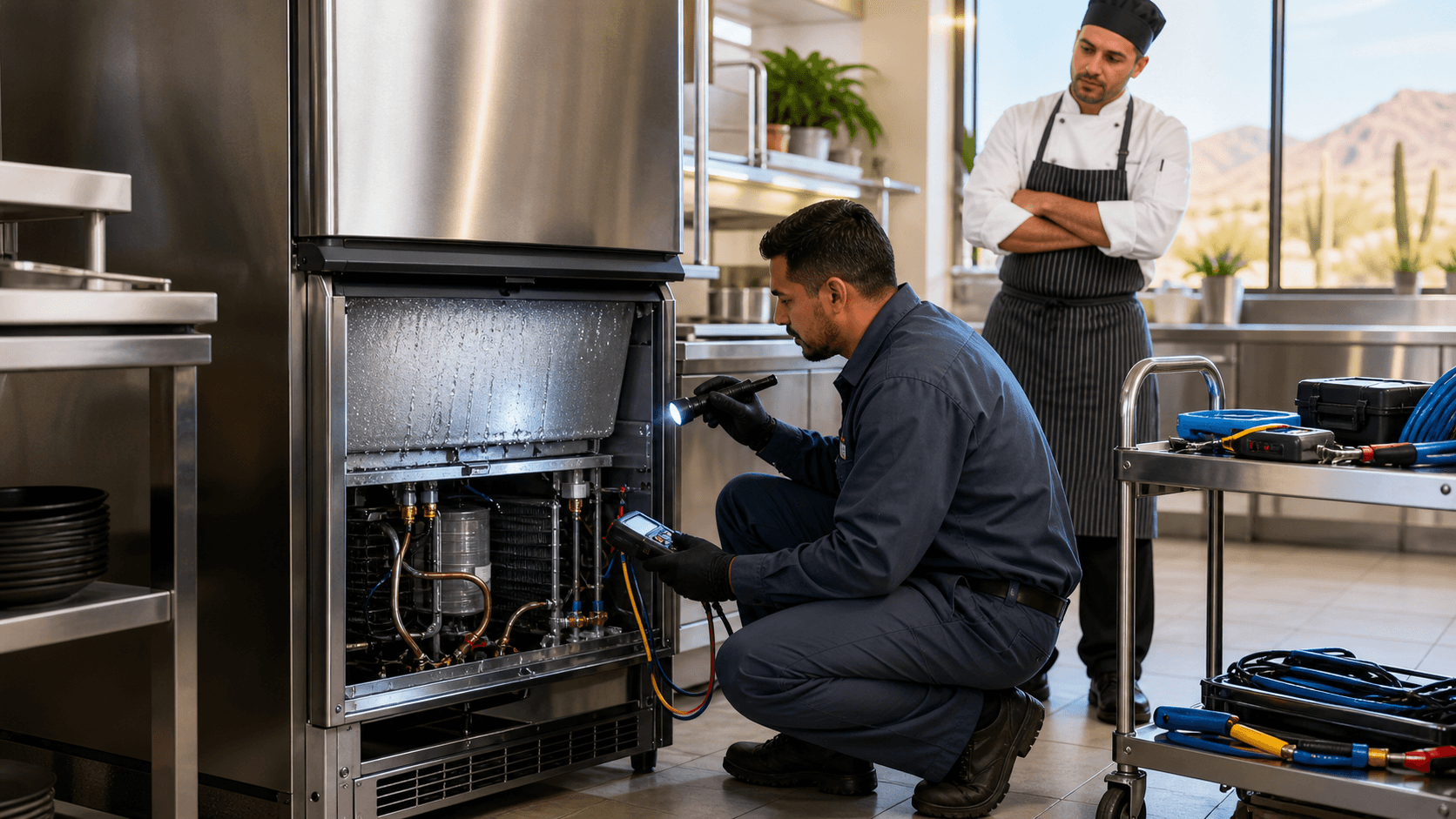
If a unit is always hot to the touch, runs nonstop, or frequently locks out on safety controls, that is a sign to bring in a technician for a professional evaluation before the compressor is damaged and you are forced into emergency ice machine repair in Phoenix, AZ.
Dirty Condensers, Scale, and Water Filtration Problems
Heat is only part of the story. Dirt, grease, and mineral buildup quietly choke performance even when the room is not extreme.
Dirty condenser coils are one of the biggest issues we see:
- Grease, dust, flour, and paper fibers stick to coils in busy kitchens
- The condenser cannot reject heat, pressures rise, and safeties start tripping
- Fan motors work harder and bearings wear out faster
A common setup is a bar ice machine hanging above a back bar cooler, pulling in warm exhaust from the cooler below and smoke or dust every time the patio door opens. Without regular cleaning, those coils turn into a solid mat of debris.
Inside the machine, hard Arizona water leaves scale deposits on:
- Evaporator plates, where ice actually forms
- Water distribution tubes and spray bars
- Level sensors, harvest sensors, and thermistors
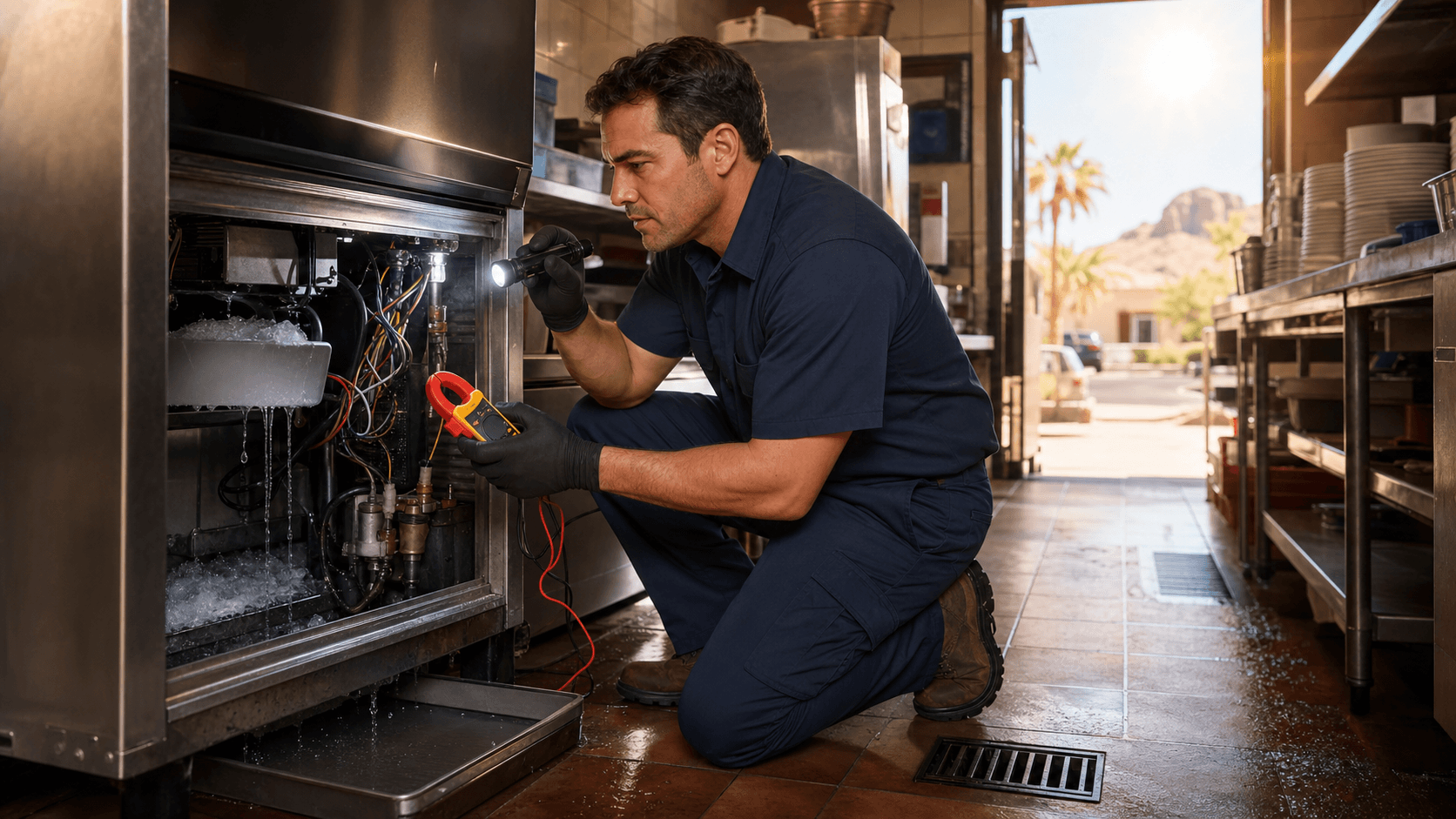
That scale shows up as thin or misshapen cubes, noisy harvests as ice sticks to the plate, or cubes that drop in chunks. Mineral buildup on probes makes the control board think water levels or temperatures are different than they really are, which leads to short cycles, strange behavior, or shutdowns.
Water filtration plays a big role too:
- Clogged filters starve the machine of water, causing small cubes or "no water" errors
- No filtration at all leads to faster scale buildup and cloudy, off-tasting ice
- Customers may complain about taste or appearance long before the machine actually fails
Practical steps operators can take:
- Set a filter change schedule based on manufacturer recommendations and actual usage
- Visually check condenser cleanliness at least once a month, more often in greasy environments
- Plan for professional descaling and cleaning before and after peak summer months to keep scale and slime from building up
From Low Ice Production to Complete Shutdown
Ice machines rarely go from perfect to dead with no warning. Most give you days or weeks of clues, if staff knows what to watch for.
Early warning signs include:
- The ice bin that never quite fills, even during slow periods
- Staff constantly telling the bar or kitchen they are "waiting on ice"
- Longer-than-normal freeze cycles, with cubes coming out small, wet, or partially formed
If the machine seems to run all day but the bin never mounds up with ice, something is wrong. As those problems continue, controls begin to protect the equipment:
- Sensors detect abnormal cycle times or temperatures and lock the machine out
- High-temperature or high-pressure safeties trip because of dirty coils or poor airflow
- Newer units display fault codes, while older machines may just stop mid-cycle
Typical Phoenix scenarios include a busy restaurant that shrugs off slow ice production until the first triple-digit weekend hits, then the machine locks out during dinner rush. Another common issue is a grocery store deli with an ice machine on top of a walk-in, where the small room gets so hot during the day that the unit starts shutting off every afternoon.
Before calling service, it helps to do a few basic checks:
- Confirm power is on, breakers are not tripped, and the machine's switch is in the right position
- Make sure the water supply is open and bin control is not blocked by stacked ice or bags
- Look for visible leaks, odd noises, or very hot air blowing from the condenser area
- Note what staff has seen, such as when the problem started, any error codes, or clear changes in cube quality
That information saves time on site and helps technicians find the root cause faster.
Preventive Maintenance That Works in Arizona Summers
Arizona is not a "standard" operating condition for commercial ice machines. Units here run more hours, live in hotter rooms, and deal with harder water than many manufacturer examples assume. Maintenance intervals that work in cooler climates are often not enough in the Valley.
For Phoenix-area restaurants, bars, convenience stores, grocery stores, and commercial kitchens, a practical preventive plan usually includes:
- Regular condenser coil cleaning, tailored to how dirty your environment is
- Routine descaling and sanitizing of evaporators, water paths, and bins
- Scheduled water filter changes, and in some cases multi-stage filtration or softening
Different businesses benefit from slightly different approaches:
- Restaurants and bars: Pre-summer deep cleaning, then a mid-summer check if the machine sits over a cookline or bar where grease and heat are common
- Convenience stores: Frequent checks for blocked airflow in tight back rooms, where cardboard, inventory, and drink cases often creep in front of condensers
- Grocery stores and larger commercial kitchens: Folding ice machines into existing walk-in cooler, freezer, and refrigeration maintenance programs so everything is inspected together
The benefits are easy to understand in everyday language:
- Fewer surprise shutdowns during weekend rushes and special events
- More consistent ice supply for promotions, happy hours, and seasonal traffic spikes
- Longer life for compressors, valves, and other expensive components
Working with a local contractor that understands ice machine repair in Phoenix, AZ also helps you set realistic maintenance intervals based on what we actually see in Valley kitchens, not just what a generic manual suggests.
Plan Ahead so Your Ice Supply Survives the Next Heat Wave
Ice machines are revenue equipment, not background appliances. In a Phoenix summer, they deserve the same level of attention you give to walk-in coolers or critical cooking equipment.
For operators, that means:
- Keeping the room as cool and well-ventilated as possible
- Leaving clearance around condensers and keeping bins and cabinets accessible
- Staying disciplined about water filtration changes and scale control
- Training staff to report early warning signs like smaller cubes, longer cycles, strange noises, or intermittent shutdowns
Most of the worst breakdowns we see could have been avoided with a bit of planning a few weeks earlier. Treat preventive maintenance as prep work for your busiest months, not a reaction after the first major failure, and your ice supply is far more likely to keep up when Phoenix hits peak heat and your business is at capacity.
Keep Your Ice Flowing With Fast, Reliable Service
If your ice machine is acting up, we are ready to get you back to full capacity quickly and correctly. At Frosty Fox AC, our certified technicians specialize in ice machine repair in Phoenix, AZ, diagnosing issues accurately and fixing them the right way the first time. We work around your schedule to minimize downtime so your customers and staff are never left waiting. Reach out today to schedule service and keep your equipment running at peak performance.