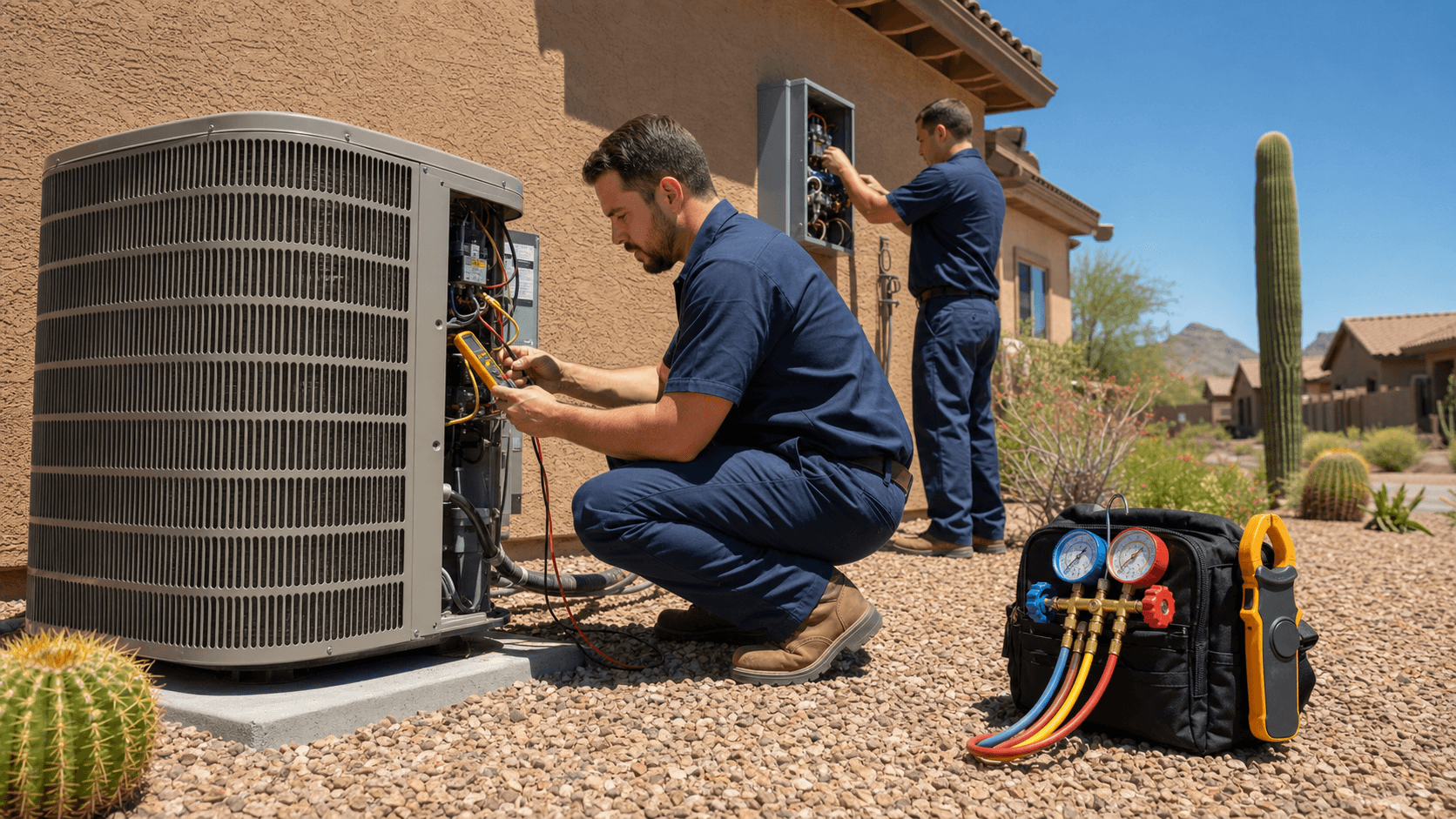
Why Early AC Repairs Matter in San Tan Valley Heat
When daytime highs sit in the triple digits, a small AC problem in a San Tan Valley home can turn into a big headache very fast. What starts as a warm bedroom or a funny noise can end with a system that stops cooling right when the sun is hitting the west side of your house.
This guide is for San Tan Valley homeowners who want to avoid mid-summer breakdowns, surprise power bills, and needing a new system sooner than expected. We will walk through real, everyday warning signs technicians see in Arizona homes and what they usually mean. The goal is simple: help you spot trouble early so repairs stay smaller and your home stays comfortable.
Subtle Comfort Changes You Should Not Ignore
Most AC problems do not start with a dramatic failure. They creep in as small comfort changes that are easy to blame on the San Tan Valley heat.
One common sign is uneven cooling from room to room. This shows up a lot in two story homes when:
- Upstairs bedrooms are several degrees warmer than downstairs
- The loft feels stuffy while the living room is fine
- One side of the house never seems to cool down
Many people think that is just how Arizona summers feel, but it can point to low refrigerant, airflow restrictions, or a blower motor that is starting to struggle. In some cases, problems in the duct system can also contribute, and a technician will check for that during an AC service visit.
Another warning sign is longer run times to reach your thermostat setpoint. Pay attention if:
- The AC runs almost nonstop after mid afternoon
- The thermostat says it should be cool, but your body disagrees
- The system used to cool quickly but now drags
This can mean the system is losing capacity from a dirty outdoor coil, a weak compressor, or a failing capacitor. When your AC has to run much longer to do the same job, parts wear faster and your energy use climbs.
Short cycling is another red flag. That is when the system:
- Turns on, runs for a short time, then shuts off
- Repeats this over and over, especially on hot afternoons
- Never seems to settle into a steady rhythm
Rapid cycling can point to thermostat problems, electrical issues, low airflow, or even equipment that is oversized for the home. Short cycling is hard on components and often leads to a full AC breakdown in San Tan Valley if it is ignored.
Noises, Smells, and Moisture That Signal Trouble
Your AC should be pretty boring. When it starts to get your attention, there is usually a reason.
New or unusual noises from the indoor or outdoor unit should never be brushed off. Listen for:
- Grinding or squealing from fan motors or bearings
- Buzzing or clicking that lines up with the system trying to start
- Rattling from the condenser unit outside, especially if it is shaking against the slab
A rattling condenser behind the house might be loose panels, a failing fan motor, or something vibrating inside the cabinet. If you hear it, that is your chance to fix a small issue before it takes out a bigger part.
Odors from supply vents are another early warning. Common smells include:
- Musty or "dirty sock" odors when the AC first kicks on
- A damp smell that comes and goes
- Sharp burning or electrical smells
Musty odors can point to drainage problems or organic buildup on the evaporator coil. Burning or electrical smells are more serious and may mean overheating components. In that case, it is usually best to shut the system off and have a professional check it before running it again.
Water around the air handler is a sign you should act quickly. In many San Tan Valley homes, systems sit in the attic or in a garage. Watch for:
- Water in the drain pan or on the floor
- Ceiling stains below the unit
- Wet insulation or a float switch that keeps tripping
A clogged condensate drain can go from "small mess" to drywall damage and possible mold growth if it is left alone. Catching this early usually means a quicker, cleaner repair.
When Higher Bills and Poor Airflow Mean More Than SRP Rates
Utility rates do change over time, but your bill should not jump for no reason. If you compare this summer's bills to last summer and notice a big difference, something may be off with your AC system.
Common AC-related causes include:
- Dirty indoor or outdoor coils making the system work harder
- Weak capacitors or tired fan motors pulling extra power
- Low refrigerant charge forcing longer run times
Weak airflow at registers is another issue that often shows up before a full breakdown. You might notice:
- One or two vents barely blowing while others feel normal
- Rooms that never get enough air, even with the door open
- A general sense that the system is "breathing" lightly
That can point to a failing blower motor, a partially frozen coil, blocked returns, or problems in the air distribution system. Any of those can turn into a no-cool situation in the middle of July if they are not fixed.
Thermostat settings that no longer "work" are easy to overlook. Maybe 76 degrees used to feel comfortable, but now the house feels stuffy unless you drop it several degrees. Before calling a pro, homeowners can safely:
- Check and replace a dirty filter
- Confirm the thermostat is set to cool and not just fan
- Make sure breakers and outdoor disconnects have not tripped
If those items look fine and comfort is still slipping, it is time for a professional to check system performance.
Common Mid-Summer Failures San Tan Valley techs See Every Year
When the heat hangs on day after day in San Tan Valley, some failures show up again and again.
Capacitors and contactors in outdoor units take a lot of abuse. Under long heat waves, they fail more often. Typical symptoms include:
- Outdoor fan not spinning, even though you hear humming
- System trying to start, then shutting off
- Frequent clicks without the unit fully coming on
Frozen evaporator coils are another mid-summer classic. Long run times combined with low airflow or refrigerant issues can freeze the coil solid. From the homeowner side, you might notice weak airflow, warm air, or ice on refrigerant lines. It is usually better to turn the system off and let it thaw, then have a technician find the root cause instead of "just letting it run."
Refrigerant leaks are common in aging systems in the East Valley, including San Tan Valley. Leaks often show up in older coils or line sets. If you find yourself needing refrigerant added every summer, that is usually a sign of an ongoing leak. Topping it off again and again often ends up costing more over time than finding the leak or planning for replacement.
When to Call a Pro and What to Expect
Some signs mean you should get same-day help. These include:
- No cooling or only warm air from vents
- Breaker to the AC tripping more than once
- Burning or strong electrical smells
- Water leaking through the ceiling or heavy dripping around the air handler
Other signs, like slight uneven cooling or mild noises, can sometimes be watched for a short time, but they should still be checked before the next heat wave.
Before calling, homeowners can do a few basic checks:
- Confirm the thermostat is set to cool with a reasonable setpoint
- Look at the air filter and replace it if it is dirty
- Make sure breakers and the outdoor disconnect are on
When you schedule service, it helps to describe symptoms clearly, such as when the issue happens, what you hear, and which rooms are affected. During a typical AC repair visit, a technician may:
- Check refrigerant pressures and temperatures
- Inspect electrical parts like capacitors and contactors
- Measure temperature difference between supply and return air
- Test safety devices and look for drainage issues
After diagnosing, they should explain what they found, offer repair options, and talk honestly about repair versus replacement if your system is near the end of its life. Regular maintenance suggestions can also lower the odds of the same problem coming back once the repair is done.
Need AC Repair in San Tan Valley?
If you are noticing any of these warning signs in your San Tan Valley home, long run times, new noises, warm rooms, or higher bills, it is better to have the system checked before the next heat spike. Schedule a residential AC repair visit with a local San Tan Valley HVAC technician who works on central air systems every day in our climate. A thorough diagnostic now can often turn a potential mid-summer breakdown into a straightforward repair and help keep your system running through the rest of the season.
Restore Cool Comfort To Your Home Today
If your AC is struggling to keep up, we are ready to find the problem fast and fix it the right way. Our licensed technicians at Frosty Fox AC provide reliable AC repair in San Tan Valley, AZ that keeps your home comfortable and your system running efficiently. Reach out today to schedule a convenient appointment and let us get your cooling back on track.